
Berkshire Hathaway Annual Meeting 2008 Transcript
Introduction: What do you need to know about the 2008 meeting?
TL;DR: The key numbers of the 2008 meeting, Berkshire’s share price against the market, the people on stage and the key takeaways for long-term investors.
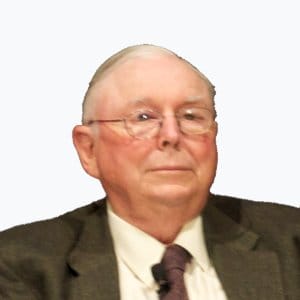
- Nancy Ancowitz · Teaches at New York University, later author of the book Self-Promotion for Introverts · Q13
- Father Val Peter · Led Boys Town for 25 years. Here he speaks for the Parents Television Council · Q27
- Timothy Ferriss · Author of the book The 4-Hour Workweek · Q32
- Frank Martin · Founder of Martin Capital Management in Elkhart, Indiana, and author of books on investing · Q55
- Expect lower returns from a bigger Berkshire. Buffett said Berkshire will earn less than in the past because it can only buy very large companies. He would be happy with 10% a year on stocks before tax and might settle for a little less. [00:38:53] [00:39:41] [00:40:32]
- Crises create bargains. Buffett showed auction rate bonds from the same issuer priced at 11.3% and 6% at the same time. Berkshire had about 4 billion dollars in them. Ajit Jain’s team built bond insurance from a standing start to over 400 million dollars of premiums in the first quarter of 2008. [01:12:35] [01:15:25] [01:16:09] [01:22:19]
- Risk sits at the top. Buffett calls himself Berkshire’s chief risk officer. He said some big banks are too big to manage from a risk standpoint. Bear Stearns had about 14.5 trillion dollars of derivative contracts, and he said the Fed did the right thing by stepping in. [02:32:03] [02:35:38] [02:39:12]
- An extra point of return is not worth ruin. Buffett said Berkshire could have used more leverage but chose not to. He quoted over 60 trillion dollars of credit default swaps and did not expect chaos. Munger said a big mess could happen and blamed the regulators. [03:57:30] [03:59:01] [04:02:32]
“If we can earn a decent return on capital, you know, what’s an extra percentage point? It just isn’t that important.” (Buffett, [03:03:14]) - Speed is an advantage. Buffett said Berkshire can decide in five minutes and promised the Wrigley financing without conditions. Munger said Berkshire spends less on due diligence than anyone. Buffett said big facts matter more than piles of due diligence. [02:44:55] [02:46:46] [02:47:37] [03:06:47]
“I’ve made plenty of big investment mistakes. I’ve never made one, in my view, that would have been avoided by conventional due diligence.” (Buffett, [02:46:17]) - Small sums have more options. Buffett said investors with small sums can find better things than Berkshire. A busy amateur should own a very low cost index fund, then forget it and go back to work. [00:41:48] [01:46:36] [02:23:20]
- One test for dividends. Buffett said a company should keep its earnings only if each dollar creates more than a dollar of value. See’s pays out nearly everything. He sees no reason to sell a wonderful business except for outside factors. [04:05:20] [04:06:58]
“So there’s no reason to sell a wonderful business except for kind of extraneous factors.” (Buffett, [01:38:31])
Berkshire Hathaway (BRK.B) · PetroChina · Wrigley · Kraft · Coca-Cola (KO) · Cologne Re · Bear Stearns · Iscar
General Re · Cologne Re · GEICO · MidAmerican Energy · PacifiCorp · Iscar · See’s Candies · Fruit of the Loom · MiTek · Wesco · municipal bond insurance
Wells Fargo (WFC) · U.S. Bancorp (USB) · M&T Bank (MTB) · American Express (AXP) · The Washington Post · Capital Cities · Mars · Fannie Mae · Freddie Mac · Salomon · Long-Term Capital Management · Lindt & Sprüngli · Johnson & Johnson (JNJ) · Sanofi (SNY) · Pfizer (PFE) · Merck (MRK) · Chevron (CVX) · ConocoPhillips (COP) · Citigroup (C) · Fairfax Financial · Webvan · Chicago Cubs
in five guides




How did Warren Buffett open the 2008 meeting?
TL;DR: Buffett introduced the directors and set the rules. He said The Intelligent Investor changed his life and that Cologne Re will soon be fully owned.
Warren Buffett [00:04:17] (Applause) Okay, Charlie, let’s get this show on the road. The… She spent more time with him than she did with me, but the… We’re going to follow the usual procedure. The business meeting will start at 3:15, but between now and then, with a break for lunch, we’re going to answer your questions. We don’t screen them ahead of time, as you know, based on who gets lined up at the microphone first, and we’ll go around from sections to sections and then go to the overflow rooms. My understanding is that our best estimate is that we have about 31,000 people here today.
(Applause) Somewhere I have a map here. Marc, do we have that? Pardon me, can’t hear a thing up here. But in any event, on the yellow pad. Okay, we’ll just mark them off as we go along. The… I would like, before we start… I heard Ron Olson laughing there, I think he made it. I’m glad to hear it. Let me introduce our directors. I really wasn’t sure whether to go through with this part of the show after they showed that rousing applause for things like dividends and raising their man. But we have up here, we have Charlie Munger on my left. He’s the one that can hear, I can see. We work together for that reason.
And if the rest of you will just stand as I give your name, and if you’ll hold your applause to the end, or even longer if you would like, I will introduce them at Howard Buffett, Susan Decker, Bill Gates, David Gottesman, Charlotte Guyman, Don Keough, Tom Murphy, Ron Olson and Walter Scott. The best directors in America. (Applause)
Charlie and I will take a break at noon, because we will probably by that time finished all of the things we have up here to eat, and we’ll need to have lunch. I’d appreciate it if you would limit your questions to one question, and that means not embodying a three-parter or four-part or something like that. And there’s no need to make a long introductory statement, because we’ll get more questions answered that way, and we want to cover as many people as we can. So with that, we’ll go right over to post number one and start in with the first question.
How can an investor stop thinking like a lemming?
[00:07:39] Shareholder (Rajesh Vora, Bombay, India): A very good morning to Mr. Buffett and Mr. Munger. My name is Rajesh Vora from Bombay, India. I have been learning a lot from many letters of yours. It’s been a great insight into investment philosophy that I haven’t learned from anywhere else. Great job. That’s on the mind side, but on the hard side, what touches me the most is what you have achieved all these years is through 100% honesty, and I salute to that. Thanks. Now my question. My question is on what key steps would you recommend to correct the mindset of typical investor like me, which is what you narrate as lemmings, like the crowd mindset. What would we recommend?
Charlie Munger [00:08:35] We got the question being repeated here about the mindset of an investor. He wants you to advise him as to how he can become less like a lemming.
Warren Buffett [00:08:59] Well, well, since you repeated the question, I’m going to let you give the first answer to that, Charlie. Until he eats about a thousand calories.
Charlie Munger [00:09:22] He wants to invest less like a lemming.
Warren Buffett [00:09:24] Oh, I understand that. I was giving you the first shot at it, but…
Charlie Munger [00:09:29] I don’t.
Warren Buffett [00:09:29] Well, I will tell you what changed my own life on investing. I started investing when I was 11. I first started reading about it, I believe in reading everything in sight, and first started reading about it when I was probably six or seven years old. But for about eight years I wandered around with technical analysis and doing all kinds of things, and then I read a book called The Intelligent Investor, and I did that when I was 19, down at the University of Nebraska. And I would say that if you absorb the lessons of The Intelligent Investor, mainly, and I wrote a foreword, and I recommended particularly chapters 8 and 20, that you will not behave like a lemming, and you may do very well compared to the lemmings.
We have here in the Bookworm copies of The Intelligent Investor, and I… I think it’s as great a book now as I did when I read it, early I guess in 1950. You will never… You can’t get a bad result if you follow the lessons of Ben Graham taught in that book. I should mention that there’s a book out there also that I did not… I did not know it would be completed by this time. My cousin Bill Buffett has written a book about our grandfather’s grocery store called Foods You Will Enjoy, and Bill will be out there, he’s signing books. I just got my first copy a couple days ago, read, and I enjoyed it a lot. Charlie worked at the same grocery store, how many years ago, probably… probably a good 70 years ago in Charlie’s case. Neither one of us was very good.
But my grandfather, you don’t want to pay much attention to his advice on stocks. He’s a… He wrote a lot of letters, and he was very negative on the stock market and big on hard work at the grocery store, so we quit listening to them. Instead, instead read The Intelligent Investor. That’s the… That’s the book that gave me the philosophy that has taken me now for a lot of years. And there’s three big lessons in there, which relate to your attitude toward stocks generally, which is that you think of them as parts of a business, and your attitude toward the market, which is that you use it to serve you and not to instruct you, and then the idea of a margin of safety, of always leaving some extra room in things.
But the people in this room, I think, have learned that important first lesson. I mean, I think most people that own Berkshire do not see themselves as owning something with a little ticker symbol or something that may have a favorable or unfavorable earning surprise or something of the sort, but they rather think of themselves as owning a group of those businesses that are out there in the other room. And that’s the way to look at… That’s the way to look at stocks. You’ll never be a lemming if you do that. Let’s go to number two.
How is the integration of Cologne Re going?
[00:12:36] Shareholder (Georg Issels, Cologne, Germany): Good morning, Warren. Good morning, Charlie. My name is Georg Issels from Cologne, Germany. My question: how is the operational integration of the Cologne Re progressing? Thank you very much.
Warren Buffett [00:12:48] Cologne Re is a… For those of you who are not familiar with it, is a 95% owned subsidiary of a General Re, of which Berkshire Hathaway owns 100%. And Cologne Re, I believe, is the oldest reinsurance company in the world. It’s… It’s done a magnificent job for us as part of first generation and then Berkshire Hathaway. And we have a process in place that will before too long result in us owning 100% of Cologne. One difference then… There won’t be any difference in operation. It runs magnificently the way it’s being run. But at that point… Up till this point, they have run their own investment portfolio. That portfolio and the equity portfolio of GEICO are the only two that I don’t run. But when we own 100% of Cologne, then I will take the responsibility for Cologne’s investment portfolio at all. Otherwise it would be hard to improve on the operation of the management of Cologne. So there will be… You will not see any other changes, except we will consolidate in 100% of the earnings of Cologne rather than 95%. Area 3.
What did Buffett say about the stock market, managers and options?
TL;DR: Buffett said he has no idea where the market goes and looks at stocks like a farm. Berkshire buys businesses with good managers and avoids option tricks.
Where is the stock market going from here?
[00:14:16] Shareholder (Sam Rainer, Fort Lee, New Jersey): Good morning, Mr. Buffett, Mr. Munger. My name is Sam Rainer from Fort Lee, New Jersey, and my question concerns your comment this week about the recession and the stock market going up so significantly in April. Can you expand on where the market’s going from here?
Warren Buffett [00:14:38] Well, I could expand, but I couldn’t answer. They… Charlie and I haven’t the faintest idea where the stock market is going to go next week, next month or next year. We never talk about it. You know, it never comes up. Our directors will tell you that they’ve never been to a directors meeting where the subject of the direction of the stock market is… We are not in that business. We don’t know how to be in that business. Obviously, if we could guess successfully a high percentage of the time where the stock market was going to go, we would do nothing but play the S&P futures market, where there wouldn’t be any reason to look at businesses and stocks. So it’s just not our game.
We don’t think… What we see when we look at the stock market, as we face thousands and thousands and thousands of companies priced every day, and we ignore 99.9% of what we see, although we run our eyes over them. And then every now and then we see something that looks like it’s attractively priced to us as a business. Forget about the word stock. So when we buy a stock, we would be happy with that stock if they told us the market was going to close for a couple years. We looked to the business. It’s exactly the same way as if you were going to buy a farm a few miles here outside of Omaha. You would not get a price on it every day, and you wouldn’t ask, you know, whether the yield was a little above ex… expectation this year, down a little bit.
You’d look at what the farm was going to produce over time. You’d look at the expected yields, you’d look at expected prices, the cost, taxes, the cost of fertilizer, and you would evaluate the intelligence of your purchase based on what the farm produced relative to your purchase price. Quotes would have nothing to do with it. That’s exactly the way we look at stocks. We look at them as businesses. We make judgments about what the futures of those businesses will be, and if we’re right about in those judgments, the stocks will take care of themselves. Charlie?
Charlie Munger [00:16:43] Nothing to add.
Warren Buffett [00:16:44] He’s been practicing for weeks. Let’s go to area four.
How can you judge a manager in one hour?
[00:16:48] Shareholder (Chandra Chavla, Seattle, Washington): Good morning, Mr. Buffett and Mr. Munger. My name is Chandra Chavla and I am from Seattle, Washington. Berkshire Hathaway has some of the best managers in the world, and I am very bad at hiring good managers. The… Some of the decisions I made, which were without any phone calls from Jamie Lee Curtis, I look back and I see, you know, what was I thinking? Though, what can you advise on how in one hour you can assess the capability of a person to be a good manager?
Warren Buffett [00:17:30] Well, you have to understand that we cheat. We buy businesses with good managers. So if you give me a hundred MBAs, and I have these classes come out all the time, alma, I’ve had about 30 schools this year, and usually there’s 75 or 100 men and women in the classes, I know more could take those hundred and spend a few hours and rank them from number one to 100 in terms of their future achievements as managers, you know, then I could pick them. You know, it would be impossible for me. But what we do is we buy businesses with great managers in place. We’ve seen those people perform for, many cases, decades. We’ve seen a record, and they come with the business.
Now, our job is not so much to select great managers, because we do have this proven record that they come with. Our job is to retain them. And many of the managers, the majority of the managers that work at Berkshire are independently wealthy. We hand them checks, sometimes in the billions, often in the hundreds of millions. So they do not have a monetary reason to work in many cases. So our job… We are dependent on them, incidentally. I mean, we have 19 or so people at headquarters and we have 250,000 working for Berkshire around the world, and we can’t run their businesses. And our job is to make sure that they have the same enthusiasm, excitement, passion for their job after the stock certificate changes hands than they had before.
Now that re… That requires some judgment on our part as to whether these people love the business or love the money. They all like money, but many of them… Well, our managers in particular, they love their businesses. I mean, they’ve worked at them, they’re a work of art to them, and they’ve been in the family sometimes as many as four generations. So we have to see the passion in their eyes, and if we see that, then we have to behave in a way that that passion remains. Can’t be done by contract. We don’t have contracts that won’t… That doesn’t work. But we can try to create an environment, and Berkshire frankly is the ideal environment. It’s even an ideal environment because of events like this. Our managers feel appreciated, and they are appreciated. They’re not just appreciated by me and Charlie, they’re appreciated by you, and we want to give you a chance to applaud them.
So I can’t be of enormous help in the… If you’re looking at a group of MBAs, you know, it’s not easy. I mean, they know… They sort of learn by that point in life how to fool you in terms of what answers you want to hear and all of that sort of thing. I would look for the person with passion for the job. I mean, the person that is always doing more than this. Sure, you look for people that are good communicators and all of that sort of thing. But I like my way better. It’s a lot easier just to take somebody that’s been batting .400 in baseball and say, I think I’ll stick him in the lineup. And the nice thing about our game is that, you know, in baseball, unless you’re Nolan Ryan or somebody, you have to hang up things at 40 or thereabouts. But in our game they go on and on and on. I mean, I use as an example, we had a famous Mrs. B from the Furniture Mart, and she worked for us till she was 103, and then she left and she died the next year. And that is a lesson to our managers. Charlie?
Charlie Munger [00:21:26] Well, that was very useful advice. It reminds me very much of the late Howard Ahmanson. And a young and starving business student once asked him for advice as to how to get ahead, and Howard said, well, I always keep a few million dollars lying around in case some good opportunity suddenly turns up.
Warren Buffett [00:21:50] Well, let’s go to number five.
Does Berkshire use options to buy or sell stocks?
[00:21:52] Shareholder (Joe Hudson, Culver, Indiana): Good morning. I’m Joe Hudson, a shareholder from Culver, Indiana. Could you please comment on how you use stock options when trying to enter or exit a position in a public company?
Warren Buffett [00:22:07] Yeah, we’ve… I think there’s one time we sold a put on Coca-Cola, with the idea that if it got exercised we were very happy to own more Coca-Cola. It didn’t get exercised. We would have been better off if we just bought the stock. Usually if you want to buy or sell a stock, you should buy or sell the stock. And using an option technique to buy a call on a stock instead of buying the stock outright, with the idea that you get it a little cheaper that way, means that about four times out of five you’ll be right, and the fifth time the stock will have moved earlier, and you’ll have… you’ll have missed, you know, the transaction you wanted to have. And so we virtually have never used options as a way to enter a position or exit a position, and I would doubt very much if we do.
We’ve used… We’ve sold these equity, long-term equity put options that are described in the press release yesterday and were described in the annual report, but that’s a different sort of thing. If we want to buy something, we’ll just start buying it, and if we want to get out of it, we’ll start selling it. Then we won’t get involved in any fancy techniques. Charlie?
Charlie Munger [00:23:33] Well, if I remember right, you wrote a letter when the public authorities were deciding whether we should have option exchanges for stocks, and Warren was all alone at that time, and he wrote a letter saying that he didn’t think it would do any good at all for the country to throw out the margin rules and in this fashion. I’ve always thought that Warren was totally right. We… It’s the idea of turning financial markets into gambling partners so the croupiers can make more money has never been very attractive to us. (Applause)
Warren Buffett [00:24:11] Yeah, it’s very interesting to me. When I talk to these MBA students, one of them from the University of Chicago, the very first question I got a few years ago, he says, what are we being taught that’s wrong? I love questions like that. I have to plan them in the future. The amount of time spent at business schools, maybe it’s a little less now, but teaching things like option pricing and that sort of thing, it’s totally nonsense. I mean, you need two courses in a business school. One is how to value a business, and the second, from the standpoint of investment, a business, and how to think about stock market fluctuations.
But the idea that you would spend all of this time with formulas… But the problem, of course, is that the instructors know the formulas and you don’t when they come, and so they’ve got something to fill a time explaining to you. And you know, it is no fun if you… I mean, if you were teaching biblical studies, you know, and you could read three or four of the most important religious terms forward and backward in five different languages, you would hate to tell somebody that it all comes down to the Ten Commandments. I mean, any damn fool can do that. So there’s a great desire of the priesthood in finance to want to teach the things that they know and you don’t know, and that they spent a long time learning, and maybe require a fair amount of mathematics.
And it really has nothing to do with investment success. Investment success depends on buying into the right businesses at the right price, and you have to know how to value businesses, and you have to have an attitude that divorces you from being influenced by the market. You want the market there not to influence you, you want it there to serve you. And that requires a mindset, which goes back to an earlier question, and it’s a mindset that’s described quite well in chapter eight of The Intelligent Investor. Let’s go to number six.
How do Buffett and Munger think about giving, ethics and future returns?
TL;DR: Buffett said real charity is giving that changes your own life. He said Berkshire’s future returns will be lower, and David Sokol answered on the Klamath River dams.
What are the joys and pitfalls of giving money away?
[00:26:17] Shareholder (Irene Rentrop, Bonn, Germany): Hi, I’m Irene from Bonn, Germany. Both of you are very generous person. What is your joy of giving, and what are the potential pits when donating money? Pitfalls when donating money.
Warren Buffett [00:26:29] I’m sorry? That’s the joys of giving and the pitfalls of donating money. The… I know personally, I’ve never given up anything in my life that made a difference in my life. I mean, there are people that will go to church this Sunday and they will drop money in a collection plate, and it will make the difference about where they take their family, or whether they take their family, in terms of what they eat, whether they go to a movie, whether they get an extra present at Christmas, whatever it may be. I mean, they are giving some money that makes a difference in their lives. I’ve never given a penny that way and I never will. I mean, I get to do everything I want to do in life. But because I’ve lived a long time, which gives you an enormous advantage in terms of accumulating money, and most of the things I want in life don’t come from the expenditure of money, so it accumulates, and basically I’m giving away excess. I’m not giving away anything from necessity.
So I really… You know, I think what I’m doing is useful with the money, but I don’t think it’s on a par at all with the actions of somebody that’s giving money that really makes a difference in how they or their children live. Those are really charitable people. I’ve… I think my sister Doris is here. She’s given away money that made a difference in her life. She gives away time too. She gives away eight or ten hours a day in terms of actually looking in to the real needs of people and giving him… giving him things beyond the money, giving him help and advice and somebody to talk to. And you know, that is… That’s real giving, and I admire for it. I’m not emulating her. I mean, she is in the retail business of giving. I like wholesale much better.
In terms of the pitfalls, you know, you can make mistakes in any area. But if you… You should give the things that you personally have an interest in and believe in, and that can be anything. I don’t… I’m not going to prioritize what should be done with gifts. That something you’re involved in, something you want to give your time to as well as money. But beyond that, I’ll let Charlie carry on.
Charlie Munger [00:28:55] Yeah, regarding pitfalls, I would predict that if you have an extreme political ideology, whether the left or the right, you’re very likely to make a lot of dumb charitable gifts.
Warren Buffett [00:29:15] If you hang around Charlie like I do, you get the sunny side of life. I mean, we ought to have that like the sunny side of the street. Let’s go to number seven.
How does Berkshire handle ethical problems at its companies?
[00:29:31] Shareholder (Akash Vijay, India): Good morning. My name is Akash Vijay and I’m from India. I worship Mr. Buffett for his philanthropy, and I do hope to serve the Gates Foundation someday. My question to Mr. Buffett is, what’s your level of involvement when one of your companies is faced with an ethical dilemma, for example, have sweatshops in Central America? So what do you do to ensure that you don’t fall into the same trap?
Warren Buffett [00:29:59] Well, we let our managers run their businesses, and we’ve got some terrific managers, not only in terms of ability, but I would say that what we have seen of the ethical standards of our managers and has been extraordinary over the years. That doesn’t mean there isn’t… There aren’t slip-ups here or there, but taken as a group over decades, I think that I’m very happy in effect turning over the keys not only to the financial performance of the business but in terms of how they behave. And I would say that I think you’re quite wrong in terms of Fruit of the Loom’s operations are conducted, and the absolutely terrific standards. John Holland’s here, I’d be glad to have you meet with him later. But we’re proud of our business and how they operate.
We do not give them… We do not give them elaborate guidelines. I write them a letter every two years roughly, and I ask them to send me a letter telling them who they think should be the successor if anything happened to them that night. I keep those letters around. Fortunately they don’t come into play very often. But I also tell them we’ve got all the money we need. It’s nice to have more money, but we’re not going to lack for money at Berkshire Hathaway. We don’t have a shred of reputation more than we need, and we never want to trade away reputation for money.
So we give them that same message that was given in the movie in terms of the Salomon situation, which is that not only do they behave in a way that conforms with the laws, but that they behave in a way where if a story were written by an unfriendly but intelligent reporter the next morning in their local paper, they would have no problem with their neighbors, their family reading it. And we run that in the movie every year just because we like the managers to keep getting that message all of the time. There is no pressure from Berkshire’s corporate office to report X dollars per of earnings in any quarter. They don’t give me budget, so they don’t… There’s no feeling that they have to come through with given numbers or I’ll be embarrassed in public in terms of publishing earnings or anything else.
We have no incentives to cause people to do anything that would go against their conscience or play games or cut corners or anything of the sort. And overall, I think it’s worked pretty well. It isn’t perfect. You can’t have 250,000 people in the city without having something going on at some point, and we do have 250,000 people working. But I’m not unhappy with our batting average. Charlie?
Charlie Munger [00:32:38] Yeah, and of course Fruit of the Loom does have foreign plants, and we have no rule against that at all. We’ve got quite a few foreign plants now. We don’t favor foreign plants. We just do whatever makes sense under the circumstances.
Warren Buffett [00:32:55] Yeah, we had a shoe business I’ve written about in Maine, and we have wonderful, wonderful workers there. They were more productive than workers around the country, around the world. But the United States was producing 20 years ago roughly a billion pairs of shoes a year, and we were a nation of Imelda Marcoses. I mean, it was wild. And you know, Brockton, Massachusetts, and you name the towns, revolved around the shoe business, as did a town called Dexter, Maine. And we bought that business and we tried to compete. We had a good brand name, we had great workmanship, and we found out that it just plain wouldn’t work against… competing against shoes produced in China.
So now of the… It’s over a billion pairs of shoes a year using this country. Basically they all come from outside the borders. And you’re going to see that, and factories in China, factories in Central America, they do not have exactly the norms that we have in this country. And you know, that’s going to be the situation. You know, we are… We will not… We are not going to tell the world how to run their business in any great way. We obviously… We have some standards that have to be met, but we are not… They are not exactly the situation you’re going to find in the United States. Number eight.
Do rising tungsten prices hurt Iscar?
[00:34:27] Shareholder (Mike McGowan, Pasadena, California): Good morning. My name is Mike McGowan, I’m from Pasadena, California. I’m a shareholder in both Berkshire and Wesco. I run a website called FinancialFoghorn.com, and I write about precious metals and things, and I’ve asked you questions in the past about silver and I didn’t really get them answered, so I thought I’d asked about a different commodity this time. I was raising the price of tungsten, and I think about your comment last year and buying Iscar. Will commodity price increases in things like tungsten affect the profitability of Iscar, and would that be the reason you’re locating a plant in China to build machine tools? Thanks.
Warren Buffett [00:35:15] Yeah, the reason the plant was built in China was to serve the Chinese market, which is large and growing, and we opened in Dalian late last fall. It’s nicer to be closer to the raw material, but it really had nothing to do with changes in the price of tungsten. Generally speaking, if you’re creating a higher value added product, as Iscar is doing from a raw material, there may be three months, six months of adjustment to changes in raw material prices. And obviously, with some commodities, if it gets high enough you get into substitutes. But there isn’t going to be any substitute for tungsten in the cutting tools, and there won’t be some… You know, there we’ve tried some substitutes for crude oil in terms of gasoline or not so heating oil, but then the substitutes like natural gas go up in price too.
So I think largely in our businesses raw materials get passed through. Now, we’re having a tough time, for example, in the carpet business in passing through the cost increases that we experience in oil-based raw materials. But we would be having trouble… We’d probably be having trouble the carpet business regardless now because of the slowdown in residential housing. It does make it tougher. But over a period of time, our businesses are going to reflect raw material costs. You know, this candy here, I have this fudge, which I can hardly wait to get into. You know, it’s going to reflect sugar and cocoa and things like that over time. And if you’re running an airline, it’s going to reflect the cost of fuel. So you can have little squeezes here and there, but it’s not a big deal, and it certainly isn’t the reason that we went to China to locate the… the… the Iscar facility.
That facility, incidentally, Iscar, we have a number of people here from Iscar and families in some cases, that has… I had very high expectations for that when we bought it. It succeeded in every way. It succeeded in terms of financial performance, has exceeded in terms of the human relations we’ve developed with the people. I mean, it was… I told you it was a terrific acquisition a few years ago. It’s been a dream acquisition, and I know Charlie wants to add to that. (Applause)
Charlie Munger [00:37:51] Yeah, I would say that the short answer is that while we don’t like inflation, because it’s bad for our country and our civilization, that we will probably make more money over time because there is inflation.
Warren Buffett [00:38:12] Go to number nine.
Will Berkshire’s new stock buys earn only 7 to 10 percent?
[00:38:15] Shareholder (Mark Rabanov, Melbourne, Australia): Good morning. My name is Mark Rabanov from Melbourne, Australia. My question is, Berkshire has bought a lot of shares over the last 12 months in listed companies. Do you expect the return on these investments to be between 7% and 10% per annum over many years, which is, I would say, well below what Berkshire has achieved in the past?
Warren Buffett [00:38:53] The answer to that is yes. The… We would be very happy if we could buy common stocks where our expectation over a long period of pre-tax, from a combination of dividends and capital gains, we’d be very happy if we thought it was going to be 10%, and we would probably settle for a little less than that. And there’s no question, absolutely no question, that returns from owning Berkshire will be less in the future than they have been in the past. There’s no question that we will not do as well with the common stocks at Berkshire that we own in the future as we have over the last, really, 40 years or thereabouts.
We operate now in a universe of marketable stocks that… where we’re talking about companies with market caps of at least $10 billion, most cases. To have a meaningful impact on Berkshire, we’re talking much bigger than that, maybe $50 billion and up. Well, that universe is not as profitable universe to operate in as if you have the entire universe of thousands and thousands of companies. So if we just take an example, if we find a company with a market cap of $10 billion and we can buy 5% of it, and usually that’s about what we could buy without disturbing things, we can have a $500 million investment. Let’s say it doubles over a period of time. That’s $500 million. You pay a 35% tax, you have $325 million. That’s less than two tenths of 1% in terms of Berkshire performance.
So our universe has shrunk enormously, and we will not do as well in that universe, remotely as well, as we would if we were operating in a much wider universe and could do all kinds of things. We’ve found little things to do from time to time where we’ve made some money. I may refer to them a little later, a couple of things, and they’re nice, but they don’t move the needle very much at Berkshire. So anyone that expects us to come close to replicating the past should sell their stock. I mean, because it isn’t going to happen. And you know, I think we’re going to get decent results over time, but we’re not going to get indecent results. And in this field we prefer indecent, but we’re not going to get them. Charlie?
Charlie Munger [00:41:23] I think you can take Warren’s promises to the bank. We are very happy making money at a rate in the future that is way less than the rate at which we made money in the past, and I suggest that you adopt the same attitude.
Warren Buffett [00:41:39] Well, I wouldn’t… I wouldn’t condemn him to that. I think if you’re working with small amounts of money, I’ve… I’ve talked to…
Charlie Munger [00:41:47] Oh yeah, yeah.
Warren Buffett [00:41:48] Then you may have very… something very much better to do with your money than to buy Berkshire. I mean, if you’re working with small amounts of money and you want to put in significant amounts of time and examine thousands of securities, you will find things that are more intelligent to buy than Berkshire. You know, we still think Berkshire is an attractive investment over a long period of time. We think that it stacks up reasonably well with other very large companies. We don’t think it’s the most attractive investment in the world in terms of what you can find if you’re willing to go through those thousands of possibilities, which is what Charlie and I used to do many years ago. It’s not feasible for us to do it now, and it wouldn’t have any impact on Berkshire.
What we really like at Berkshire is buying good size to very large first-class businesses with first-class management and just sitting there. Because the nice thing about that is you don’t have to go from flower to flower. You can just sit there and watch them produce more and more every year and give you capital, and you can buy more businesses. That’s a nice formula. It’s a formula that will work, I think, for us. It won’t produce returns like the past. Number 10.
What will Berkshire do about the Klamath River dams?
[00:42:58] Shareholder (Chukchu Killman, Klamath River): My name is Chukchu Killman and I come here from the Klamath River, and I come here with a heavy heart. And I know this is a pretty light-hearted event, but I came here last year with the heavy heart too, and I fasted for 10 days driving over here to speak with you. And you know, we really were disrespected last year, you know, because one of your subsidiaries, PacifiCorp, is… has dams on the Klamath River that are creating toxic algae blooms, along with multiple other things. I won’t go into it too far. But I just come here today with a principal agreement between you and I, that you will sit down at the table and help us figure this out, help us make PacifiCorp accountable. And beings that I’m an indigenous American and you’re a guest in my home as a European American, that you would do that in front of all your shareholders today, in good faith, that you care, you know, as a philanthropist, and you care about, you know, I mean, you know, helping, you know, third world countries, you know, fight poverty, disease, when you’re create… helping create it right here in the United States.
Warren Buffett [00:44:28] So you may not… You may not… That last year we read the order from the… under which we acquired PacifiCorp, and actually, as you may know, I’m prohibited from actually making decisions in that… in the area of PacifiCorp. That was part of the decision, that was part of the public utility commission ruling. Dave Sokol here, who can speak to that. I think the first dam was built in 1907, and we bought PacifiCorp a couple of years ago. But David, if Dave could go to a microphone, I think that… I think he could address the issues that you’ve brought up. I don’t think we meant in any way to be disrespectful last year, those of you who were here last year, that we may have a difference of opinion on this. And incidentally, there are strong differences of opinion, as I understand it, in your area about what should be done. And well, I think I should have Dave make the explanation on them. Dave? Somebody want to put a spotlight on them, on them?
DSDavid Sokol [00:45:40] Thanks, Warren. As you stated, first, it would be inappropriate for Mr. Buffett to respond in any detail on this issue, because as part of the acquisition in 2006 of PacifiCorp, he specifically agreed in writing not to interfere with any decisions of our regulated assets within PacifiCorp. So having said that, these four dams that we operate on the Klamath River were built over the last 100 years. There are a whole series of issues in the Federal Energy Regulatory Commission re-licensing process as to what should occur. These decisions through that regulatory process have been ongoing for eight years, and they won’t culminate for probably another six.
Having said that, there are 28 various parties from federal, state and local agencies, Native Americans, fish… fishery folks, local landowners that are party to a discussion as to what should or should not happen with these assets. And I left out the irrigators. Of those 28 parties other than PacifiCorp, there are at least four different directions in which people think this process should go. From our perspective, we will be pleased to find a resolution when the 28 parties agree as to how that resolution should go forward, how it would be funded, etc. Fundamentally, it’s up to the Federal Energy Regulatory court Commission, state and federal regulators in addition to them, and then our specific regulators in each of the six states that PacifiCorp operates in. So if public policy moves in the direction of dam removal, fish ladders, or maintaining the existing status quo, that would be the process in which we would go forward. We are working constructively with each of the various parties. We’ve met numerous times with each of the four tribes, and it’s a complicated situation and one that hopefully over time a cooperative resolution can be met.
Warren Buffett [00:48:11] (Applause) Area 11, please.
How do Buffett and Munger stay healthy and choose their work?
TL;DR: Buffett said to find your passion and learn to speak in public. He took a Dale Carnegie course because public speaking terrified him.
How do Buffett and Munger stay healthy?
[00:48:13] Shareholder (Dinish Takariya, Walnut Creek, California): Good morning. I’m Dinish Takariya from Walnut Creek, California. Well, we learned something from a comic movie, but could you please expand on how do you maintain your good mental and physical health?
Warren Buffett [00:48:43] Well, you start with a balanced diet. Some Wrigley, some are, some See’s, some Coke. Oh, basically, if Charlie and I can’t have a decent mental attitude, who can? I mean, we get to do what we love doing every day. We do it with people that are not only cheerful about it and like us, but they do their jobs extraordinary. They like their jobs too. We’re forced to do virtually nothing we don’t want to. Have a trainer that comes three times a week. She may… I think she’s probably here, and she may think I’m a little begrudging in that particular activity, but that’s only 45 minutes three times a week. And the rest of the time I am doing almost… Well, I’m doing whatever I love, every, you know, day by day by day by day. And I do it, you know, in air-conditioned offices, and, you know, with all kinds of help. It… I mean, how could you be sour about life, you know, being blessed in so many ways?
And then the amazing thing is that when Charlie’s 84, I’m 77, and we’ve slowed down, I’m sure, in a lot of ways, but we pretend we haven’t, and it doesn’t seem to bother us. We get along fine. Great partners, great managers, you know, great families. I… There’s just no reason to look at any minuses in life and to focus on… to focus on that. It would be crazy. So, you know, we really do count our blessings, because they’ve been many, and they continue to come forth, and we’ll enjoy it as long as we can. There’s not much more to it than that. Charlie?
Charlie Munger [00:50:34] Well, I wish we were poster boys for the benefits of running marathons and maintaining a very slim post bodily state and so forth. But as nearly as I can tell, neither of us pays much attention to any health habits or dietary rules, and seems to have worked pretty well so far. I don’t think we can recommend it to everybody, but I, for one, don’t plan to change. (Applause)
Warren Buffett [00:51:06] Really, from the moment we get up to the… to when we go to bed at night, we get We do all kinds of things. We get this… Associating with wonderful people is, you know, is about as good as it gets. And you know, we live… We’re biased, obviously, but we think we live in the best country in the world and have all kinds of good things. I mean, just imagine, we could have stayed in my grandfather’s grocery store, and it would have been hell. (Laughter)
Charlie Munger [00:51:43] By the way, this relates to the subject of corporate compensation. You’re in a job which you would pay to have if that were the only way to get it, and you’re supposed to be an exemplar from other people, for other people. There’s a lot to be said for not paying yourself very well.
Warren Buffett [00:52:08] He points that out to me regularly. Well, if you think about it, you know, the idea that CEO compensation represents a market system, and that you have to pay some guy a $10 million retention bonus or something to stay around at a job that, you know, he’s been fighting to keep and stacking the board and everything so they keep him around and all. I mean, it’s… I don’t know of a CEO in America, I’m sure there are a few, but I… there… I don’t know of any that wouldn’t gladly do the job at half the price or a quarter of the price. And I’ve seen some that have left jobs paying them eight figures, and nobody’s offered them anything, you know, a year later, two years later. I wonder where that wonderful market system is that’s supposed to have all these bidders for their services. It’s really sort of ridiculous, I think. (Applause) Let’s go on to 12.
What should a high school student do with his life?
[00:53:04] Shareholder (Richard Rentrop, Bonn, Germany): Hi, I’m Richard Rentrop from Bonn, Germany. At the moment I attend high school, and will like your wisdom on how to approach the question of what to do with the rest of my life.
Warren Buffett [00:53:20] So we prefer things a little more difficult than that.
[00:53:24] Shareholder (Richard Rentrop, Bonn, Germany): If you’ve got to say so. Mr. Buffett, Mr. Munger, if you were about to start all over again, what profession would you choose and why?
Warren Buffett [00:53:36] Well, I would choose what I do, because, hey, I have fun at it. I’m reasonably good at it. You know, I meet a lot of interesting people through it. No heavy lifting. It, you know, it’s… it fits me, doesn’t… But that’s not advice for you. I mean, you have to find out what really… what’s your passion in life. You know, it’s a terrible mistake to kind of sleepwalk through your life, because unless Shirley MacLaine’s right, you know, it’s the only one you’re going to have. And the… So I was like… I was very lucky in that I found my passion early. I mean, I… That’s not easy. You know, that takes some luck. It just so happened my dad was in a business at a very small office, and he had a bunch of books down there, and I went… I would go down there on Saturday or after school, I would start reading those books, and it turned me on. And this was before Playboy actually existed, they there. And so, you know, that was just plain lucky.
You know, if you’d been a minister, I’m not so sure I would have gotten quite as enthused about visiting the office. That’s the way to… And I can’t prescribe that for you. But I can tell you that if you’re going through the motions in life, you’re doing something… Now, if you… You know, obviously if you need the job, you haven’t… You can’t make a change, and your kids have to eat and all of that, you deal with realities like that. But when you’re in a position to make choices, you know, I always tell the kids that come visit me, I tell them, go to work for an organization you admire or an individual you admire. That means many of them become self-employed. But they… But the idea, you know, you can’t get a bad result.
I went to work for Ben Graham when I was 24. I only worked for him for less than two years, but I jumped out of bed every day in the morning. I was excited about what I was going to do, I was learning things, I was with a man I admired. I never asked my salary when I took that job. I moved to New York City and found out what my salary was when I got the check. So just be sure you… And be sure and get the right spouse. That’s enormously important. That the… You know, Charlie says the problem, you know, is that we talk about the fella that spent 20 years looking for the perfect woman, and then he found her, and unfortunately she was looking for the perfect man. So you may have a problem in that person. But it’s enormously important who you marry. I mean, it’s a huge, huge, huge decision.
And you know, if you’re lucky in a couple things like that, you’re gonna have a happy life, and then… And you’re going… You’re gonna behave better as you go along. I mean, it’s a lot easier to behave well when things are going your way, and you’re enjoying your work, and you like the… You’re thinking about things every day that they’re the kind of things you’d like to think about. And Charlie has a lot better advice than I have on that. Go to it.
Charlie Munger [00:56:51] Well, of course you’ll do better if you develop a passion for something in which you have a considerable aptitude. I think if Warren had gone into the ballet, nobody would have ever heard of him.
Warren Buffett [00:57:04] Well, I think they’d have heard of me, just in a different way. Charlie, well, the chances are, if you find something that turns you on, you probably do have some talent for it. I mean, that… I never… I don’t think I could have gotten turned on by ballet. Let’s go… We’re going to go now to 13, which is in an adjacent ball. We have multiple overflow rooms, which is how we’re handling the 31,000. The grand ballroom is the only one we’ve got a microphone in. So let’s go to number 13. Somebody there?
How can introverts get the recognition they deserve?
[00:57:38] Shareholder (Nancy Ancowitz, New York City): I’m Nancy Ancowitz, I’m from New York City, and I teach at New York University. Mr. Buffett, I’d love to get your advice on something that’s a little off the investing path but that taps into your business experience and wisdom. I’m writing a book to help people of a more introverted nature get the recognition they deserve. What advice would you give to the quieter half of the population to help them raise their visibility in their careers?
Warren Buffett [00:58:09] Well, that’s a very good question, and I sort of faced that at one time. I was absolutely, throughout high school and college, terrified of public speaking, and I would have… I avoided any classes, signing up for them, that would require it. I would get physically ill if it even thought about having to do it, let alone doing it. And I took a Dale… Well, I’ve… First of all, I signed up. I went down to a Dale Carnegie course when I was at Columbia and signed up for it, gave him a check for a hundred dollars, went back to my room and can’t and stop payment on the check. This is a real man of courage you’re looking at up here.
And then I came out to Omaha and I saw a similar ad. I was at the Rome Hotel, for you old-timers in Omaha, on 16th Street, and I went down there, and this time I took a hundred dollars in cash and gave it to Wally Keenan, who many… some of you may know, he died some years ago. First time I’d met him. And I took that course, and when I finished that course I went right out of the University of Omaha, volunteered to start teaching, knowing that I had to get up in front of people.
I think the ability to communicate, both in writing and orally, is of enormous importance. Under-taught most graduate business schools. They wouldn’t find an instructor to do it, because it would sort of be beneath them to do something so supposedly simple. But if you can communicate well, you have an enormous advantage. And to you who are talking to these… the group of introverted people, and believe me, I was in certain ways quite introverted, it, you know, it’s important to get out there and do it while you’re young. If you waited your 50th, it’s probably too late. But if you do it while you’re young, just force yourself into situations where you have to develop those abilities.
And I think the best way to do that is to get in with a whole bunch of other people who are having equal problems, because then you find you’re not alone and you don’t feel quite as silly. And of course that’s what they did at the Dale Carnegie course. I mean, we would get up in front of 30 other people who could hardly give their own name, and after a while we found out we could actually pronounce our own name in front of a group. And but we would stand on tables and do all kinds of silly things just to get outside of ourselves. And you may have thought by this point, you might think it went too far in my particular case, but that’s another problem. But it… You’re doing something very worthwhile if you’re helping introverted people get outside of themselves, and working with them in groups where they see other people have the same problem and they don’t feel quite as silly themselves. I think is… I think you’re doing a lot for some human beings when you help them do that. Charlie?
Charlie Munger [01:01:25] Yeah, it’s a real pleasure to have an educator come who is working to do something simple and important instead of something foolish and unimportant.
Warren Buffett [01:01:37] I hope he’s not going to name names. Okay, let’s go back to number one.
Who pays for the Klamath dams and their pollution?
[01:01:44] Shareholder (Regina Chichizola, Klamath Riverkeeper): Hi Mr. Buffett, my name is Regina Chichizola, and I’m the Klamath Riverkeeper. I came here today with many of the other people from the Klamath that came here, and I thank you for having us, and I thank the shareholders for being a lot nicer to us this year than they were last year. So my question is, I’m sure you’re familiar with the severe pollution issues in the Klamath River, such as the toxic algae problem that is 4,000 times allowable recreation levels, and that the fish are also now toxic due to the Klamath dams. I was wondering if you were familiar with the finances behind the Klamath dams. Many economic studies have shown that removing the Klamath dams would be up to hundreds of millions of dollars cheaper than re-licensing them. So my question is, what would you do if PacifiCorp decided to keep these dams, even though it would mean that your shareholders would lose money in the long run, and that PacifiCorp’s ratepayers would also be losing money?
Warren Buffett [01:03:10] Well, I think the question about the ratepayers will be addressed by the public utility commissions. I mean, it is their job to represent the citizens of Oregon and weigh a number of different considerations, for example, clean energy. Do you want to replace hydro energy with… of what you’re talking about, with coal, which emits carbons into the atmosphere? There are enormous trade-offs. Anytime the government gets involved in eminent domain, we have that with wind farms, for example, in Iowa. There’s some people that are unhappy with us using the land for wind farms. But on the other hand, you get clean energy that way, and there are trade-offs involved in government policy. You get into that with a question of eminent domain, all of that sort of thing. But I think I’m going to let Dave talk to the… the question, the more technical questions you get into.
But I would say, overall, you have people with widely different interests. Obviously a big interest is the cost of you of electricity, and to some extent every public utility commission that makes a decision on gas versus coal versus wind versus solar is making a decision based partly on the economics to their ratepayers, partly on their feelings about what is the best for society. And those commissions are appointed state by state to make those decisions. Now, in addition, in this case we have the FERC, as it’s called, the Federal Energy Regulation Commission, right, that will also have to rule on it. They will listen to everybody. They’ll listen to you, they’ll listen to the 28 others that Dave mentioned. In the end, we will do exactly what they say.
I mean, as a public utility, if they tell us to put up a… not put up coal, we will not put up coal. If they tell us to put up wind, assuming that there’s a place where there is wind, we will put up wind. We follow the dictates of the regulatory bodies that tell us what to do, and in the end they give us a fair return on the assets employed, and we will get that return whatever the assets may be. If they tell us to put in coal assets, we’ll get a return on that. So from our standpoint, on the standpoint of profitability, it’s neutral. From the standpoint of society, weighing all these different things, that’s a decision society will make. But Dave, let’s… want to talk to the algae question?
DSDavid Sokol [01:05:37] Sure. First, it’s important, the Karuk tribe did do a study and found bioaccumulation of microcystin, or blue-green algae, in the perch and the freshwater mussels in the Klamath River. What’s important to understand about that, and by the way, we disseminated that report immediately to state and federal health agencies, because they should know about it. Microcystin is not unique to the Klamath River. There are 27 other lakes in the state of Oregon that have blue-green algae, 70 different countries, every providence… province in Canada, in 27 of the U.S. states have lakes that have blue-green algae. It is created from lakes that have a high abundance of nutrients and naturally forming algae.
And at the head of the Klamath River is a lake known as Upper Klamath Lake, which is actually a Bureau of Reclamation reservoir. It’s a shallow, large reservoir that is known as being hyper eutrophic, which means a great abundance of algaes and various nutrients. Those nutrients then flow down the river and do pass through, or in cases get backed up by the four reservoirs down below the Bureau of Reclamation Link Dam. The important issue is those things are in fact taken into account by the Federal Energy Regulatory Commission. They issued their environmental impact statement last November, which endorsed various fish past… passage methods on the dams, but do not call for removal of the dams. But again, those are decisions that all the state, federal agencies and the various involved parties will either have to come to agreement with or let them run their course through the FERC process.
Warren Buffett [01:07:35] Thank you. Number two.
How did Buffett hedge in the 1960s, and how does he use dislocations?
TL;DR: Buffett described shorting the market in the partnership years. He showed auction rate bonds priced at 11.3% and 6% at the same time and praised Ajit Jain’s bond insurance start.
Was Buffett’s 1964 hedging technique pair trading?
[01:07:37] Shareholder (Henry Pattner, Singapore): Hi, my name’s Henry Pattner. I’m hailing from Singapore most recently. In one of your older letters, you… your older partnership letters, in 1964 you introduce a fourth investment method called Generals, Relatively Undervalued. In your description you say, we have recently begun to implement a technique which gives promise of very substantially reducing the risk from an overall change in valuation standards. We buy something at 12 times earnings when comparables or poorer quality companies sell at 20 times earnings, but then a major value revaluation takes place so that the latter only sell at 10 times. Is this technique pair trading, and if so, how did you think about and calculate the ratio of longs to shorts?
Warren Buffett [01:08:32] Yeah, I didn’t remember we started as early as ’64. But certainly in the ’60s we did some of what in a very general way would be called pair trading now, which is a technique that’s used by a number of hedge funds and perhaps others, that go long one security and short another. And often they try to keep them in the same industry or something. They say that British Petroleum is relatively attractive compared to Chevron, or vice versa, so they long one and short the other. And actually that technique was employed first by Ben Graham in the mid-1920s, when he had a hedge fund. Oftentimes I read articles all the time that credit A.W. Jones with originating the hedge fund concept in the late ’40s, but Ben Graham had one in the mid-1920s, and he actually engaged in pair trading, and he found out it worked mod… very modestly well, because he was right about four times out of five, but the time he was wrong tended to kill him on the other four.
We did… We shorted out the general market for about five years and the partnership, to a degree. We borrowed stocks directly from some major universities. I think we were probably quite early in that. We went to Columbia and Harvard and Chicago and different places and actually arranged for direct borrowing. They weren’t… It wasn’t as easy to facilitate in those days as it is now. And so we would take their portfolios, and we would just say, give us any of the stocks you want on where, and then we’ll return them to you after a while, we’ll pay you a little fee. And then we went long things that we thought were attractive. We did not go short things that we thought were unattractive. We just shorted out the market generally. It was always kind of interesting to me when I would visit the treasurer of Columbia or something like that, and I’d say, you know, we would like to borrow your stocks to short. And you know, he thought his stocks were pretty good at that point, and he’d say, well, which ones do you want? I said, just give me any of them. You know, I’m happy to short your whole damn portfolio. It… I needed the Dale Carnegie course to get me through that kind of thing, you know. We didn’t have any specific ratios in mind. We were always limited by the number of institutions that would give us the stocks to short. So it was not a… It was not a big deal, but we probably made some extra money out in the ’60s. It’s not something that would fit our… what we do these days at all.
And generally speaking, I think if you got some very good ideas on businesses that are undervalued, it’s really unnecessary to do any shorting out of the market. There’s a… For those of you who are in the field, I mean, there’s a kind of a popular proposal… Money managers always have some popular proposal that’s being sold to the potential investors, and now there’s something called 130/30, where you’re long 130%, long, short 30%. That stuff’s all basically a bunch of stuff just to try and sell you the idea of the day. It doesn’t really have any great statistical merit, but the fish bite, as Charlie says. Charlie can elaborate on that.
Charlie Munger [01:11:55] Yeah, we made our money by being long some wonderful businesses. We didn’t make it by a long short strategy.
Warren Buffett [01:12:05] Number three.
How does Berkshire use market dislocations?
[01:12:06] Shareholder (Oliver Krautscheid, Frankfurt, Germany): Dear Mr. Buffett, dear Mr. Munger, my name is Oliver Krautscheid from Frankfurt in Germany. The subprime crisis has led to inconsistent pricing in capital markets. Credits are trading at large discounts, and at the same time the equities do not respect, do not reflect this. My question is, when will this be over, and how do you take advantage of market dislocations?
Warren Buffett [01:12:35] Well, when there are market dislocations, there are always ways to take advantage of it, but we’ll leave for you the joy of searching for those. The… But there have been some really important dislocations, and I brought along, just for your amusement, a few figures on something that we’ve done recently. But it doesn’t have any big significance for Berkshire. I mean, Berkshire will make some extra money out of this. It doesn’t take any time to think about, but it does illustrate just how dramatic the changes were. And the ones I brought along relate to the tax-exempt money market funds. There were $330 billion of these. That’s a lot of money, $330 billion. And they relied on repricing of, really almost all cases, first grade municipal bonds every seven days.
They had these auctions, and it was all set up very elaborately so that people could have their money, more or less in their minds, instantly available in something that was tax exempt, and they were marketed extensively. And I brought along, for example, here’s one that related to the… They were backed by various municipal issues. This happens to be one by the LA County Museum of Art. Just pull that out. And on January 24th, it was marketed at 3.15%. January 31st, 4.0. February 7th, 3.5. February 14th, 8%. Now, how can a tax-exempt bond of short-term nature be selling at a 3.5% rate one week, and one week later, on Valentine’s Day, be it 8%, and one week after that be at 10%? It’s now back to 4.2.
Now, those are huge dislocations in markets. That’s crazy. It’d be one thing to be some little obscure item, but this happened with billions and billions and billions of dollars of securities. It even happened… We got these bid sheets every day, and this happens to be a bid sheet, I think, from Citigroup, and they were repricing these every seven days. And what you would find on these, you’ll see there’s lots of issues involved. The same issue would appear on several different pages because it would represent some different auction, although handled by the same broker at the same time. On one page you would find an issue… We would bid all these. We have to bid these at 11.3%. On one page we bought them at 11.3%. On another page, the same issue, we bid the 11.3%, and somebody else bid 6%.
So you had the same issue with the same broker at the same time being sold at 11.3% and 6%. Those are markets of extreme dislocation, and you find those occasionally. You found that after the Long-Term Capital Management crisis in 1998, and you found the equivalent of it in the stock market in 1974 and so on. And those are great times to make unusual amounts of money. And if you… There’s certain things we can’t figure out. I see in The Wall Street Journal, I see advertisements these days of auctions taking place in some esoteric mortgage securities. If you had enough time, you could probably figure out some of those that were very mispriced. We don’t fool around with that. We just don’t have the time.
We were able to do four… We have about $4 billion in this right now. When we get all through, we’ll have made some extra money for a couple of months. It won’t be significant in relation to Berkshire size, but it’s something that’s very easy to do. You may be able to find, by working very, very hard on some smaller issues, you might be able to find in this mess and mortgages, and it’s gone beyond subprime, it’s gone into Alt-A’s and it’s gone into option ARMs and that sort of thing. You may… There very well could be some great opportunities out there that Charlie and I will no longer spot because we just can’t be looking at that many things. Charlie?
Charlie Munger [01:16:51] Yeah, what is interesting is that how brief these opportunities to take advantage of dislocations frequently are. Some idiot hedge fund bought unlimited municipal bonds at, you know, incredible margins. I think they bought 20 times more municipal bonds than they could afford with their own money, borrowing all the rest. And when those things were dumped on margin calls, municipal bonds suddenly got mispriced in America. But this dislocation was very brief. So you… But very extreme. You’ve been very extreme. And so if you can’t think fast and act resolutely, it does you no good. So you’re like a man standing by a stream trying to spear a fish, and the fish just comes by once a week or once a month or once every 10 years, and you’ve got to be there to throw that spear fast before the fish swims on. It’s a pretty demanding business if you do it right.
Warren Buffett [01:17:56] But there have been times, I mean, that in the junk market, bond market, there was a three or four month period in 19… in 2002 where some really incredible things happened, and they happened on a large scale. So…
Charlie Munger [01:18:11] Yeah, it happens about twice a century.
Warren Buffett [01:18:14] Yeah, which we means he and I have only had four or five times when we could do it. Let’s go to number four.
How can a small business grow into a large one?
[01:18:22] Shareholder (Srinivas Kanediwal, Fort Lauderdale, Florida): Hello, Mr. Buffett and Mr. Munger. My name is Srinivas Kanediwal. I am from Fort Lauderdale, Florida. I read all your letters and annual reports multiple times, and every time I get a different insight, so thanks for doing it. My question is about converting the successful small businesses into large enterprise. I have a good and successful small business from the last few years. I’m unable to grow it to the next level, and seems like there are some components I’m missing, so wanted to take your advice on it.
Warren Buffett [01:18:58] Well, Berkshire was a small business at one time. I mean, it just takes time. I mean, it’s the nature of compound interest, and, you know, you can’t… you can’t build it in one day or one week. So Charlie and I have, you know, we’ve never tried to do in some master stroke, convert Berkshire into something four times as large. People have done that sometimes in business, but we’ve kind of… we’ve sort of felt that we kept doing what we understood and did it consistently and had fun while we were doing it, that it would be something quite large at some point. But it… There’s nothing magic. It’d be nice to attract a whole bunch of money into some great idea, having, you know, multiply it many fold in a few weeks or something of the sort, but that has really not been our approach.
We’ve just… We have done, in a general way, we’ve done the same thing. Now, we do little variations of it, but we kept doing the same thing for years, and we’ll keep doing it. You know, we will have more businesses a few years from now than we have now, and we’ll have all the ones we have presently. Most of them will do better. Some won’t. And we will have added something, and that’s an automatic formula for getting ahead. But it’s not an automatic formula for galloping ahead. And… But we don’t really feel… We’re not unhappy because we’re not galloping. We’re not happy if we’re not moving at all. But, you know, we’ve got 76 or so, in most cases, pretty darn wonderful businesses, and like I say, we’ll have more as we go along.
So it’s a… it’s a very simple formula. Gypsy Rose Lee said once, she said, “I have everything I had five years ago. It’s all that… it’s two inches lower,” you know. Well, well, we want to have five years from now a whole bunch of businesses we had before that are two inches higher, plus some more businesses, and that’s the formula. Charlie?
Charlie Munger [01:20:58] Yeah, you got to remember that it’s the nature of things that most small businesses will never be big businesses. It’s also in the nature of things that most small… most big businesses eventually fall into mediocrity or worse. So it’s a tough game out there. In addition, the players of the game all have to die, and that is… Those are just the rules of the game, and you have to get used to it. We’ve only created from scratch one small business that became a huge business that I can think of, and that’s the reinsurance department. And there, Warren and Ajit and others have created a great and valuable business out of air. But can you think of anything other that’s large that we’ve done in all these decades?
Warren Buffett [01:21:48] No.
Charlie Munger [01:21:48] No, we’ve only done it once, so we’re one trick pony.
Warren Buffett [01:21:52] Yeah, we were lucky on that one too.
Charlie Munger [01:21:54] Yeah, and instantly, without Ajit we wouldn’t have done it at all, so…
Warren Buffett [01:21:59] Right.
Charlie Munger [01:22:00] Wait, isn’t that we did it. Ajit did it. We just sat there cheering.
Warren Buffett [01:22:05] Somebody asked us once what was the best investment we ever made, and I answered, the fee we paid to the executive recruiter to find Ajit Jain. (Applause)
And that connection, I’d like to give you a little report. We went into the municipal bond insurance business a few months ago, and actually we did it through Ajit, and he got our companies up, licensed and running. And in the first quarter of 2008, I don’t have the figures for all the other people, but our premium volume came to over $400 million. And I think now that was overwhelmingly written in the secondary market. But I think our premium volume was not only larger than any other municipal bond insurer in the United States, I wouldn’t be surprised if it’s as large as all of the rest of them combined. And this was from a standing start that Ajit accomplished this. And I have here a list of, what, 300… And this is at the end of the quarter, 278, I believe it is, transactions. Now, that’s all done out of an office with 29 or 30 people who are doing a lot of other things too. I mean, it’s a remarkable, remarkable place.
One of the interesting things about this is that almost all of this business, although not all the premium volume, all of… almost all of this business was… came from people who came to us with municipal bonds asking us to insure them. In every case, with except two or three, they already had insurance from the other bond insurance, most of whom were rated triple A. So they were paying us a fee, which was higher, to write insurance which would only be paid not only if the municipality didn’t pay, but the original bond insured didn’t pay. So they… So we were writing business in an average rate of 2 and a fraction percent for the quarter, and the original insurer had charged perhaps an average of 1%. And they had to pay, and they… In fact, the only way we’re going to pay is if they went broke.
So it tells you something about the meaning of AAA in the reinsure… in the bond insurance field in the first quarter of 2008. Ajit’s done a remarkable job in this arena. And Berkshire wrote a couple of primary policies for the Detroit Sewer District in the Detroit Water District, that each about $370 or $380 million. And people have found our insured bonds trading in the secondary market at a more attractive yield to the issuer, in other words at lower yields, than from any other bond insurer. So this whole company has been built just in a matter of a couple of months by Ajit and his small office in Connecticut. It’s pretty remarkable, and I congratulate him for… Let’s go to area five, please.
What do the numbers tell Buffett, and what should young people read?
TL;DR: Munger prefers businesses that drown in cash. Buffett told a 12 year old to read a daily newspaper and said he likes earnings in many currencies.
Which number in the financial statements matters most?
[01:25:45] Shareholder (Stuart Kaye, New York City): Hello, my name is Stuart Kaye, and I’m from New York City. I wanted to know, if you could not talk with management, could not read an annual report, and did not know the stock price of a company, but we’re only allowed to look at the financial statements of a company, what metric would you look at to help you determine whether you should buy a company?
Warren Buffett [01:26:18] Well, what we’re doing in investment, and what everybody is doing investment, is they’re laying out money now to get more money back later on. Now, let’s leave the market aspect of the asset out. I mean, when you buy a farm, you really aren’t thinking about what the market on it’s going to be tomorrow or next week or next month. You’re thinking about how many… what the… how many bushels of beans per acre can you get, or a corn per acre, and what the price is likely to be. You’re looking to the asset itself. And the case you lay out, the first question you’d have to make is, do I understand enough about this business so that the financial statements will tell me the information that’s useful to me in making a judgment about what the future financial statements are going to look like?
And in many cases, the answer would be no. Probably in a great majority of the cases, it would be no. But I’ve actually bought stocks the way you’re describing many times, and they were in businesses that I thought I understood, where if I knew enough about the financial past, it would tell me enough about the financial future that I could buy. Now, I couldn’t say the stock was worth X, or 105% of X, or 95% of X. But if I could buy it at 40% of X, I would feel that I had a… this margin of safety that Graham would talk about, and I could make a decision. Most times I wouldn’t be able to make it. I wouldn’t know. If you hand me a bunch of financial statements, you don’t tell me what the business is, there’s no way I can make a judgment as to what’s going to happen. It could have been a hula hoop business. It could have been a pet rock business, you know. On the other hand, it could have been Microsoft early on.
So unless I know the nature of the business, the financial statements aren’t going to tell me much. Now, if I know the nature of the business’s business and I see the financial statements, you know, if I see the financial statements on Wrigley, I know something about the business, you know. Now, I have to know something about the product before I can make that judgment. But I… We’ve bought lots and lots of security sharing… The majority of the securities Charlie and I bought, we have never met the management and never talked to them, but we have primarily worked off financial statements, our general understanding of business, and some specific understanding of the industry and the business we’re buying. Charlie?
Charlie Munger [01:28:34] Yeah, I think there’s one metric that catches a lot of people. We tend to prefer the business which drowns in cash. It just makes so much money. The main… One of the main principles of owning it is you have all this cash coming in There are other businesses, like the construction equipment business of my old friend John Anderson. He used to say about his business, “You work hard all year, and at the end of the year, there’s your profit sitting in the yard.” There was never any cash, just more used construction equipment. We tend to hate businesses like that. It’s a lot easier to understand a business is mailing you a check every month.
Warren Buffett [01:29:19] But that’s what an apartment house is, you know, if… Yeah, if you want to, you can probably value an apartment property pretty well if you know anything about, you know, the city in which it’s in, and if you have the financial statements, you can make a reasonable guess as to what the future earnings are likely to be. But that’s because it is a business that gives you cash. Now, you can… There could be surprises in that arena as well. But I… I bought a lot of things off financial statements. There are a lot of things that I wouldn’t buy, you know, if I knew that… Actually, there’s a lot of business I wouldn’t buy if I thought the management was the most wonderful in the world, because they were in the wrong business. It really doesn’t make much difference. Number six.
Would Buffett accept fish kills on his own river?
[01:30:08] Shareholder (Mike Pomentier, Karuk Fisheries): Good morning. My name is Mike Pomentier, fisheries supervisor for Karuk Fisheries. Mr. Buffett, you grew up and still live in the banks of the Missouri River. I too live on a river, called the Klamath. My family has lived there since a time immemorial. In 2002, 68,000 fish died at the mouth of the Klamath River due to disease and bad water quality. These fish are also my relations. If another company polluted your river and killed all the fish and made the river unswimmable and unfishable, how would you approach this problem? Thank you.
Warren Buffett [01:30:53] Well, I… I think society would, as a whole, should approach that problem by looking at the net benefits from whatever is taking place in that situation, and what the cost of electricity would be, and the… what the farmer’s situation would be if you went to a different form of water distribution an area. I… There are a lot of competing… There are a lot of competing ideas and desires in a large society, and it’s up to government basically to sort out those. When we were shorting it out… Right now, we’re building coal plants in the country, we’re building gas plants, we’re doing various things. People are coming to different conclusions about what kind of trade-offs they want to make, and generally those are being made at the state level, although you could have a national energy policy that would override individual states’ decisions.
We’re responsible… We’re responsive to national policy on that. We’re responsive to local policy. The Oregon Public Utility Commission, I’m sure, is aware of exactly what you’ve discussed, and they have to consider that. But they have to consider a lot of other things in determining what is the best way to generate the electricity required for the citizens of Oregon. And Dave, would you want to add anything to that?
DSDavid Sokol [01:32:25] Warren, just one comment, and not in any way to be disrespectful of the fishermen, but it… We are not polluting the river. We’re not doing… adding anything to the water that isn’t coming out of Upper Klamath River. And we do recognize the different views as to whether the irrigation’s a good thing or a bad thing, whether renewable power such as hydro is better than returning the river to its prior 1907 date. But the one thing that, just to be clear, is that PacifiCorp is not adding anything. The water is flowing through penstocks, creating electricity, and coming out the… the rear end. And it did so under a 50-year FERC license. But again, we understand the varying concerns, and hopefully over the next six years a societal answer that balances all those concerns will be reached. Thank you.
Charlie Munger [01:33:25] I’d like to… I’d like to point out how refreshing it is to have people addressing a pollution problem which has nothing to do with burning carbon. (Applause)
Warren Buffett [01:33:43] Number seven.
What should a 12 year old be reading?
[01:33:44] Shareholder (Jack Grinch, Philadelphia): Hey, I’m Jack Grinch. I’m from Philadelphia. I’m in seventh grade, and I’m 12 years old. I just wanted to ask, what kind of things should I be reading, like, in my grade? Because I know there are a lot of things that they don’t teach you in school that you should know, but what things should I be looking into?
Warren Buffett [01:34:16] Well, I would get in the habit, if you don’t have it already, but you sound like you marry well may, of reading a daily newspaper, which is not the most popular thing in the world among younger people these days. But you want to learn as much as you can about the world around you, you know. And Bill Gates, I think, quit the letter P in the World Book. Doesn’t seem to hurt him too much to quit there. But you ought to have a set of… You can have a set of World Books. You can read the newspapers. You should just sop it up, and you’ll find out what’s the most interesting to you. I mean, you know what, there’s a certain point where the sports pages are most interesting to me, and then the finance pages, and I happen to be a political junkie. But you just can’t learn enough in life. And I think the fact… What you’ll find is the more you learn, the more you want to learn. I mean, it is fun. And… But you sound to me like a young person that’s going to do a lot of that on their own. Do you have any suggestions, Charlie? You’d probably suggest reading Ben Franklin.
Charlie Munger [01:35:20] Well, my suggestion would be that the young person who just spoke has already figured out how to succeed in life. You’ve got it made. (Applause)
Warren Buffett [01:35:29] Number eight.
High margins or global growth: which does Buffett prefer?
[01:35:30] Shareholder (Norman Rentrop, Bonn, Germany): Greetings to all of you from the Midwest of Europe, from Bonn, Germany, on the Rhine River. I’m Norman Rentrop. I’m a shareholder in Berkshire, Wesco and Cologne Re. I want to thank you and Eitan Wertheimer to take the initiative and the crime to come to four cities in Europe, and potentially throughout the world, to tell owners of family businesses what great alternative Berkshire Hathaway is to selling their businesses to buy out funds. Now, my question regarding the chocolate industry. I’m challenged since I cannot buy See’s Candy in my hometown, Bonn, Germany. You gave that great example of the great business, the good business and the gruesome business, See’s Candy. You cited having sent like $1.3 billion in cash profits to Omaha. There’s another company called Lindt & Sprüngli. Now, while See’s Candy achieves more than 20% profit on sales, you describe that their growth has been okay. Lindt & Sprüngli does only 14% on sales, but they did go almost global.
Warren Buffett [01:37:19] Yeah, could you get to the question, please, on this one?
[01:37:25] Shareholder (Norman Rentrop, Bonn, Germany): Yeah, the question is in whether you want to have a company with high profitability but okay growth, versus a company going global but lower profits. What are your considerations?
Warren Buffett [01:37:39] It really makes no difference to us. We evaluate all kinds of businesses, and what we do want is, we want a business with a durable competitive advantage, which both of the companies you named do, and we want something we understand, and we want the management that we like and trust, and then we want a price that makes sense. And we try to look at… We probably looked at every confectionary business, you know, for 20 years that publicly owned, the way we get the figures, and sometimes we find something where it’s… where we can take action, and most of the time we don’t. When they’re private businesses, we don’t determine… You know, a really good private business, I always tell the manager, the best thing to do if you’ve got a wonderful private business is just keep it. You know, it’s gonna be worth more next year than the year after.
So there’s no reason to sell a wonderful business except for kind of extraneous factors. It may be family situations, and maybe taxes, that may be that there isn’t another potential heir, or whatever it may be. But there’s no need… If you’ve got a business worth a billion dollars, you don’t need the billion dollars. You’ve got a business is worth a billion dollars, anymore that you’ve got a farm that’s worth a million dollars. You’re already got the million dollars. You just happen to have it in the farm. And if you like farming, you keep it. So we never urge people to sell good businesses. We urge them to keep them. But there comes times when they do want to sell, for one reason or another, maybe once every 20 or 50 years. And we do think if they have a business that they’re enormously proud of, that’s a really fine business, that they can keep more of the attributes that they love in that business by selling it to Berkshire than they can, by far, selling it to anyone else. So we are the logical buyer.
As you mentioned, I’m going to Europe. Eitan has been wonderful about setting this up, and we’re going to make presentations, not to try and get anybody to sell us their business now, because most people shouldn’t sell us their business now. But we do want them to think of us when the time comes, when an event occurs that does cause them to think about selling. And we want to be on their radar screen, and we’re more on the radar screen in the United States than we are in Europe, and we’re going to try to correct that. But if you take a… take a firm like, you name it, you know, there’s a price at which we would buy stock in it. There’s a price at which we buy the whole business, but it’s unlikely to be selling there, you know.
The… If you think about hundreds and hundreds of wonderful companies… I get all these managers… that just got a CEO yesterday who called me, and, you know, they want to tell me about their business, and they imply their businesses, or they think their business, is the most attractive investment in the world. It isn’t the most attractive investment in the world. There are thousands of possible investments. And, you know, the idea that all these managers are saying our stock is the most wonderful in the world is crazy. But it’s our job to look at hundreds of things, and in terms of marketable securities, buy what we think are the most attractive ones among the ones we understand and like as businesses. And then occasionally we get the chance to buy an entire business. We never do that at a bargain price. It just doesn’t happen. People don’t do that. The stock market gives you bargain prices. Individual owners won’t.
But when we get a chance to do that at a fair price, we like doing it. We love building Berkshire with a bunch of businesses with favorable long-term economic characteristics. But the chance that any one of them… You know, we aren’t going to look for a given confectionary company and say, regardless of price, we’re going to do this, because we don’t do anything when the phrase “regardless of price” enters into the sentence. Charlie?
Charlie Munger [01:41:25] Yeah, I watched a man build up a business in Southern California, which was a wonderful business, and the time came to sell it. And he devoted his whole life to creating it. He sold it to a known crook who was obviously going to ruin the business, just because you could get a slightly higher price. I think that’s an insane way to live a life. If you own a prosperous business, I think the better course is to sell to somebody you know is going to be a good steward of what you’ve created.
Warren Buffett [01:42:10] Let’s go to number nine, please.
How should a European hedge the dollar risk?
[01:42:13] Shareholder (Johan Froedenberg, Germany): Hi, my name is Johan Froedenberg from Germany. How would you, as a European investor that invests in U.S. equities, hedged the U.S. dollar risk? Thank you.
Warren Buffett [01:42:27] How do you hedge the U.S. dollar? Well, you know, whether you’re thinking of starting in Germany and hedging the dollar risk of investing here, or vice versa. We are happy to invest in businesses that earn their money in euros in Germany, or whether it’s there, France or Italy, or earn their money in sterling in the UK, because we do not have a feeling, at least I don’t have a feeling, that those currencies are likely to depreciate in a big way against the U.S. dollar. That would be how we would get hurt. We could all offset that by borrowing the money in those countries and borrowing in their currency to make the purchases. But overall, I think that the U.S. is going to continue to follow some policies that have made the dollar weaker in recent years. So I’m… I had to bet my life one way or another over 10 years, I would probably bet that the dollar would weaken against other major currencies. Therefore, I feel no need, if we buy companies those earnings primarily arise elsewhere in major countries, I feel no need to try and hedge those… those purchases.
I mean, if I… if I landed from Mars today with a billion of Mars dollars, or whatever they call them on Mars, and I was thinking about where to put my money, you know, I went to the local, wherever my UFO landed, and went to the bank and said, “I’ve got this billion of Mars currency,” and they said, “Well, what would you like to exchange here?” I don’t think I put all the billion in U.S. dollars. So it doesn’t bother me to buy businesses around the world unhedged in terms of their currency, and have a fair amount of our earnings coming from earnings that… that originally… that originate in other currencies, in which I will convert at current rates to dollars at some time in the future.
If you take Coca-Cola, we own 200 million shares of Coca-Cola, and if their earnings are roughly $3 a share, that means our share of the earnings of Coca-Cola or $600 million a year. And of those earnings of $600 million, you know, maybe close to $500 million will be from around the world, all different kinds of currencies. Basically, I like that. I think that that will be a net plus to us over time, and it certainly has been a net plus to us in recent years. So we are not… We’re not in the business of hedging currencies, basically. We do not have a lot of hedges set up. Charlie?
Charlie Munger [01:45:18] Nothing to add.
Warren Buffett [01:45:19] Number ten.
What would Buffett do with small sums, and who will succeed him?
TL;DR: Buffett said small sums open thousands of possibilities. He has three CEO candidates and four investment candidates, and he once had over 100% of his net worth in ideas.
What would Buffett buy with small sums besides stocks?
[01:45:19] Shareholder (Eric Schlein, Larchmont, New York): Hey, how you doing? I’m Eric Schlein from Larchmont, New York. This is actually a follow-up question from a question that I asked last year at the meeting. I’d asked you guys, you know, what you would do with small sums of money, since, you know, I run a small portfolio under a million dollars. And, you know, I asked you if you’d be doing things, you know, like the net nets that Benjamin Graham used to talk about, and, you know, liquidation arbitrage, you know, a lot of the things that you used to do with the Buffett Partnership. And you acknowledged that you wouldn’t be just to buy and hold investor that you basically are today, but we’d be doing a lot of those transactions. And Mr. Buffett, you also talked about how a lot of the investments you would do with under a million dollars would have nothing to do with stocks, and would be with other types of securities, and you really don’t elaborate… Neither of you really elaborated any more than that. So I guess I was wondering if you could elaborate a little more, a little bit more, on how your investment strategy, you know, back then, you know, in reference to non-stock investments, would be different than your buy and hold strategy today. So what kind of stuff would you be doing? Maybe you can give me a pass example that you did in the ’50s or the ’60s. That’d be great. Thank you, appreciate it.
Warren Buffett [01:46:36] Well, if I were working with small sums of money, and I would be happy doing that, the… it would just open up thousands of possibilities to me. And you might very well… Certainly we found very mispriced bonds which… where we could come nowhere near buying a position of enough size and Berkshire to make a difference, but where it would have made a difference if you were working with a million dollars. But it would be bonds, it would be… it would be stocks of both in the United States and elsewhere. We found them in Korea a few years ago that were ridiculously cheap. You know, you basically had to make very significant returns, but you couldn’t put big money out in it. So it could be in stocks, it could be in bonds. Wouldn’t be in currencies with small amounts. But, you know, I had a friend who used to buy tax liens, you know, Tom Knapp. He’s got some relatives here. And an enterprising person can find a lot of different ways of making money. You’ll find them… Most of them will be in small stocks. If you’re working with small money, they’ll be in small stocks or in some specialized bond situations. Wouldn’t you say that, Charlie?
Charlie Munger [01:48:05] Sure.
Warren Buffett [01:48:05] Number 11, please.
What would Buffett do about the economy as president?
[01:48:06] Shareholder (Dr. Silber, St. Louis): Hi, I’m Dr. Silber from the Infertility Center of St. Louis, and we feel that by making many, many babies, we’re doing the best we can to help salvage the solvency of Social Security. And we won’t pursue the logic of that too far, but we need someone to pay into the system. And with the demographic implosion that we’re facing, and the current anti-immigration feeling, that this is the real cause of the Social Security dilemma and that we’re facing, and it’s true in most of the developed world. But my question is, everybody is looking very closely at what you and Charlie are going to say at this meeting, because there’s just a huge amount of confusion, such, since the credit crisis. And I guess you’ve been through many, many years and decades of confusion, but everybody really wants to know what you think.
Because we have three candidates, one of whom I like, which I won’t mention, but all three of whom seem to be pandering to voters and not really demonstrating a profound understanding of economics. And we’re going to decrease interest rates to help the credit crisis, and we’re gonna inject $180 billion as free gifts into the economy, and yet our dollar is down 50%. And we certainly don’t want a recession and all the misery that would bring, but aren’t we going to eventually have a gigantic inflation here in the U.S.? And so… And in China, which is our major partner in this, the stock market has gone down, and people are losing money because they’re worried about the U.S. So I’m wondering if you could just shed some words of wisdom on, if you were the presidential candidate, which I would like to see happen, what would be your position or your policy?
Warren Buffett [01:50:11] Well, I think it was Bill Buckley, was it, that ran for mayor of New York, you know, 40 years ago or something like that. And they asked him what the first thing he would do if he were elected. He said, “I’d ask for a recount.” It’s not an easy game. I think we have… Just personally, I think we have three pretty good candidates this time, quite, quite good candidates. But I think that your comments about the pandering and all that, I’m afraid that’s just part of a very… If you have a very long political process, and you have people only generally willing to listen to ideas in fairly short form, and you’re trying to make the other candidates look bad one way or another, I promise… I think that the truth is you do get a lot of pandering in the policies that are proposed.
I think… I think you have candidates, they’re pretty, pretty smart about economics. I happen to think two of the three are maybe a little smarter about economics than the third, but the third may be just as smart too, and it may just be forced into a different position. You know, political processes is something that doesn’t lend itself to Douglas Lincoln debate on the fine points of policy. And it’s a tough game, and I don’t… The one thing I think is, I think they will behave better in office than on the stump. I think that’s true of all three of them. And I think… But I think that’s just built into the system. We… You know, we have a country that works awfully well. It… You know, whether Warren Harding is in office or Franklin Pierce or whatever it may be over the years.
And it gets back to that saying I’ve said many times, that I think that you want to buy stock in a business is so good that an idiot can run it, because sooner or later one will. And we live in a country, frankly, that is so good that your children and grandchildren will live a lot better than you live, even though an idiot or two runs it from time to time in between. But we’ve got a lot better than it is running. I mean, believe me, I think we’ve got three very good candidates, and I’m… I wish whichever one of them wins, I wish them well. It’s not… You know, it’s the toughest job in the world, the most important job in the world. And I think the motivations of the people running it are a lot better sometimes than their proclamations as they go along in the political process. I think it’s very hard to run in Iowa without being for ethanol, you know. I mean, I… And maybe you may win some badge for courage or something in the end, but you won’t win the presidency. Charlie?
Charlie Munger [01:53:18] Well, I’d like to address the recent turmoil and its relation to politics. After Enron totally shocked the nation with the gross amount of folly and misbehavior, our politicians passed Sarbanes-Oxley. And it has now turned out that they were shooting at an elephant with a peashooter. And lo and behold, we have a convulsion that makes Enron look like a tea party. And I confidently predict that we will have changes in regulation and that they won’t work perfectly. Human nature always has these incentives to rationalize and misbehave, and the learned professions very often fail and their basic responsibility to be learned, and… We’re going to have this turmoil as far ahead as you can see.
Warren Buffett [01:54:26] But look at it this way. I have a job here I love, and I gladly pay to have this job. Now, I have enough stock so that I’m reasonably assured of keeping the job. But let’s just assume for the moment that there were three other candidates out there, and none of us haven’t had any stock, and we were all up here making a pitch to you. My answers might have been a little different today, you know, in terms of what Berkshire’s prospects would be under me and all of that sort of thing going forward. It… it’s… it’s a corrupting process. Now, you know, it’s… it works pretty well, but the process itself has to be corrupting.
Just take the boom in commodity prices we’ve had. We’ve had a boom in the price of oil, but we’ve had a broom in the price of corn and soybeans. Now, I have heard no political candidate say, “You’ve had this huge increase in the price of corn and soybeans. That means all these poor people throughout the country will be paying more for food, so we ought to put an excess profits tax on farmers.” That is not something you’re going to hear. On the other hand, when it happens in oil, and it happens to be Exxon, you know, people will propose occasionally we ought to put a terrible tax on Exxon because the price of oil has gone up. There’s a lot of situational ethics, or situational policy making, that depends on how many voters there are in any given category and what state you happen to be in and all that.
But I don’t think I’d behave any better now if my ambition would be the president of the United States. You know, I would… I’m sure it would affect my… my… my… what I talked about, my behavior. I… You know, we’re all human beings, and I… So I don’t condemn the people for the fact that when they, you know, are working 18 hours a day and the other guy is shooting at them, and they start exaggerating things a little. I just don’t think you should expect more of human beings than… And I think that they will tend… I think any one of the three candidates will tend to behave quite well in the White House, though they’ll succumb to all the things that presidents do in terms of having to certain groups that help them get there and all of that sort of thing. But I think on balance, they will end up doing what they think is best for the country, and I think they’re all smart people. Number 12.
Where does Berkshire stand on succession?
[01:56:47] Shareholder (John Ebert, Bremerton, Washington): My name is John Ebert. I’m from Bremerton, Washington. I’m very pleased to see that both you and Charlie look so healthy, and I’m also glad to know that your goal is to work till at least 102 before you retire. I think your secret must be the Cherry Coke and the See’s Candy, by evidence of what you’re doing on the screen there. My question obviously deals with succession. At last year’s meeting, you spoke about your plan for your chief financial officer. Could you please update us on where you stand on success… succession?
Warren Buffett [01:57:22] Yeah, and we’ve said on the CEO front, we have three that any one of which could step in and do a better job than I do in many respects. And the board as unanimous, I believe, in terms of knowing which one it would be if it were tomorrow morning. But that might be different two or three years from now. I think in any event, though, when the time comes, they’ll want to pick somebody reasonably young, because I think on balance it’s a good idea to have a long run at this job. And I think it aids in acquisition and being able to make promises to people about how their businesses will be treated and so on.
In terms of the investment officer, the board has four names. We’ve discussed before, any one or all of the four would be good at doing my job, probably better in some ways. And… But they all have good jobs now. They’re happy where they are now. They would… I think every… any one of the four would be here tomorrow if I died tonight and they… and they were offered the job by the board. They’re all reasonably young. They’re all very well to do, or rich, and compensation would not be a major factor with them. I think that any of the four would take the job at less money than they’re making now. But there’s no reason for them to come now. They would… I would still end up making the decisions, and they would probably chafe the idea of not being able to make the decisions.
I actually worked for Ben Graham for a few years, and I love them and enormously. I learned an amount from him. I named my older son middle name after him. But in the end, I wanted to make decisions, and I… If Ben Graham made him differently, you know, I actually prefer to make my own decisions. And that’s… Anybody that manages money well is going to feel that way. So it’s just better in this case. It could happen tomorrow, it could happen five years from now, but whenever I’m not around to make the decisions, the board will decide whether to have one, two, three or four of these people. They’ll decide… You know, they may decide to have four and divide it up four ways. They may decide to have only one. They will probably be heavily influenced by how the incoming CEO feels about exactly how he wants to work with a group or with one. And they’ll come… So there will not… There will be no… There will be no gap after my death in terms of having somebody managing the money. And they’ll probably be a lot more energetic than I am now. And though they may… they could very easily have a much better record. Some of them have a much better recent record than I do. Charlie?
Charlie Munger [02:00:25] Well, you know, we still have a rising young man here named Warren Buffett, and having…
Warren Buffett [02:00:34] That’s the advantage of working with a guy 84. You always look young.
Charlie Munger [02:00:41] And I think we want to encourage this rising young man to reach his full potential. (Applause)
Warren Buffett [02:00:48] One thing I should point out, with our average age being 80. People talk about aging managements. Well, we haven’t found a management that isn’t aging. If we ever find… we want to start eating what they eat. And what I can point out about your management, since our average age is 80, we’re only aging at the rate of 1.25% a year, and that is the lowest rate of aging that I know of in corporate America. I mean, some of these companies have 50 year olds, and they’re aging at 2% a year. And just think how much riskier that is. Let’s go to 13.
When did Buffett put most of his money in one idea?
[02:01:32] Shareholder (Isaac Dimitrovsky, New York City): I’m Isaac Dimitrovsky from New York City. Mr. Buffett, it’s great to be here. I’ve read that there were several times in your investing career when you were confident enough in one idea to put a lot of your money into it, say 25% or more. I believe a couple of those cases were American Express and The Washington Post in the ’70s, and I’ve heard you discuss your thinking on those. But could you talk about any of the other times you’ve been confident enough to make such a big investment, and what you’re thinking was in those cases?
Warren Buffett [02:02:09] Charlie and I have been confident enough, if you’re only running our own net worth, I’m certain, I’m a very significant number of times. If you go over 50 years, there have been a lot of times when you put at least 75% of your net worth into an idea, when aren’t there?
Charlie Munger [02:02:26] Surely. Well, but 75% of your worth outside Berkshire has never been a very significant amount.
Warren Buffett [02:02:31] Well, but I’m going back. Let’s just assume it was… Let’s just assume you didn’t have Berkshire in the picture. There have been times… I mean, we’ve seen all kinds of ideas we would have put 75% of our net worth in. When there have been times in my life when I’ve had more than 100% of my net worth invested in things.
Charlie Munger [02:02:52] That’s because you had a friendly banker.
Warren Buffett [02:02:55] And I didn’t know that. There have been times… Well, initially I had 70… Several times I had 75% of my net worth in one situation. There are situations you will see, they… over a long period of time, I mean, you will… you will see things that it would be a mistake… If you’re working with smaller sums, it would be a mistake not to have half your net worth in. I mean, they’re… You really do sometimes insecurity see things that are lead pipe cinches, and you’re not going to see them often, and they’re not going to be talking about them on television or anything of the sort. But there will be some extraordinary things happen in a lifetime where you can put 75% of your net worth or something like that in a given situation. The problem has been the guys that have put 500% of their net worth in. I mean, you… You know, I mean, if you look at… Just take LTCM. Very smart guys, very decent guys, some friends of mine, high grade, knew their business. But they put, you know, maybe 25 times their net worth into things that were a cinch.
If they hadn’t have gone in that heavily… I mean, they were in things that had to converge, but they didn’t get the play out the hand. But if they’d had 100% of their net worth in them, it would have worked out fine. They’d had 200% of their net worth, and it would have gotta find. But they said… went to, you know, maybe 2,500% or something like that. So there are… there are stocks… I mean, actually, there’s quite a few people in this room that have close to 100% of their net worth in Berkshire, and some of them had it for 40 or more years. Berkshire was not in the cinch category. It was in the strong probability category, I think.
But I saw things in 2002 in the junk mine field. I saw things in the equity markets. If you could have bought Cap Cities with Tom Murphy running it in the early… in 1974, it was selling in a third or a fourth what the property is worth, and you had the best manager in the world running the place, and you had a business that was pretty damn good even if the manager wasn’t. You… you could have put… you could have put 100% of your net worth in there and not worried. And you’re going to put 100% of your net worth in Coca-Cola earlier than when we bought it, but certainly around the time we bought it, and that would not have been a dangerous position. Be far more dangerous to do a whole bunch of other things that brokers were recommending to people. Charlie, you want to…
Charlie Munger [02:05:37] Yeah, if you… The students of America go to these elite business schools and law schools, and they learn corporate finance the way it’s now taught, and investment management is the way it’s not taught. And some of these people write articles in the newspaper and other places, and they say, well, the whole secret of investment is diversification. That’s the mantra. They’ve got it exactly back afterward. The whole secret of investment is to find places where it’s safe and wise to non-diversify. It’s just that simple. Diversification is for the know-nothing investor. It’s not for the professional. And there’s nothing wrong with the know-nothing investor practicing it. It’s exactly what they should practice. It… it’s exactly what a good professional investor should not practice. But that’s… You know, there’s no contradiction in that. That a know-nothing investor will get decent results as long as they know they’re a know-nothing investor, diversify as the time they purchase their equities and as to the equities they purchase. That’s crazy for somebody that really knows what they’re doing.
Warren Buffett [02:06:47] And you will find opportunities that, if you put 20% of your net worth in it, you have wasted the opportunity of a lifetime, you know, in terms of not really loading up. And we’ve had the chance to do that way, way in our past when we’re working with small sums of money. We’ll never get a chance to do that working with the kinds of money that Berkshire does. We try to load up on things, and there will be markets when we get a chance to from time to time, but very seldom do we get to buy as much of any good idea as we would like to. Go to number one.
Will Berkshire check its TV advertising?
[02:07:31] Shareholder (Father Val Peter, Boys Town): Good morning, Mr. Chairman and Charlie. I’m Father Val Peter. For 25 years I was lucky to be head of Boys Town, expanded across the whole country. Warren was very kind to me, very helpful over long periods of time. What I represent today is Parents Television Council, where 1.2 million folks across the country, and our concern is to help keep toxicity off television programs, excessive violence, etcetera. And I was very surprised, being on a Parents Television Council board, when I read a report, I hope it’s not true, but it might be, that says that of the best and most troublesome advertisers, Berkshire Hathaway is near the bottom, at 444 out of 452. I hope that’s not true. But my point is this. When I was had a Boys Town and somebody said something like that, I’d say, go find out, correct it. I mean, my question is, would you be kind enough to say, go find out, it was necessary, corrected? Thank you.
Warren Buffett [02:08:44] Yeah, I… Well, I would say this, that I don’t know where the rankings come from. I mean, I see the… Certainly by far our biggest advertiser would be GEICO. We spent over $700 million a year on advertising. I see their ads all over the place, and I, you know, I don’t regard them as offensive or inducing anti-social behavior or anything like that. But I would glad… be glad for you to contact Tony Nicely, because I can’t think of any other company at Berkshire that does remotely the amount of advertising. And Tony’s an easy fellow. He’s here now, actually. But you could buy them at GEICO, or you could… you could find them at the GEICO booth probably later in the day, and both probably later in the day, and just talk to him about that. I’d be glad to have you do that, Father Peter. Number two.
How should individuals invest, save and think about oil?
TL;DR: Buffett said oil output will level off and then slowly decline. A busy amateur should own a low cost index fund, and parents teach by example.
Should a couple manage all its accounts as one pot?
[02:09:44] Shareholder (Deb Calviello, Windsor, New Jersey): Good morning, Mr. Buffett, Mr. Munger. My name is Deb Calviello, and I’m from Windsor, New Jersey. I’m 45 years old and have achieved financial independence in that I’m able to manage the money of my spouse and myself full time. And that goes to marrying well, part of that. I wasn’t… I think that could be a big part of it, marrying well, in the sense that I received the encouragement and the confidence to pursue that. That’s true. I was going to ask you a question more along the lines of diversification, but I think I will put it this way. I’ll skew it a little differently. Each of us has a traditional IRA, a Roth IRA, and together we have a brokerage account. Should the assets in those accounts be separated or better managed as a whole pile? In other words, have overlapping securities in each account, or different types of securities relegated to a specific account?
Warren Buffett [02:11:07] Yeah, well, I would say your marriage sounds like it’s going to last, so I think you should think of yourself and your husband as a unit. And I would… You should, in my view, you should look at your overall financial condition and not worry about where the location of the assets will be. So if you have a net worth of X, and you have 20% of it and you’re in a 401(k), and 30% outright, and so on like that, just look at the whole picture and decide what mix of assets, what type of assets you want, and don’t treat them as being in separate pots. I mean, it… At Berkshire, you know, we own stock… We own stocks in a whole bunch of different… Our insurance companies own stocks in separate portfolios, and we even have a portfolio in Cologne, as mentioned earlier. I don’t even think about what entity anything is in. You know, it’s all working for Berkshire.
And I think you should… The way to think about your situation is to think about it all working for your family. Now, if you’re… You know, you strike me as having a very solid marriage, and I think your husband would be crazy to be split with you. But the… If you’re… if you’re just starting out, you may want to keep your money separate for a while, so you’ll see how it plays out, because a significant percentage you end up in divorce. This is… I don’t get into marriage counseling very often, so I’m… I can feel… I’m… I can feel the ground sort of disappearing between my feet here. But I will turn it over, therefore, to our marital expert, Charlie Munger.
Charlie Munger [02:12:54] Yeah, occasionally you’ll find an investment that is going to produce a huge amount of taxable income. It’s a junk bond paying a high yield that’s taxable or something. So some items are more suitable for those retirement accounts that get tax deferral benefits. But apart from that, it’s all one pot.
Warren Buffett [02:13:22] Sure. Number three.
How will the end of oil play out?
[02:13:23] Shareholder (Doug Hicks, Akron, Ohio): Hi, Warren. I’m Doug Hicks from Akron, Ohio. And you hear on the news lately a lot of people say that oil will run out during this century. Considering the U.S. policy is to do nothing until the very last second, how do you think the end of oil will play out? For example, do you think that this would unfortunately result in World War III, or do you think alternative energy will be available the day that oil runs out to take its place? And maybe, do you think these oil companies’ value will go to zero when oil runs out?
Warren Buffett [02:14:10] Yeah, oil won’t run out. It doesn’t work that way. But oil will do at some point… Who knows when, people predict a lot of everything’s oil… At some point, daily productive capacity throughout the world will first level off and then start declining very gradually. The nature of oil extraction is such that wells don’t… with rare exceptions, they don’t go to a given point producing 100 barrels a day and then all of a sudden quit or anything like that. So you run in… you run into this depletion aspect and get into decline curves and that sort of thing. So we won’t… We’re producing in the world 86 or 87 million barrels a day of oil, which is more than we’ve ever produced before. We are closer, by at least my calculations, we’re very much closer to producing almost as much as our productive ability as in the world, with fields in their current stage of development, than we’ve ever been. I mean, our surplus capacity, I think, is less than, well, any time I can remember, and it’s quite a bit less than most periods.
So we don’t have the ability to crank up in any short period of time the 86 or 7 to 100 million barrels a day. But whatever that peak will be, and whether we’ve hit it five years from now or 50 years from now, and then it will just gradually taper down, and the world will adjust to it. And hopefully we’ll be thinking about it, you know, well before it happens, and various adjustments will be made in the world that will cause the demand to somewhat taper down as the available supply. But we will be producing oil far beyond this century. It’s just the question is whether we’re producing 50 million barrels a day, or 75 million, or 25 million barrels a day. I don’t know the answer to that.
There’s a lot of oil in place in the world. We’ve messed up the recovery of a lot of the oil. I mean, we never recovered the, you know, the total potential of fields, and in some fields we’ve mis-engineered in ways so that we’ll recover a very small percentage. Now, maybe they’ll be better engineering, tertiary recovery and that sort of thing in the future. It’s not… it’s not a… it’s… it’s nothing like an on and off switch, though, in terms of the world producing oil or adjusting to reduced capacity or anything like that. You may still have enormous political considerations to access to the available oil, because it’s going to be so darn important to our society for so long. There’s nothing we can do in any short period of time that will wean the world off of oil, and, you know, that is a fact of life. Charlie?
Charlie Munger [02:17:16] Well, if we get another 200 years of economic growth, pretty well dispersed over the world, while the population of the world also goes up, all of the oil, coal, natural gas and uranium reserves of the world are like nothing. So eventually, of course, you have to use the sun. There is no other alternative. And I think we can confidently predict that there’ll be some pain in this process of adjusting to a different world. Personally, I think it’s extremely stupid to use up the hydrocarbon reserves of the world as fast as we are. I don’t think we’ve got any good substitutes for those things as chemical feedstocks. I think it’s perfectly crazy to use up something so precious for which you have no alternative that’s sure to be available.
And if you look at it backwards, what should we have done? Hell, we should have bought all the oil in the ’30s in the Middle East and taken over here by tankers and put it in our own ground. I mean, it’s… it’s obvious to see what should have been done in the past. Even though that’s obvious, are we doing the equivalent of that now? And the answer is basically no. So I think the governmental policy tends to be way behind in terms of rationality, and I think we’ll just have to soldier through. But eventually, the… If we’re going to have prosperous civilization, we have no other alternative than the sun.
Warren Buffett [02:19:12] What’s your over under figure for 25 years now, world production oil per day?
Charlie Munger [02:19:19] Down.
Warren Buffett [02:19:20] That… that’s not an insignificant prediction. I mean, believe me, if oil production is down 25 years from now, it’ll be… it’ll be a different world. I mean, you… China’s gonna sell over 10 million cars this year. I mean, the demand is going to keep… Even at these prices, it’s hard for me to imagine demand falling off a lot. So if production falls off, you will… you’ll have some interesting consequences. Number four.
Which three hard policies would they set as president?
[02:19:51] Shareholder (Guy Pope, Portland, Oregon): Mr. Buffett and Mr. Munger, my name is Guy Pope, and I’m from Portland, Oregon. I enjoyed the cartoon this morning, and I’d like to expand on that. I too like the idea of both of you serving as a single term as the president of the United States. During, hypothetically, let’s say, Mr. Buffett, you served the first term, Mr. Munger, you served a second term.
Warren Buffett [02:20:17] I think the other way around’s better, but go ahead.
[02:20:22] Shareholder (Guy Pope, Portland, Oregon): Each of you, please name three difficult policy decisions you would implement during your term to better the country.
Warren Buffett [02:20:31] Well, Charlie’s going to serve the first term, so I’m going to let him name his three.
Charlie Munger [02:20:40] I think that one takes us so far afield that I think it’s asking too much, three perfect solutions to the major problem of mankind from each of us in a few minutes. We’ve just barely managed to stagger through life as well as we have, and I don’t think we’re quite up to it.
Warren Buffett [02:21:07] We probably have a massive federal program for retirement homes. Actually, I would probably do something about the tax system that would change things so that the super rich paid a little more and the middle class paid a little less. But that’s my… That might be why you’d prefer to have Charlie serve first. Number five.
What trends do they see in world food shortages?
[02:21:32] Shareholder (Ryan Johnson, Arizona): Hi, I’m Ryan Johnson from Arizona, and I wanted to ask what you think about the food shortages in the world and what trends you see in the next decade or two.
Warren Buffett [02:21:44] Well, again, I’m no expert on that. Charlie?
Charlie Munger [02:21:47] Well, I said last year that I thought that the policy of turning American corn into motor fuel was one of the dumbest ideas in terms of the future of the world that I’d ever seen. I came out here with the head of an academic institution, and he called the idea stunningly stupid. Now, I’m here in Nebraska, where I like Nebraskans to prosper, but this idea was so monstrously dumb that I think it’s probably on its way out.
Warren Buffett [02:22:24] We’ve now, well, no, we got time for a couple more. Let’s go to number 6.

How would they invest a first million at age 30?
[02:22:31] Shareholder (Timothy Ferriss, Princeton University): Hi, my name is Timothy Ferriss. I am a guest lecturer at Princeton University twice a year, and I’d like to touch on an earlier question about investing with small sums of money. I’d like to ask both of you, if you were 30 years old again and had your first million in the bank, how would you invest it, assuming you’re not a full-time investor, you have another full-time job, you can cover your expenses with other savings for about 18 months, no dependents. And it’d be really helpful for my students, for myself and others here, if you could be as specific as possible about asset classes, percentages, whatever you’re willing to offer.
Warren Buffett [02:23:20] Well, I’ll be very simple. I, with, under the conditions you name, I probably have it all in a very low cost index fund, and it’d probably be, you know, might be Vanguard, somebody I knew was reliable, somebody where the cost was low. And because you postulated that you’re not going to become a professional investor, I would recognize the fact that I’m an amateur investor, and I would feel that a, unless bought during a strong bull market, which this is, hasn’t been, I would feel that that was going to outperform to a degree bonds under current conditions over a long period of time. And then I’d forget it and go back to work. Charlie?
Charlie Munger [02:24:11] Yeah, it’s in the nature of things that you aren’t going to have a whole lot of screamingly successful professional investors. You’ve got a great heart of professionals taking croupier’s profits out of the system, most of them by pretending to be professional investors. And that is the nature of things too. And but if you don’t have any rational prospects of being a very skilled professional investor, of course you should compromise on some simple thing like an index fund.
Warren Buffett [02:24:45] Yeah, and that you will not get that advice from anybody, because nobody gets paid to give you that advice. And so you will have all kinds of people telling you how much better they can do for you than that, and how if you just give them a wrap fee or give them commissions or whatever it may be, that they will do better. But they won’t do, but on average, you know, if a thousand other people like you do the same thing, that group of a thousand will do worse if they listen to the people that make pitches at them. And in the end, why should you expect, I mean, you’ll get a very perfectly decent return over a 30 or 40 year period by doing what I suggest. And why should you expect more than that when you don’t bring anything to the party? The salesman will tell you that you’ll get it, but you won’t.
Charlie Munger [02:25:34] I would give you another word of warning. Do not judge stock brokers generally by the ones you meet at this meeting. We attract some of the most honorable, intelligent stock brokers in the world. They are not representative of the class.
Warren Buffett [02:25:51] The politician in him just came out. (Laughter) Okay, we’ll do one more, then we’ll break for lunch. Number 7.
How should children think about frugality and debt?
[02:25:58] Shareholder (Tim Pham, Austin, Texas): Good morning. My name is Tim Pham. I’m from Austin, Texas. For my children, I would like to hear from both of you as far as the temptation to keeping up with the Joneses, and can you give them advice that they can live by with respect to frugality, debt and work ethic?
Charlie Munger [02:26:26] Yeah, just tell them to keep up with the Buffetts.
Warren Buffett [02:26:31] Well, Charlie and I, he, have always been big fans of living within your income. And if you do that, you’ll have a whole lot more income later on. And, you know, it, I think they will, a considerable extent, not a perfect extent, they will follow the example of their parents. I mean, if their parents are coveting, you know, every possession of their neighbor, you know, or trying to figure out ways to increase their cost of living without necessarily their standard of living, the kids are likely to pick up on it. But, you know, you can get the reverse effect if you get too tough with them, they go crazy later on. But they, oh, it’s, people make that election.
And incidentally, there are people, there are plenty of people that I don’t advise to save. I mean, the real, if you’re struggling along and making a reasonable income, and you have a job with a 401(k) being put aside for you, and you have Social Security, who’s to say whether it’s better to defer a dollar of expenditure on your family on a trip to Disneyland or something that they’ll get enormous enjoyment out of, so that when you’re 75 you can have, you know, a 30-foot boat instead of a 20-foot boat? I mean, there are choices, and there are advantages to spending money in various forms for your family when it’s young and giving them various forms of enjoyment or education or whatever it may be.
So I don’t advocate, I may practice, but I don’t advocate extreme frugality. The, and I don’t say that it’s always better to be saving 10% of your income instead of 5% of your income. I think it’s crazy to be spending 105% of your income, and I think that that leads to all kinds of problems, and I get letters from people every day that have experienced those problems. But I, you know, in the end, you, if you want to have an internal scorecard, I mean, you are not a better person or a worse person because you live a different kind of life than your neighbor. You live a life that, you know, is true to yourself. Charlie?
Charlie Munger [02:28:52] Yeah, it’s obviously the best method to train your children, to provide the proper example.
Warren Buffett [02:29:00] I think we’re hearing a child that didn’t get that advice. (Laughter)
Charlie Munger [02:29:04] But of course, even if you do provide the proper example, it’s likely not to work. It’s new some of the time anyway. It’s new.
Warren Buffett [02:29:14] Now we’ll take about a 30 to 40 minute break. We’ll come back. Some of those who are in the other room, we always have some openings here after lunch, so you might be able to move into the main room. We’ll reconvene, we’ll say at 12:45, we’ll go till 3 o’clock. My cousin Bill Buffett will be out at the Bookworm signing books about my grandfather, and I look forward to seeing you in a few minutes. Thanks.
Okay, we’re going to go back to work here. We broke off at area 7 last time. I have asked, just so everybody’s aware, but we’ve had three questions relating to the Klamath situation, and I think that’s more than proportional to the interest of the crowd, and (Applause) so we’ll skip any more like that. I think the position is known, and we’ll go on to number 8.
Are big banks too big to manage, and why did the Fed save Bear Stearns?
TL;DR: Buffett said some banks are too big to manage and backed the Bear Stearns rescue. He bought PetroChina after reading only the annual report.
Are investment banks too complex for their bosses to manage?
[02:30:18] Shareholder (Ola Larson, Salt Lake City): My name is Ola Larson. I live in Salt Lake City, and I think on Lou Rukeyser on Wall Street Week, 1981 or something, so you must really have impressed me, Warren. What I’m, what I’d like to ask you is that, looking at the future, have the business practices or the investment banks become so complex that it is not possible for the head or the investment bank to be aware of the exposures to financial risks day to day or week to week?
Warren Buffett [02:30:57] Yeah, that’s an exceptionally good question, and I think the answer, I think the answer probably is yes, at least in some places. Although there’s a few investment bank heads I’ve got enormous respect for their ability to sort of get their minds around risk. But I decided, for example, when we bought General Re, it had about 23,000 derivative contracts, and I think I could have spent full time on that and not really been able to get my mind around how much risk we could, we were running under some fairly extreme conditions that I did not think were impossible, but that the people who are running the operation might have thought were impossible, or that might not have cared about it that much, because their own incentive compensation was such that if they made a lot of money one year on something that would work 99 years out of 100, they would feel the chances of something going wrong big were very slim. But I don’t want to have it slim, I want to have it none.
So I regard myself as the chief risk officer at Berkshire. If something goes wrong at Berkshire because of, in terms of risk, of the way we run the place, there’s no way I can assign that to a risk committee or have some mathematicians come in and make a bunch of calculations and tell me I’m only running a risk that’ll happen once in the history of the universe or something of the sort.
I think the big investment banks, a number of them, and big commercial banks, I think in some, they’re almost too big to manage effectively from a risk standpoint in the way they’ve elected to conduct their business. And it’s going to work most of the time, so you don’t see the risk in a way that, I mean, you don’t, you know, if you have a one in fifty year risk that a place will go broke, it may not be in the interest of a 62-year-old executive that’s going to retire at 65 to worry too much about that. I worry about everything at Berkshire. So I would say they’re too, they’re very hard to manage, very hard to have your mind around.
I mean, clearly you’ve seen cases in the last year where very big institutions, if the CEO knew what was going on, he certainly hasn’t admitted it subsequent to what’s happened, because it’s embarrassing either way, but it’s less embarrassing to say “I didn’t know what was going on” than to acknowledge that you knew these kind of activities were going on and you let them go on.
It’s, I’ve been asked for advice on regulation sometimes, and we have seen an extraordinary example, which somehow the press really hasn’t picked up on much. But you had a, you had an organization called OFHEO, whose sole job was to supervise two big companies. And these big companies were Fannie Mae and Freddie Mac, and they had a large element of public purpose in them, and they were chartered by the federal government, and they had, their activities had overtones for the whole mortgage and securities markets. So Congress said, “If we’re going to give you all this too-big-to-fail type protection in terms of the federal government stepping in and give you special privileges, we want to keep an eye on you.” So they formed OFHEO, and they had 200 people going to work, I presume, at 9 to 5, and their sole job was to see what these two places were doing. And they turned out to be two of the biggest accounting misrepresentations in the history of the world. So they were two for two with the only things they had to examine.
And I fear that if you tried to do the same thing with the biggest commercial banks or the biggest investment banks, I’m not sure you can keep track of it. What you need is somebody at the top whose DNA is very, very much programmed against risk, and he is going to have to resist the entreaties of those who work beneath him who say, “Everybody else is doing it, and if they can do it over there and make all this money doing it, why can’t we be doing it here?” And that’s not easy to do. I mean, when you’ve got a bunch of high-powered people are used to making in seven figures every year, and they want to do things, and they say, “If you don’t do them here, we’re going to go elsewhere.” It’s a very, it’s a very tough system to be.
So I would say that in many ways the, there are firms that in terms of risk, they’re simply, they are conducting themselves in a way that they’re too big to manage. And if at the same time the government says they’re too big to fail, that has some very interesting policy implications. Charlie?
Charlie Munger [02:35:56] Well, I would argue that you say that very well. It does have interesting policy implications. It’s crazy to have people get so big and so important that you can’t allow them to fail, and allow them to be run with as much knavery and stupidity as permeated the major investment banks. It’s not that Berkshire hasn’t had wonderful service from investment banking all these years, because we have. It’s just that as an industry, this crazy culture of greed and overreaching and overconfidence in trading algorithms and so on creeps in, and I would argue it’s quite counterproductive for the country, and it ought to be rained way back. These institutions are too big to fail, and it was demented to allow derivative trading to end up the way it has ended up, and with the clearance risks that are embedded in the present system. And it’s amazing how few people spoke against it as it was happening. There was just so much easy money to be reported.
A lot of the money that was reported as being earned wasn’t really being earned. It was in that wonderful category of assets that I call “good until reached for.” They sit there on the balance sheet, and when you reach for it, it just fades away. Like, he’s not chemist, he’s not getting 400 million of that good-until-reached-for assets we got with General Re, and they were behaving honorably.
Warren Buffett [02:37:33] Yes.
Charlie Munger [02:37:33] But at any rate, people pushed it way too far. In the drug business, they say, “Prove that this works before they certify the drug.” On Wall Street, they start believing in the tooth fairy, and if one guy’s reporting a lot of money away, everybody else is asking, “Why aren’t we betting on the tooth fairy?” It’s a crazy culture, and it, and to some extent it’s an evil culture, and it needs a huge reigning end. And the accounting profession utterly failed us. The worst behaving were the people who set the accounting practice standards, and they’re very bureaucratic and take forever, and they don’t want to do anything real difficult that displeases people. This is not a combination of wonderful qualities when your job is to set accounting standards, which ought to be dealt with sort of like engineering standards, and they don’t even have the right approach. So there’s a lot wrong.
Warren Buffett [02:38:29] When Charlie and I first got to Salomon, we noticed that they were trading with Marc Rich, who had fled the country. And we suggest, well, we told them we wanted to quit trading with Marc, and they said, well, they were making money doing it, one way or another, and they said, “What the hell did we know about crude oil trading?” And they wanted to keep trading with them. And only by just total directive could we stop our own employees from trading with Marc Rich. Now, if you can’t stop your trading people trading with Marc Rich, you know, when you’re focusing on it, just imagine what goes on, you know, in those trading rooms elsewhere.
It’s, it, if Bear Stearns, I think the Fed did the right thing by stepping in on Bear Stearns. If Bear Stearns had failed on Sunday night, and it would have, they would have walked over to a federal judge and handed him a bankruptcy petition, I guess a little after 6 o’clock Midwest time, because that’s when Tokyo opened. They had failed the next day. As I understand it, they had about 14 and a half, which isn’t as bad as it sounds, but $14.5 trillion of derivative contracts. Now, the parties that had those contracts that had a claim against Bear Stearns would have been required, I think almost by the contracts they signed, but they would have been required to undo those contracts very promptly to establish the damages they would have against the bankrupt estate.
Just imagine thousands of counterparties around the world, you know, trying to undo contracts, with everybody knowing they had to undo contracts in a very, very short period of time. The 400 million we tried to reach for and didn’t find, we had the luxury of spending about four or five years unwinding those contracts. These people would have four or five hours to do the same thing, with everybody else doing it simultaneously. It would have been a spectacle that would have been, I think, of unprecedented proportions. And of course, it would have resulted, in my view, of another investment bank or two going down, you know, within a matter of days, because nobody has to leave, nobody has to lend you money.
And in fact, that was one of the interesting things that was said at the testimony when they called him down to the Senate Finance Committee. They, too, I think two of the witnesses said, “We didn’t understand, we understood we couldn’t borrow money unsecured if people started looking at us askance, but,” they said, “we didn’t dream we couldn’t borrow money secured.” Well, we’d found that out at Salomon, that we were having trouble borrowing money secured, 17 years earlier. When the world doesn’t want to lend you money, 10 basis points doesn’t do much, you know, or 20 basis points or 50 basis points much, or a bigger haircut on collateral. They want to lend you money or they don’t want to lend you money. And if you’re dependent on borrowed money every day, you have to wake up in the morning hoping the world thinks well of you. And there was a period there a few months ago when I think every investment bank in the United States was plenty worried about whether people are going to think well of them the next morning. Well, let’s go on to number 9.
Why did Buffett only read PetroChina’s annual report?
[02:41:45] Shareholder (Harry Bagai, San Francisco): Harry Bagai, San Francisco. Mr. Buffett, I was reading recently in Fortune magazine that when you invested $500 million in PetroChina back in 2001 or 2002, all you did was read the annual report. Now, I was thinking that most professional investors with the kind of resources that you have would have liked to have done a lot more research and talk to management, maybe regulators, etc., etc. The question I have is, how, what is it that you look for when you’re reading an annual report like that? How is it that you were able to work like that? How is it that you were able to and did make an investment purely on the back of reading that report?
Warren Buffett [02:42:30] Yeah, well, it was in 2002 and 2003, and the report came out in the spring, and I read it, and that’s the only thing I ever did. I never contacted any management, I never got a brokerage report, I never asked for anybody’s opinion. But what I did do was I came to the conclusion of the company, and it’s not hard to understand crude oil production and refining and marketing and the chemical operation they have. I mean, you can do the same thing with Exxon or BP or any of them, and I do that with all, I look at them. And I came to conclusions worth 100 billion, and then I checked the price and it was selling for 35 billion, roughly.
What’s the sense of talking to management? I mean, basically, if you talk to management, almost every company, they’ll say they think their stocks are wonderful, buy them. They’ll give you all the good stuff and skip over things that, it just doesn’t make any difference. Now, if I thought the company was worth 40 billion, I’ve been selling for 35 billion, you know, then at that point you have to start trying to refine your analysis more. But there’s no reason to refine your analysis. I mean, I didn’t need to know whether it was worth 97 billion or 103 billion if I was buying it at 35 billion. So any further refining of analysis would be a waste of time when what I should be doing is buying the stock.
So we really like things that you don’t have to carry out to three decimal places. You know, if you have to carry it out to three decimal places, it’s not a good idea. And, you know, it was something like PetroChina, it’s like if somebody walked in the door here and they weighed somewhere between 300 and 350 pounds, I might not know how much they weigh, but I would know they were fat, you know. And the, that’s all I’m looking for is something that’s financially fat. And whether PetroChina, to weigh 95 billion or 105 billion, didn’t make much difference if we’re selling for 35 billion. If it’s been selling for 90, it would have made a difference.
So if you can’t make a decision on something like PetroChina off the figures, forget about going further. And that’s basically what we did. It’s a straightforward report, just like reading another, like, just like being Chevron’s or ConocoPhillips or anything like that, just as informative. We’re going to learn more, you know, by going out and deciding whether you thought they’ve got one huge field in China, whether the life of it was 13 years or 14 years or something of the sort? They should hit you between the eyes. Charlie?
Charlie Munger [02:44:55] Yeah, I would argue that we have lower due diligence expenses than anybody else in America, and that we have had less trouble because we had less expense. I know of an investment operation in America that pays over $200 billion a year to…
Warren Buffett [02:45:16] It’s a million.
Charlie Munger [02:45:17] 200 million, yes, 200 million, for me to, every year to its accountants, a lot, to help them with due diligence. And I think our operation is safer because we think like engineers. We want these margins of reliability. And they’re trying to do something really difficult, which is to have fine-grained…
Warren Buffett [02:45:38] When we get a call on something like the Mars-Wrigley situation, if we don’t know enough about Mars and Wrigley by this point so that we have to go out, I still like to go out and, of course, and sample all the bars, so we have it, 15. I mean, I feel I owe that to the Berkshire shareholders. But I’m not going to look at their labor contracts or their leases or anything like that. It, if the value of Wrigley depends on a specific lease someplace or a specific commitment to this or that, you know, or a given environmental problem, forget it, you know.
There’s these overriding considerations that are enormously important, and then there’s a whole lot of trivia that doesn’t mean anything. That we have never made a, we’ve made plenty of big investment, I’ve made plenty of big investment mistakes. I’ve never made one, in my view, that would have been avoided by conventional due diligence. And we would have spent a lot of money and we would have wasted a lot of time, and in some cases we would have missed deals simply because we wouldn’t have committed fast enough.
We have a significant advantage, and it gets bigger as we get bigger, because in terms of big deals, people rely more and more often on process, in that when people want to get a deal done, they want to know what’s going to be done, they will come to us. I mean, the Mars people wanted to deal, in terms of this financing aspect of the Wrigley situation, they only wanted to deal with Berkshire, and because they knew we didn’t have any lawyers involved. I’ll admit to this group, we didn’t even have any directors involved. We just, you know, we got a call, it made sense, and we said yes. And when we say yes, we don’t say yes with a material adverse change clause, we don’t say yes if financing is available, we just say yes.
So I can tell people when we make a deal that if we’re going to have $6.5 billion available, it’s going to be available, you know, whether there’s a nuclear bomb goes off in New York City, or whether there’s a flu epidemic, or whether Ben Bernanke runs off to South America with Paris Hilton, that, you know, the check is going to clear. And if you’re making a deal, you know, the guy that wants the $6.5 billion, that assurance is worth something, and you really can’t get any place other, you say, “Well, I’ll do it, but I’ve got to have my, I have a due diligence team check this out and do all of that.” So it’s a real advantage to us, and I don’t think there’s any disadvantage to us. Number 10.
What did Buffett say about takeovers, Kraft and his investment successors?
TL;DR: Buffett said a takeover of Berkshire is very unlikely. Branded food companies are good businesses, and his successor must spot risks never seen before.
Does Buffett believe in Jesus Christ?
[02:48:30] Shareholder (Matthew Millard, Norman, Oklahoma): Hi, Mr. Buffett. My name is Matthew Millard. I’m from Norman, Oklahoma, and…
Warren Buffett [02:48:35] We’ll forget, we’ll forgive that as Nebraskans.
[02:48:37] Shareholder (Matthew Millard, Norman, Oklahoma): That’s okay, thank you. I’ve been a long time Berkshire shareholder, since I was 16. Really liked the company, really like your investment style, buy and hold forever, kind of beyond the grave. But my question actually had to do with, do you know and believe in Jesus Christ and have a personal relationship with him?
Warren Buffett [02:48:56] No, I’m an agnostic. And I grew up in a religious household, and if you’d asked that question of my mother or father, you’d have gotten a different answer. But, and I’m a true agnostic. I’m not closer to either a theist or a, an atheist. I simply don’t know. And maybe someday I’ll know, and maybe someday I won’t, but that’s the nature of being… Charlie?
Charlie Munger [02:49:20] I don’t want to talk about my religion.
Warren Buffett [02:49:23] Okay. Well, being an agnostic, I don’t have to talk about religion. Very simple. I don’t, I obviously, I have no opinion on anybody else’s religion, because that’s the nature of being an agnostic. I am, I wish everybody well on their own. Number 11.
Could raiders break up Berkshire after Buffett?
[02:49:42] Shareholder (James Young, East Brunswick, New Jersey): Hello. Good afternoon, Warren, Charlie. I want to thank you for hosting this annual meeting. My name is James Young from East Brunswick, New Jersey. I don’t want to sound morbid, but my question is, once you two are gone and Warren’s stock is placed in trust and slowly forced to be sold over the years, what safeguards are in place to prevent a hedge fund or LBO shops from joining together and acquiring Berkshire Hathaway and putting it in play and breaking up this wonderful company and endangering the culture of this company?
Warren Buffett [02:50:18] Well, my stock would be sold over about a 12-year period after my death. During the time of settling this estate, it gets disposed of in the same manner as presently, and then it gets on a time clock. So that takes a lot of time. I may live a little longer even than now. But even if that started now, you wouldn’t be dealing, I hope, with a company that had a market value much larger than even we presently have. And you’d still have large blocks of stock held by institutions or people that certainly had a similar philosophy.
There’s no guarantee that if somebody wanted to try a $600 or $700 billion takeover, it might be, you know, a lot larger than that, if you go out of ways, that it can’t be done. But I think it would be about as unlikely to happen in the case of Berkshire as any company I can think of in the world. It can’t happen at all, in effect, until some time after I die. There’ll be a lot of votes concentrated till that period.
And like Charlie says, I’ve told, there’s this period after I die before this 10-year distribution period kicks in, so I’ve told my lawyer to make sure that my estate lasts for quite a while. And he says that’s like telling your teenage son to have a normal sex life, when you tell a lawyer that. But the, it’ll be a long time. And like I say, if we do anything in the way of decent race or compounding, you’re really talking, you know, one of the very largest companies in the United States. And I don’t think anybody’s gonna, I don’t think it’s gonna be the LBO of General Electric or Exxon, and I think that it would be equally difficult with Berkshire. There’s no 100% guarantee, however. Charlie?
Charlie Munger [02:52:24] Yeah, and besides, Warren doesn’t plan to leave very early. I’ve heard him say several times, when people ask him what he wants said at his funeral, and he always gives the same answer. He says he wants people to say, “That’s the oldest looking corpse I ever saw.”
Warren Buffett [02:52:46] And I’m unlikely to change my views on that subject. But thanks for asking. Number 12.
Why is Kraft a good business?
[02:52:54] Shareholder (Harold Yulin, Chicago, Illinois): Hello, my name is Harold Yulin. I’m from Chicago, Illinois. I’d like you to describe the economic characteristics of the Kraft Corporation, why you feel this is a good business.
Warren Buffett [02:53:08] Well, I would say most of the big food companies are good businesses, in that they earn good returns on tangible assets. And I don’t want to get into, particularly, in the specifics on Kraft. But if you own important branded products in this country, whether it’s Wrigley’s or Mars or Coca-Cola or a number of the Kraft brands or See’s Candy, you have good assets. It’s not easy to take on those products.
Just imagine, you know, taking on Coca-Cola. Will sell a billion and a half 8-ounce servings of its product around the world today. There’s some… Coca-Cola will sell a billion and a half 8-ounce servings of its product around the world today. There’s something in every person’s thing, in every person’s mind, virtually, in the globe about Coca-Cola that’s a product of, since 1886 has been associated with happiness and good value in terms of refreshment and all that. It’s just about impossible, you know, to, in my mind anyway, to take on a product like that. It’s clearly satisfies people in a, you know, everywhere on the globe. And, you know, it may not be the same, Kraft, for example, has Kool-Aid in the powdered soft drink business. You know, I don’t think I’d want to try and take on Kool-Aid. I’d rather have Coca-Cola, but it’s a tough product.
And to get implanted, just think of, to get implanted in people’s mind. RC Cola, around the world, and RC Cola has been around a long, long time, you know, it isn’t going to go anyplace. I mean, that is very, very difficult. And actually Richard Branson came over to this country, you know, they say that a brand is a promise. I mean, there’s a promise involved in picking up a Milky Way or picking up a Coca-Cola, so what it’s going to deliver to you. Richard Branson came over seven or eight years ago, 10 years ago, you know, a fellow with a famous airline and all of that, and he came out with something called Virgin Cola. I thought that was kind of an unusual promise to have in a product.
Never could quite figure that one out, with what the promise was, but whatever it was, it didn’t work, and the, you know, they’ve been, I don’t know how many, Don Keough would know, but there have been hundreds of colas over the years. But in the end, who is going to, you know, buy some substitute cola for a penny again less, or two cents a can less than Coca-Cola? Or the same thing with See’s Candy, or the same thing with Kool-Aid, or whatever it may be. So we feel pretty good about branded products when they’re runaway leaders in their field.
And there’s nothing unusual about Kraft in their position versus Kellogg or some other people like that. So the specifics of which one we buy may depend a little bit how we feel about the price. It certainly will make a difference how we feel about the price, the management and some other factors. But if you buy in with good branded products and you don’t pay too much, you’re probably going to do okay. On the other hand, you’re not going to get super rich, because the attributes that I’ve just laid out are pretty well recognized. Charlie?
Charlie Munger [02:56:32] I’ve got nothing to add.
Warren Buffett [02:56:34] Okay. I don’t, do we need to go to the other room or not? Well, let’s just go to number 1. If I’m skipping the other room and there’s still people in there, somebody can let me know and we’ll go back for them. Number 1.
How were the four investment candidates picked?
[02:56:50] Shareholder (Kevin True, Chicago, Illinois): Hello, Mr. Buffett, Mr. Munger. My name is Kevin True from Chicago, Illinois. My question is this. You have identified four investment professionals who will at some point in time be running the portfolio for Berkshire Hathaway. What was the criteria that you use to select the four people, and what will be the criteria for evaluating them going forward?
Warren Buffett [02:57:24] Yeah, the criteria for selecting, we, I think we laid out pretty well in the 2000 annual, 2006 annual report. We obviously look for people that have had pretty good records, but that criteria alone is nowhere near sufficient to come up with the candidates we want. I mean, we care enormously about human qualities, and we think we can make that judgment in some cases, and in some cases we can, I mean, and it’s no negative vote on people we skipped over. We just decided we didn’t, we didn’t know whether they would be the right kind of person. We made an affirmative judgment on four as to both their ability and their integrity.
And I would like to, there was one other item in here, I believe, which I think achieved a little added relevance in the last year. I said, “We therefore need someone genetically programmed to recognize and avoid serious risks,” and then I put in italics, “including those never before experienced.” And I said, “Certain perils that lurk in investment strategies cannot be spotted by one of the models, by use of the models commonly employed today by financial institutions.” Well, I think that proved to be somewhat prophetic of what happened last year. All of these places had models. I mean, the major banks, the major investment banks, and they would meet weekly at a risk committee, probably, and go over their models, and all of the statistics would be printed in nice columns and everything, and they didn’t have the faintest idea what risk they were involved.
You really need in the investment world someone very solid, someone you trust, reasonable analytical skills, but you also need someone that actually can contemplate problems that haven’t popped up yet, but which are starting to become possibilities in terms of new financial instruments or new behaviors and markets and that sort of thing. And that’s the rare quality. I mean, that inability to envision something that doesn’t show up in your past model, you know, can be fatal. And Charlie and I spend a lot of time thinking about things that could hit us out of the blue that other people don’t include in their thinking. And we may miss some opportunities because of that, but we feel it’s essential when managing other people’s money, or for that matter managing our own money. So I would say that you might go back and read the 2006 annual report again, but those are the criteria we’re looking for, and we have identified as being met by the four people we’re thinking about. Charlie?
Charlie Munger [03:00:26] Yeah, you can see how risk-averse Berkshire is. In the first place, we try and behave in a way so that no rational person is going to worry about our credit. And after we’ve done that, and done it for many years, we also behave in a way that if the world suddenly didn’t like our credit, we wouldn’t even notice it for months, because we have such liquidity and are so unlikely to be unable to be pressured by anybody. That double layering of protection against risk is like breathing around Berkshire. It’s just part of the culture.
And the alternative culture is just the opposite. You call a man the chief risk officer, but often he is functioning as a guy that makes you feel good while you do dumb things. So he’s like the Delphic oracle that convinced the Persian king to attack somebody or other. I mean, it’s, he’s just a dumb soothsayer. And how can a guy be dumb, or he’s got a PhD and he can do all this advanced math? Well, you can, you can, but you can, it’s probably, well, all you’ve got to do is crave system and computation so much that you torture reality into fitting some model, mathematical model, which really doesn’t match, particularly under extreme conditions. And then, because of this work that you’re putting into everything and these computations about daily trading risk and so forth, you feel confident that you’ve clobbered the risk, but you haven’t. You’ve just clobbered up your own head.
Warren Buffett [03:02:33] Yeah, we really want to run Berkshire, you know, I’ll even applaud that one. We really want to run Berkshire so that if the world isn’t working tomorrow the way it’s working today, or, and it’s working in a way nobody expected, that we don’t have a problem. We do not want to be dependent on anybody or anything else, and yet we want to keep doing things. So we found a way to do, we think we found a way to do that. It may give up some of them, well, obviously gives up earning higher returns 99% of the time and maybe 99.9% of the time.
Obviously we could have run Berkshire with more leverage over the years than we have, but we wouldn’t have slept as well, and we wouldn’t feel comfortable. We have a lot of people in this room that have almost all their net worth in Berkshire, including me, and we wouldn’t feel comfortable running a business that way. Why do it? I mean, it doesn’t, it just doesn’t make any sense to us to be exposed to ruin and disgrace and embarrassment and for something that’s not that meaningful. If we can earn a decent return on capital, you know, what’s an extra percentage point? It just isn’t that important. So we will always try to behave in a way that, a, is not dependent on anybody else evaluating the risk except for us. It cannot be farmed out. And you’ve seen what happened to some institutions where the management thought they were farming it out. And, you know, if that means a, so, a reasonable return instead of a slightly unreasonable return, we just accept it. Number 2.
How fast can Berkshire decide, and what about coal and regional banks?
TL;DR: Buffett said if he cannot decide in five minutes, he cannot decide in five months. Munger called small banks a likely place to look.
How many companies can Buffett value within a day?
[03:04:19] Shareholder (Munich, Germany): Mr. Buffett, hello, Mr. Munger. My name is Brooke Advertic, and I’m from Munich, Germany. I would like to get back to your point that as a professional investor one should be able to act quickly and decisive. That means being able to know what the intrinsic value is and to act within a day or within an hour if the market offers an opportunity. My question is, how large is the universe of companies which you have in your head whose intrinsic value you know, where you would be able to act within a day or two if the market offered an attractive price to you? And secondly, how come you suddenly invest in Southern Korea or China?
Warren Buffett [03:05:08] Yeah, we can act. Our immediate decision is whether we can figure the, what’s being offered out to us or not. I mean, there’s a go, no-go signal. And Charlie and I are often thought to be rude when we think we’re just being polite and not wasting the other person’s time. So as they start mid-sentence in their first conversation with us, we just say, “Forget it.” And Charlie’s pretty good at that, and I’m picking it up. The, it’s, we know very, very, very early in the conversation whether somebody’s talking about something that there’s any chance is actionable by us, and we don’t worry about the ones we miss. We want to make sure that we don’t waste any time thinking about things that, when we got all through thinking about them, we’re not going to know enough to make the decision on. So we just rule those out, and that rules a lot of things out.
But then if it gets through a couple of these filters and makes it in to an area where it says this is something that we know enough about to make a decision on, we’re ready to move right then. So we make decisions, we can make a decision in five minutes very easily. I mean, it just is not that complicated. Now, we know about a number of businesses and industries, and there’s a lot of businesses and industries we don’t know anything about. We know about a lot of things about certain kinds of bonds, and we know some, there’s a variety of things we know about. And it’s nice if we can expand that universe of knowledge, but the most important thing is that anything that gets through is in an area of knowledge.
And the truth is, if we can’t make a decision in five minutes, we can’t make it in five months. You know, there’s, we’re not going to learn enough in the following five months to make up for the fact that we went in deficient in the first place. So it’s just not a problem around Berkshire. If we get a call and somebody says either got a business for sale, or, well, that’s what we’re gonna get on the calls, or if I’m reading a paper or a magazine or an annual report or a 10-K, and I look at a price and there’s a significant differential between price and value, we move right then. And Charlie and I don’t need to talk to each other about it. I mean, we both think the same way, and we have generally similar spheres of knowledge. Charlie?
Charlie Munger [03:07:35] Oh, it’s, the answer to your question is we can make a lot of decisions about a lot of things very fast and very easily, and we’re unusual in that respect. And the reason we’re able to do that is there’s such an enormous other lot of things that we won’t allow ourselves to think about at all. It’s just that simple. I mean, I have a little phrase. When people make pictures to me, and about halfway through the first sentence, I say, “We don’t do startups.” They don’t exist. Well, if you blot out startups, there’s a whole layer of complexity that goes out of your life. And we’ve got other little water out systems, and using those, we finally find out that what remains is still a pretty large territory that we can’t handle. I think that’s fair one.
Warren Buffett [03:08:29] Yeah. And yeah, and an awful lot of giveaways that people in the first sentence or two throw out, that, you know, we just know we aren’t, you know, it isn’t going to work. And we waste very, I would say we waste a lot of time, but we wasted on things we want to waste our time up, and we’re very selective about that, and then we’re good at it. We waste a lot of time, but we’re not going to waste it on things we don’t want to waste it on. Number 3.
What does Buffett think of Carlos Slim?
[03:09:06] Shareholder (Jorge Garza, Mexico City): Mr. Buffett, Mr. Munger, thank you very much for this wonderful ride. Coming, my name is Jorge Garza, and I’m coming from Mexico City. Coming from there, you have been occasionally compared to, or rather Carlos Slim has been occasionally compared to you, for other reasons than your love of the game of baseball. Can you please share your thoughts on him?
Warren Buffett [03:09:36] Well, I, he came up once with two of his boys, and we had lunch, but that was probably 15 years ago. So I really have no special, I mean, you probably know a lot more about Carlos than I do. I read the news stories and all of that, and we had a perfectly pleasant lunch, but that was a long time ago. And Charlie, do you have anything?
Charlie Munger [03:09:59] No, I think you speak for the total knowledge of both of us about Carlos Slim.
Warren Buffett [03:10:06] We’ll get on the rest of the Forbes 400 if you’d like. Okay, number 4.
Should Coca-Cola leave the Beijing Olympics?
[03:10:13] Shareholder (Andre Stolte, New York City): Hello, my name is Andre Stolte. I came from New York City, and I’m thrilled to be here. I’m greatly inspired by you. We follow you in our analyzed business class in New York City, a small group of small investors, and my, your human rights violations and requirements. My question is, would you, or have you considered asking Coca-Cola to withdraw sponsorship from the Beijing Olympics in light of the immense human rights violations in Tibet, possibly inspiring a new business model that would value humanitarian interest as well as monetary interest?
Warren Buffett [03:11:06] Yeah, I personally, you know, I personally think that the Olympics, and I hope they are, you know, conducted forever with everybody participating. I think that personally it’s a mistake to start deciding what this country should be allowed and this country shouldn’t be allowed. Now, I think it’s very hard to grade a couple hundred countries that might be participating according to how their behavior was. I mean, we didn’t let women vote in this United States, you know, until 1920. So we went 140 or so, 130 years, and I would say that was a great human rights violation. But I would have hated to see the United States banned from the Olympics, you know, in the years prior to that because of that. So I just think it’s a terrible mistake to try and get into the Olympics. A wonderful event. I think the more people participate in them, the better, and I think that on balance they contribute to a better world over time. So I would not start getting punitive about it, but I understand your motives on it, and thank you. Charlie?
Charlie Munger [03:12:20] Well, Warren understates my position. I usually understand his position. This is a mad matter, strong.
And I would say to you people who are distressed by imperfections in China, ask yourself your question. The question is, is China more or less imperfect as the decades have gone by? And the answer is, China’s moving in the right direction. And as long as that’s happening, I think it’s a great mistake to just pick the worst thing about somebody you don’t like and obsess about it.
Warren Buffett [03:12:57] Yeah, the U.S. has moved in the right direction. Over here, our Constitution said Blacks were three-fifths of a person, you know. I mean, we’ve moved a long way, and we’re far from perfection. But I think you do better with people that you’re working with to, if they’re going in the right direction, largely to encourage him. You may want to nudge him a bit, but I don’t think the Olympics is the right way to do it. Let’s go to number 5.
What is the future of coal?
[03:13:28] Shareholder (Jessica Helmers, Scottsdale, Arizona): Hi, my name is Jessica Helmers, and I’m from Scottsdale, Arizona. My question is, what future trends do you see in the coal industry? Do you think its cost advantage will outweigh its environmental impact?
Warren Buffett [03:13:40] Well, I think in the short term, the world’s going to use more coal, you know. And I think that there’s no question that there’s an environmental disadvantage to it. And as the, I think the world will slowly, maybe more rapidly than that, but we will figure out better ways to do the things that coal does that will be more environmentally friendly over time. But it is going to happen fast. I mean, if you shut down the coal generated utilities in the United States, you know, this, we would not be able to hold this meeting in a room with the lights on. And so it’s a very tough problem to solve, or to even make big inroads on in a short period of time.
Now, we at MidAmerican, we’ve put in a lot of wind capacity in the last five years or so, probably about as much as anybody has. But we are dependent a lot on coal. It’s cleaner coal than it was 20 years ago, but, and we will be dependent on it for a long time. And, you know, it, and it’s a worldwide problem, obviously, and the Chinese are building coal plants at a very rapid rate. It’s going to require cooperation and leadership on a worldwide scale. And frankly, the United States isn’t, not in a great position in terms of leadership, because, you know, per capita we’ve done as much to this planet of a negative nature as any country in the world. So we, it’s a little tough for us to go around preaching to people. But we will need a leader, in my view, that can sort of transcend our record of the past and get cooperation from major countries around the world. I don’t think it’s gonna be, but I don’t think it’s going to be fast. Charlie is less pessimistic on this than I am. Charlie?
Charlie Munger [03:15:54] Well, I think the people who are very against the use of coal should reflect which one they’d rather use up fast, the hydrocarbons, the oil and natural gas, or the coal. I would rather use up the coal, because it’s less desirable as a chemical feedstock for what we need to feed the world. And so I would argue that there’s an environmental reason, in terms of humankind, for being very pro coal use. Most people don’t think that way, but I do.
Warren Buffett [03:16:36] Charlie does not find comfort in numbers. (Laughter) Number 6.
Are small regional banks good investments now?
[03:16:40] Shareholder (Rezab, Sacramento, California): My name is Rezab. I live in Sacramento, California. The stock prices of most small regional banks have become more attractive in the past one year. Do you have any opinions about regional banks as investments? And if you were going to purchase shares, what are the areas that you would carefully examine?
Warren Buffett [03:17:05] Yeah, I don’t think you should make a categorical decision about something like, however you define them, small, mid-cap, whatever, regional or national banks, for that matter. So much depends on the character of the institution, which will probably be a reflection to a great degree of the type of CEO you have. And I, a bank can mean anything. It can, you know, it can mean an institution that’s doing all kinds of crazy things. There was one called the Bank of the Commonwealth up in Detroit many years ago that went to extremes, and it was very popular, Wall Street, for a while. It could mean the soundest of institutions. We had one, we owned a bank, the only bank Berkshire’s ever owned in its entirety, here in Rockford, Illinois, run by a fellow named Gene Abegg. And, you know, it wouldn’t make any difference whether it was a super regional or a regional or a small or a mid-city, mid cap bank. There’s no way Gene Abegg could not run on anything other than a super sound bank.
So I don’t think you should, I think you should know something about the culture of the management and the institution to make a firm buy decision on a bank, and that’s hard to do for 99% of the banks. We own stock, as you know, been center report, Wells Fargo and U.S. Bank and M&T up in Buffalo. And in all three cases, I think I understand quite well the DNA of the institution in terms of how it behaves. That doesn’t mean those places are immune from problems, because they’ll have problems, but it means that, but it doesn’t mean they’re immune, in my view, from what I would call institutional stupidity. And I would not say that all banks are immune from that. Matter of fact, there was a very wise man named, I think it was Morris Cohen, that said there are more banks than bankers. And if you think about that a while, you’ll get my point. Charlie?
Charlie Munger [03:19:20] Well, I think the questioner is on to something. So many of our very large banks, both here and in Europe, have sort of cast a pall of disgrace over the whole industry, and that has undoubtedly pounded down the stocks of some small banks that there’s nothing at all wrong with. So I think you’re prospecting in a likely territory.
Warren Buffett [03:19:45] Yeah, but you can find a few big banks.
Charlie Munger [03:19:49] Yes. And if I, I don’t know, if you took the 20 smallest banks in Florida and the 20 largest banks in Florida, which group would be in better shape in terms of the Florida real estate situation? It’s a territory that has some promise.
Warren Buffett [03:20:07] That is a wildly bullish statement from Charlie, I think. Number 7. I’m going to go out and buy that stuff as soon as we get out of here.
What are the biggest risks for mankind, and how should students treat money?
TL;DR: Buffett called nuclear proliferation the primary problem of mankind. He told a teacher that the best investment students can make is in themselves.
How can nuclear proliferation be stopped?
[03:20:21] Shareholder (Matt Thurman, Chicago, Illinois): Good afternoon.
Warren Buffett [03:20:22] Good afternoon.
[03:20:24] Shareholder (Matt Thurman, Chicago, Illinois): My name is Matt Thurman, Chicago, Illinois. Mr. Buffett, Mr. Munger, what are your thoughts on preventing further nuclear proliferation, given recent events in Syria, Iran, North Korea and other countries? Thank you.
Warren Buffett [03:20:40] Yeah, well, it’s the great problem of mankind, along with proliferation, or the spread of other weapons of mass destruction in the chemical and biological field. The genie is out of a bottle on nuclear knowledge, and more and more people are going to know how to do enormous damage to the rest of the human race as the years go by. You’ll have a given percentage of the population that are psychotics or megalomaniacs or religious fanatics or whatever, and will wish ill on their neighbors. And the choke point will be, presumably will be materials, and to a degree deliverability.
I think there, people generally associate weapons of mass destruction threats these days with terrorists and rogue organizations of some sort, and not so much with nations. But I regard both as being enormous threats to the future mankind. And we have not made much progress in that respect. We should be doing everything possible to reduce access to materials. And I’ve even had a few thoughts on that, which you can look up on the Nuclear Threat Initiative, probably on the website, and I’ve got a proposal, actually, that might reduce by a tiny bit the rationale, at least, for all kinds of nations having highly enriched uranium and that sort of thing.
But it’s the, it is the primary problem of mankind. If you’ve got six and a half billion people, you’re probably going to have in the world, you’re probably going to have close to twice the number of people who wish ill on their neighbor than you had when you had 3 billion people. And for a long time, if you were a psychotic or something, you could pick up a stone and throw it at the guy in the next cave, and you moved on to bows and arrows and rifles and cannon. But for millennia, the ability to inflict massive damage was quite limited, no matter how crazy you were. And since 1945, when Einstein said that this, that the atomic bomb, as they called it then, has changed everything in the world except how men think, that was a comment made shortly after Hiroshima, we live in a world where exponentially, as experienced exponential growth, and the ability to flick harm on somebody else, and we haven’t gotten rid of the nuts or the people who want to do it.
And it is, whether it’s, you know, Iran, or you name it, or whether it’s terrorist organizations or whatever, you know, we live in a very, very, very dangerous world on that, that is getting more dangerous as we go along. And we’ve been very lucky since 1945. You know, when the Cuban Missile Crisis came along in the ’60s, you know, it might have been 50/50. And I think we were lucky we were dealing with Khrushchev, and we were lucky that Kennedy behaved the way he did, but we were lucky. And Charlie and I talked a lot about it in the ’60s at the time. But it’s, it won’t go away. And you would hope, at least in the United States, that we have an administration, whether it’s Republican or Democrat, where that’s at the top of the agenda, trying to figure out a way to minimize that risk. You can’t eliminate it, it is out of the bottle, but we’ve got a, it should be paramount to minimize the risk that we really get into something that involves, you know, deaths on a scale that nobody’s ever contemplated before. Charlie?
Charlie Munger [03:24:40] Yeah, well, you talk about deaths on a scale that people have never contemplated before. People have recently figured out that the population of Mexico probably had a decline of 95% caused by European man bringing in his pathogens, and it was a pretty big civilization that went through that little knothole. These things can happen and have happened, and look at Mexico today. I don’t think it’s going to wipe out the species.
Warren Buffett [03:25:16] I hope that cheers you up.
Charlie Munger [03:25:19] The cockroaches will survive.
Warren Buffett [03:25:21] It’s a very good question. I wish I knew a better answer. Number 8.
How can a teacher help students handle money?
[03:25:28] Shareholder (Elizabeth, Apopka, Florida): Good afternoon.
Warren Buffett [03:25:29] Good afternoon.
[03:25:30] Shareholder (Elizabeth, Apopka, Florida): I’m Elizabeth from Apopka, Florida. I would like to thank you for this wonderful opportunity to learn so much more about finances and at the same time have a wonderful time. It’s been fun.
Warren Buffett [03:25:51] That’s great.
[03:25:53] Shareholder (Elizabeth, Apopka, Florida): I teach at Valencia Community College in Orlando, Florida. I teach office administration and business. I applaud my students for investing in themselves by enrolling in college. I also want to stress financial independence and financial freedom. I do this by telling them that slow and steady wins the race, also good sound financial management, and then the law of reciprocity. I have them track every expense over a period of time. Also, they buy, theoretically, one stock and track that too over a period of time. We keep track of the current financial news, current news, and also they have researched papers, thank you, they researched FICO scores, the credit reports, Clark Howard, Suze Orman, the top 10 billionaires, not because I think…
Warren Buffett [03:27:37] Could you move on to your question then, please?
[03:27:44] Shareholder (Elizabeth, Apopka, Florida): Yes, but thank you. Okay. What else should I be doing to lead them to make sound financial decisions and to have a happy, sound financial life?
Charlie Munger [03:28:02] I’m ready to hire your entire class right now.
Warren Buffett [03:28:06] Well, I think you’re telling, you’re giving you some very good advice. I think that the most important investment you can make is in yourself. I mean, very, very, very few people get anything like their potential horsepower translated into the actual horsepower of their output in life. And potential exceeds realization, just an enormous factor with so many people.
And I, one illustration you might try with your class, I tell them this when I talk to high school groups. I’d just imagine that you’re 16, and I was going to give you a car of your choice today, any car you wanted to pick. And, but there was one catch attached to it. It was the only car you were going to get in the rest of your life, so you had to make it last. There you can pick out the fanciest one you want, a majority, whatever it might be. How would you treat it? Well, of course, you would read the owner’s manual about five times before you turn the key in the ignition. You’d keep it garaged. Any little rust, you would get taken care of immediately. You’d change the oil twice as often as you were supposed to, because, you know, it has to last a lifetime.
And then I tell the students, and you get one body and one mind, and it’s going to have to last you a lifetime, and you better treat it the same way. And you better start treating it right now, because it doesn’t do you any good to start worrying about that when you’re 50 or 60 and the rust, that little speck of rust, has turned into something big.
So anything your students do to invest in their mind and body, particularly your mind, we didn’t work too hard on the bodies around here, but, you know, it pays off. It pays off in an extraordinary way. Your best asset is your own self, and you can become, to an enormous degree, the person you want to be. When I get classes in universities, I just ask them to imagine they were going to buy one of their classmates, to own 10% of for the rest of their life. Which one would they pick? They wouldn’t pick the one with the highest IQ or necessarily the one with the highest grades. They pick the person that’s going to be effective. And the reason people are effective is because other people want to work with them, they want to be around them. And other people, they don’t want to be around.
And those are qualities that an individual picks up: being generous, being humorous, being on time, doing it, not claiming credit for more than you do, but rather than less than you, helping out other people, all kinds of human qualities that turn other people on. And then there’s things that turn on people off. And those are habits, and they’re the habits that you pick up when they’re the age of your students. The habits they have today will follow them throughout life. So why not have good ones? So that’s the only message I would give to your students.
Charlie Munger [03:31:04] Well, I’ve got a specific suggestion that answers your specific question. I would add to that extensive repertoire of yours by teaching them to avoid being manipulated to their disadvantage by vendors and by lenders using the standard tricks of the vendor and lender trade. And you couldn’t start with a better book than Cialdini’s “Influence.” And I think Bob Cialdini, who’s a shareholder, is here somewhere in this audience. And so I have a new textbook that I suggest you add to your class, which is Cialdini’s “Influence.” And he’s just got a new book that’s coming out, in, for sale in Omaha today, I think, for the first time, and that’s called “Yes!” So here’s two books that I suggest you add to your class.
Warren Buffett [03:31:57] Okay, let’s go to number 9.
in five guides
Would Buffett buy the Chicago Cubs?
[03:32:00] Shareholder (Andrew Gordon, Chicago, Illinois): I’m Andrew Gordon from Chicago, Illinois, and I’m nine years old, and I’m a big baseball fan. I know you like baseball, and my favorite team is the Chicago Cubs. Would you like to buy the Chicago Cubs from Sam Zell?
And my question is, do you think buying baseball teams, this is a good investment?
Warren Buffett [03:32:36] Well, it’s been a good investment. It’s been a good investment, it’s not been a good investment necessarily because the earnings have gone up so much, although cable television multiplied the value in a big way. In effect, television expanded the stadium. Wrigley Field, I think, probably sees less than 40,000, maybe. So you had 40,000 seats available when I went there for my first major league baseball game in 1939, but then along came television and then cable television and paid, pay, in effect pay cable television for baseball or sports networks, and that multiplied the seats in a huge way. Now a lot of that went to the players, but some of it stuck to the owners.
I am not a… When I was, when I was your age, I would have thought if I made a lot of money I would have bought a team, but there were a lot of things I thought I would do then I haven’t done subsequently. So I don’t think if the Cubs sell for 700 million and you’ve got a percentage of that in your bank account now, I don’t think I would buy in it at that price. There’s a psychic income to many people in only sports teams. I mean, it makes them famous, maybe not in the way they anticipated when they bought the team, but the, you know, it is a way to instant celebrity and recognition and all that. As long as we live in a society where people have loads and loads of money, a certain percentage of people are going to want to become no one for the fact that they have done very well in life, and the sports team is certainly one way of doing it. That isn’t the only reason people buy them, obviously.
But I will say this, you are not the first one to ask me about buying the Cubs. We, I’ve had calls from, not from Sam, but from other people, and it’s… I think I’ll leave that to you. Charlie, are you thinking about buying a sports team? He would be a tougher cell than I would.
Charlie Munger [03:34:48] I might do something kind of stupid like that, but…
Warren Buffett [03:34:52] Well, you’ve already done it once. (Laughter)
Charlie Munger [03:34:52] Touché.
Warren Buffett [03:34:55] Number 10.
Why don’t Americans save?
[03:34:55] Shareholder (Andy Peake, Western Connecticut): Mr. Chairman, Mr. Vice Chairman, my name is Andy Peake and I’m from Western Connecticut. Americans at the individual, municipal, state and federal levels historically do not save. On the other hand, Asians save approximately 40% of their income. Living beyond one means is an American way that obviously cannot continue. First, why is it that Americans do not save? And secondly, what can we do to correct this long-term problem? Thank you.
Warren Buffett [03:35:28] Yeah, well, certainly the savings rate in this country is, has fallen significantly and may even be negative, although I, it does seem to me that the value of the country in real terms, I think, does increase quite significantly decade to decade. So I’m not sure exactly how it happens without savings, but it does seem to me that this country as a whole is worth considerably more than it was 10 or 20 or 30 or 40 years ago in real terms. So something good has happened. But the, the propensity to save, it almost seems innate in at least the great majority of cases.
I mean, we’ve got our friend from Florida teaching children to save, and I think that has some impact. And I meant, I should have thanked Andy Heyward for that terrific cartoon this morning, and he’s got a program that I’m participating in that we think in cartoon form will, might influence a few younger people towards saving. If you own Berkshire stock, you’re automatically saving, because we retain earnings and your indirect interest in those retained earnings is a form of saving. So you can, you can spend every dollar of your income that comes in the other way, in a view on Berkshire, you are net saving, which is a practice I’ve been, not been following for 43 years, sometimes in my family’s consternation.
The, I don’t, I don’t know that the, you know, the savings rate is based on calculations made on, on consumption and imports and so on, and we are importing $700 billion more of goods and services than we’re exporting, and that means that somebody else is doing are savings for us, basically, as we, as we export ownership and claims against America. I think that’s going to have consequences over time, but we are so rich that it may not be really apparent.
I don’t, I think the average American standard of living is going to improve in real terms, although I think it may be very, very, very disproportionate, the extent to which the, particularly the super rich, benefit compared to those in the middle class. But, Ned, I think the company, the country will be, even with our present policies, are the net re, in net real terms, the, the value on a per capita basis of the country will increase from decade to day, decade, but nothing like it will in places like China or Korea percentage-wise, where the savings rate is very high. This country may not save very much because it may not need to save very much. We have 47,000 of GDP per capita. That, it may not be distributed very well, but we are one very, very, very rich country, and a very rich country may not need to save as much as a country that’s trying to reach its potential. Charlie?
Charlie Munger [03:38:56] I’ve got nothing to add to that.
Warren Buffett [03:39:02] Okay, number eleven.
Why did Buffett travel to Germany, and what went wrong in the crisis?
TL;DR: Buffett wants German family owners to think of Berkshire. He said CDO squared securities could take 750,000 pages to understand.
Why are Buffett and Munger coming to Germany?
[03:39:03] Shareholder (Uta Bauda, Munich, Germany): Mr. Buffett, Mr. Munger, this sounds good. (Laughter) I’m used to that. My name is Uta Bauda from Munich. Again, a guy from Germany. We’re gonna meet in around about 14 days’ time again in Germany, in Frankfurt, at the Union Club. May I ask you a little bit ahead of the others, what are your reasons for coming to Germany? Thank you.
Warren Buffett [03:39:40] Yeah, it’s very simple. We want more, not that there have been hardly any so far, but we would, we would like more family owners of German businesses, some cases in the family maybe 100 years, maybe 20 years, whatever it might be. We want more owners who, when they feel some need to monetize their business, think of Berkshire Hathaway. We want to be on their radar screen. We want to be in the same position, we want them to be in the same position that the Wertheimer family was, or Paul Andrews’ family was here not so long ago, or the Pritzker family was, when they have some reason, be a variety of them, that they want to convert a, the ownership of a good, very good company about which they care a great deal, translated into, into money, to think about calling us. And if they care about their business, we are their best call.
And I don’t think we’re anywhere near as prominent on the radar screen in Germany as we are in the United States, and that’s something I probably should have done more about earlier. But now I’m going to hit four countries in Europe in a few weeks, and, and when we leave, I think we’ll be somewhat better known, what we’re looking for, what we can do for those companies, why they should give us a call. I think we’ll be better known a month from now than we are now. Charlie?
Charlie Munger [03:41:20] Yeah, and Germany is a particularly advanced civilization in terms of inventiveness and engineering. You go into an American printing plant now and the names on the machines are all German. Not, not all, but mostly. Now, some of the German names are Germans who came over here to America and formed printing equipment businesses, but it’s just amazing the influence that the Germans have had on field after field in America. It’s a very logical place for us to be looking.
Warren Buffett [03:41:57] Sounds like maybe Charlie should go. Number 12.
Does this crisis look like any earlier period?
[03:42:00] Shareholder (Len Yaffe, Tiburon, California): My name is Len Yaffe. My wife Ruth and I live in Tiburon, California. I was wondering if the current economic stresses remind you of any prior period in U.S. or any other nation’s history, and if so, is there anything we can learn from the prior period that might help us manage the current period better?
Warren Buffett [03:42:25] Well, they’re all a little different. They all have similarities, but this one obviously had, had more of its origins in, in the mortgage field and in terms of the real estate, residential real estate bubble. But the troubles that begin in one area have a way of spreading to other areas. But I would say that in my lifetime it’s been, I can’t remember one where this particular real, residential real estate bubble has sent out the shock waves and the exposure of other practices elsewhere to, to, as to their weaknesses, like this one. But I don’t, I don’t think there’s any magic to the analysis or anything like that.
I think that some stupid things were done that won’t be done soon again, and they won’t be done exactly the same again, but variations of them will, will pop up at some point, because human, humans are what lead to stupidity and behavior, and there are these sort of primal urges that, in terms of getting rich and using leverage and all of that sort of thing, and wanting to believe in the tooth fairy, and that pop up from time to time in human behavior, and sometimes they pop up on a very big scale. The, in terms of giving us, having any great insights on solutions or anything of the sort, I, I, I don’t have them. Charlie?
Charlie Munger [03:44:06] Well, no, but it was a particularly foolish mess. Now, at earlier meetings we talked about some idiot who decided that a credit delivery grocery business, like the old Buffett store…
Warren Buffett [03:44:20] Yeah, yeah.
Charlie Munger [03:44:21] A Webvan, you know, internet based delivery service for groceries, a really asinine idea, and of course it met an eggdominious failure. That was smarter than the, what the people did in this mortgage field. It was a lot smarter. I just wish we had those brilliant people back that gave us Webvan. Which, by the way, reminds me of my general attitude toward political development. I have a rule, and it’s as follows: the politicians are never so bad you don’t live to want them back.
Warren Buffett [03:45:12] Polly Adam. Number one.
Can we trust the books of big financial firms?
[03:45:14] Shareholder (Bob Kline, Los Angeles): I’m Bob Kline from Los Angeles. Following up on the last question, can you speak to the accuracy of the financial statements of the world’s major financial institutions? What should be done to properly value their assets like mortgages, leveraged loans, CDOs and other assets that are, as Charlie says, as good until reach for? Since the leverage at these banks and brokerage firms is generally 15 to 20 times their tangible net worth, there isn’t much margin for error. So what can be done to improve the integrity of financial and statements?
Warren Buffett [03:45:59] Well, it’s a very tough thing. I still lean strongly, there’s a lot of controversy now, determine, but whether you should use that or some other figure like cost, because people say that the present values are unrepresentative and so on. I think that you get more into more trouble as a society when you start openly valuing things at prices that make no sense in terms of what’s going on, then whether you do your best to estimate them, even though those estimates may prove many cases optimistic later on and certainly inaccurate in some respects. So I would stick, I would, I would stick with financial institutions at least having to attempt to report their, their assets on a fair value basis.
But when you get into instruments, I’ve used this illustration before, but when you get into a CDO squared: if you read a standard mortgage, residential mortgage-backed certificate security, it may consist of thousands of mortgages backing up this instrument, and then that instrument may be tranched into 30 or so different tranches, where each party has a different claim on the waterfall of funds received. Now, that instrument itself can be kind of difficult to understand. But then you take that and you create a CDO by taking some of the lower junior tranches of a bunch of these RMBS’s, maybe 50 of them, and then you create a CD out of this. So now you create out of a whole bunch of junior and perhaps, and very correlated and, and perhaps kind of lousy instruments, and then you put them in a CDO and say that because you put them all together and diversified, in theory, you’ve got a lot of AAA tranches of that. That was a big error to start with. And then when you took the lower tranches of a bunch of CDOs and stuck them into a CDO squared, that was nuttiness squared.
And if an ar, if a residential mortgage baxter security had a 300 page prospectus, and you had to read 50 of those to understand the CDO, you’re up to 15,000 pages. And if you had to read 50 more CDO prospectuses and the material behind that to evaluate a CDO squared, you had to reach 750,000 pages, presumably, to evaluate one’s security. And that was madness, to let people value that sort of thing, because they say the market is 10 cents on the dollar, is unrepresentative, so, and instead of using that, I’ll use the 100 cents I paid. I think would be an abomination. And I think that the discipline, mild as it may be, of telling managements that you’re going to have to value this stuff at market may keep them from doing things that they would otherwise do that would be very stupid if they think they can get away with with valuing them at some fictitious, or that cost, which would be fictitious in terms of market. So I lean toward the, I lean toward the market value approach. I don’t know, when you get into really complex instruments, I just don’t know how you value them. Charlie was on the audit committee at Salomon, and they would spend hours and hours and hours, and I think, I think you found one that was mismarked by $20 million or something like that, back when $20 million was real money.
Charlie Munger [03:49:43] It was a floating plug.
Warren Buffett [03:49:45] Well, we had the floating plug too.
Charlie Munger [03:49:48] Yeah, yeah. No, there’s a lot that goes on in the bowels of American industry that is not pretty.
Warren Buffett [03:49:55] Yeah. So you can add, the sausage and laws, maybe you should have accounting practices, of things that people shouldn’t have to witness the making of.
Charlie Munger [03:50:05] I think that part of the trouble comes from some prominent members of my own Republican Party. Some of these people overdosed on Ayn Rand and what they learned in Economics 101, and they sort of got to thinking that if anything happened as a natural response of human nature in a free market system, even if it was an axe murder, it was a desirable development and part of a wise distribution of risk. I don’t know why grown-ups get these silly ideas, but they do, and one of them headed the Federal Reserve. I think Alan Greenspan did a very good job, averaged out, but he did overdose a little on Ayn Rand, and he had this tendency to believe that if it happened in a free market it had to be all right. I think there’s some things that should be forbidden, and I think that the world would have worked better if a lot of things that were described as follows: “This is a financial innovation which will diversify risk.” If that phrase had been banned from all discords, the country would have worked better. (Applause)
Warren Buffett [03:51:22] Are you two?
Should Buffett and Munger reread the Constitution?
[03:51:24] Shareholder (Larry Tidrick, Elk Grove Village, Illinois): I’m Larry, I’m Larry Tidrick from Elk Grove Village, Illinois. My question is really more a plea. Get out your copies of the U.S. Constitution, read over Article One, Section 8, the enumerated powers, the 9th Amendment, the 10th Amendment, and give Roger Pilon a call at the Cato Institute. I think everything that’s gone on today regarding finance and economics has to do with our Constitution, which is really based upon property rights and contract rights.
Warren Buffett [03:52:07] Do you have a, do you have a question now or not?
[03:52:13] Shareholder (Larry Tidrick, Elk Grove Village, Illinois): Yes, sir.
Warren Buffett [03:52:14] Yeah, okay.
[03:52:15] Shareholder (Larry Tidrick, Elk Grove Village, Illinois): Well, no, I don’t.
Warren Buffett [03:52:17] I, I sort of suspected.
[03:52:19] Shareholder (Larry Tidrick, Elk Grove Village, Illinois): I made, I, yeah, I made the, and, okay, that’s, that’s really it.
Warren Buffett [03:52:25] Okay, well, thank you. We’ll go on to number three.
What did Buffett say about credit default swaps and dividends?
TL;DR: Buffett did not expect credit default swaps to cause chaos, while Munger said a big mess could happen. Buffett explained when a company should pay dividends.
Will mass transit and passenger rail expand?
[03:52:30] Shareholder (Dan Schmidt, Burnsville, Minnesota): Yes, my name is Dan Schmidt from Burnsville, Minnesota, and I’d like your opinion on the future of mass transit and how it relates to railroads, and will these transit systems and railroads be expanding in, in the future in terms of passenger traffic. Correct?
Warren Buffett [03:52:54] Yeah, the American public basically doesn’t like mass transit. I mean, it, it endures it when it, when it needs to, but they’re, the American love affair with the, the car, which translates to an aversion to mass transit, is a sort of overwhelming… I used to be involved in bus companies, and, you know, you could make all kinds of rational arguments to people about the use of man’s transit, but one person to a car seems to be an enormously popular method of moving around. And I think it’s unlikely that we see a large expansion in, in mass transit in this country.
I think the American public is, is, for one reason or another, whether they’re trained to it or whether it’s just something in their genetic makeup, they do not like going out and waiting for buses or whatever it may be, or trams, and they, they want to get in their car. And even with gas and close to $4 a gallon, they want to go someplace and pay a lot of money to park, and, and they don’t want to double up in the cars very much, and that just seems to be human nature. Maybe it’ll change, but I, I never like to bet on something that has gone in one direction for a long time reversing unless the evidence is pretty strong. Charlie, you have a more optimistic view of it than I have? Number four.
How would Munger handle the climate debate?
[03:54:33] Shareholder (Tom Nelson, North Oaks, Minnesota): Hi, I’m Tom Nelson from North Oaks, Minnesota. My question is for Charlie. If you were in charge of this country, how would you handle Al Gore’s alleged climate crisis?
Charlie Munger [03:54:49] Well, of course, I’m in the awkward position of agreeing with Al Gore that we shouldn’t be burning up so many hydrocarbons. I’ve just got a different reason. His brain doesn’t work the way mine does, and you’ll have to judge for yourself which you prefer.
Warren Buffett [03:55:17] We’ll have a vote a little later. Number five.
Could credit default swaps cause the next meltdown?
[03:55:23] Shareholder (Frank Martin, Elkhart, Indiana): Good afternoon, Warren and Charlie. This is Frank Martin from Elkhart, Indiana.
Warren Buffett [03:55:32] Nice to have you here, Frank.
[03:55:35] Shareholder (Frank Martin, Elkhart, Indiana): Thanks, Warren. One of my favorite aphorisms from you is “to win, first you must not lose.” The excerpt that you read a few moments ago from the 2006 annual report contemporized that aphorism, and I think was both patient and prophetic. Notice I said prophetic and not pathetic.
Warren Buffett [03:56:04] I noticed. Yeah, thank you.
[03:56:07] Shareholder (Frank Martin, Elkhart, Indiana): Thank you. On several of occasions, disagreeing with Alan Greenspan, you have called derivatives weapons of financial mass destruction. We both have, are on record as believing the country is currently in recession. If corporate default rates, which are currently benign, escalate, should the recession deepen and we get back to default rates common in 2002 or back in the early 1990s, will the credit default swap problem materialize as a serious threat to financial stability? I respect you as one of the all-time great pricers of risk. You and Charlie must consider selling insurance without reserves, without really understanding pricing risk, to be an abomination. Is there a chance, in your judgment, that the CDS market may eclipse the subprime mortgage market as the next element of the financial meltdown?
Warren Buffett [03:57:30] The credit default swap market, you see these figures, and I, I’m repeating them, I’m not, I’m not validating them, but the last number that came out was over 60 trillion. Now, there’s lots of double counting and these things and all that sort of thing, but there’s no question there’s a lot of money on both sides of the credit default market. They call them credit default swaps. You can think of it as insurance against a, a company going bankrupt. And actually we have written two types of derivatives on a big scale. We explained them in the annual report, we explained them again in the press release that was issued yesterday, and we have insured, in the, we have written insurance that pays off to somebody else in the event of default by companies listed on given indices. There’s a High Yield 2, a High Yield 3 and through, so on, through High Yield 9, and we’ve written various tranches of, of risk on those things. And I think we’re going to make significant money, although we could lose money too. It would, it will depend on credit experience in the next few years. I think there’s no question that, that corporate default rate will rise. That’s been cranked into the calculations I make in writing this insurance.
The question of whether the credit default swap, the size of that market, will lead to any kind of chaos in the financial markets, I think probably not, although if a Bear Stearns had failed, for example, you would have had a huge unwinding of contracts by counterparties who had to establish their claims and all that. So you would have had rather chaotic conditions any time. A, a credit default swap is merely a payment by one party to another, so it’s a, it’s a negative some item. When somebody loses money on a subprime loan, on a mortgage loan, they’ve lost real money. Now, somebody may be buying the house later on cheaper than they would have bought it earlier on, but there is not an equivalent swap of dollars at the time that a subprime loan goes bad. With the credit default swaps there is a swap of dollars, so as long as the counterparties pay, if A is up $1 million, B is down $1 million. And the question is, is if you get a Bear Stearns type situation that didn’t get, didn’t, didn’t get interrupted by the, by the Fed, whether counterparties would fail and you get a lot of trip hammer effects. I don’t think that’s going to happen, and I think the chances of it happening were reduced significantly by what happened, by the fact that the Feds stepped in at Bear Stearns.
We’ve had enormous payments from one party to another in terms of credit default swaps. Just, there’s a firm called Fairfax Financial that made, a relatively small firm, that, that made, I remember, well over $1 billion in credit default swaps. Well, somebody else lost the billion, but it didn’t pose a threat to the system. It posed a threat to the guy that lost the billion, but he had to keep putting up collateral, presumably, as he went along, so it wasn’t like he was called overnight for the billion. So even though credit defaults, they’ve been the most volatile of instruments in the last 18 months, there’s been nothing that’s wrong as much, maybe there’s some subprime index that has, but virtually as credit of all swaps, and that really hasn’t created a problem in the system.
So I do not think, particularly if the Fed is going to step in when they see investment banks is that they regard as too big to fail, or banks that are too big to fail, I don’t think that the, that, that, that will probably be the cause of the problem. May be a cause of enormous losses to some institutions, but those will be matched by enormous gains by their institutions. I do think there’s a, there’s that, the problem of the overnight disruption in the system, which Bear Stearns, I think, would have produced, but maybe something else could produce, a nuclear bomb going off in Manhattan, you know, or something of the sort, that kind of thing, where there’s a discontinuity, where, where the collateral posted the previous day was totally inadequate in terms of the kind of movement that occurred. Certainly at that time something like having a large amount of CDS out there, it could cause a, it could, it could exacerbate the chaos to a considerable degree. Charlie?
Charlie Munger [04:02:32] Well, I think the answer to your question, is could we have a big-time mess out of credit default swaps, is yes, we certainly could. I think the stupidity, while it’s extreme, is not as bad as sweeping bums off skid row to give them mortgages to buy houses, but it’s pretty bad. One of the things that’s interesting about credit default swaps, which isn’t much commented on, is let’s say you’re insuring against the outcome that people will lose money on a $100 million bond issue, and the credit default swaps, instead of amounting to 100 million, amount to 3 billion. Now you’ve got people with $3 billion worth of contracts that really have a big incentive in having somebody fail, and of course they may manipulate in some fraudulent or extreme way with the little loss in order to make the big collection. It was insane for the regulators to allow this outcome to occur.
In America it used to be illegal for people who had no insurable interest just to buy life insurance on people they didn’t know, because society was afraid that people would do that and then kill the, kill the person. And that happened in Los Angeles. We had sweet little old ladies that got bums off skid row, they take out life insurance on them, and when two years went past they murdered them with fake hit run accidents. And so human nature is up to this kind of banality where you have big payoffs, and why we wanted these enormous bets to be made in relatively unregulated markets, where the bets are 10, 20 times the size of the original bond issue, it’s crazy. If I did this as a satire, you’d say I was overstating. I’m understating. We have a major nut case bunch of regulators and proprietors in this field.
Warren Buffett [04:04:52] Charlie, one. Invisible hand, zero. Let’s go to number six.
Why doesn’t Buffett believe in dividends like Graham?
[04:04:56] Shareholder (Neharick Aneela, Houston, Texas): Hi, Mr. Buffett and Mr. Munger. My name is Neharick Aneela and I’m from Houston, Texas. I’m in 7th grade and I’m 12 years old. I was wondering why you do not believe in dividends, Mr. Buffett, when your mentor Ben Graham believed in dividends. He influenced you in so many ways, but why weren’t you influenced into believing in dividends? Thank you.
Warren Buffett [04:05:20] Well, I had to show a little individuality in some respect. The… Well, the answer is I do believe in dividends, and in a great many situations, including many of the ones that, companies in which we own stock. The test about whether to pay dividends is whether you can continue to create more than $1 of value for every dollar you retain. And there are many business, we, take See’s Candy, which we own. See’s Candy has paid everything, virtually, out to us that they’ve earned, because they do not have the ability within See’s Candy to use large sums, which they earn, intelligently in their business. So it would be an enormous mistake for See’s Candy to retain money. So they distributed Berkshire, and we hope that we move that around in some other area where that dollar becomes worth $1.10 or $1.20 in terms, present value terms. If we do that, the shareholder, whether they’re taxable or whether they’re not taxable, whether they’re a foundation or whether they’re living on income, even, they are better off if, if we retain the money, because if, if they were going to get $1 in dividends and it became worth $1.10 or 1.20 in market value immediately on a present value basis, they’re better off selling a small percentage of their stock and, and realizing the required amount that way, and they will have more money when they get all through doing that than if we paid it in dividends.
But if the time comes, and it will come someday, when the, if the time comes when we don’t think we can use the money effectively to create more than $1 of market value per dollar retained, then it should be paid out. And like I say, we do that individually within Berkshire, but because we have this ability to redistribute money in a tax-efficient way within the company, we probably had more, we had more reason to retain all of our earnings. If See’s Candy were a stand-alone company, we would simply pay out a lot of the, the earnings, practically all of the earnings, and dividends, just like we do now, except it goes to Berkshire. That we like our, we like the companies in which we have investments to pay to us the money they can’t use efficiently in their own business. In some cases that’s 100% of what they earn, in some cases is 0% of the earned. We own some stocks that don’t pay any dividends. Costco paid a very small… Did they pay any dividend for a while?
Charlie Munger [04:08:03] Sure. Earlier, and they, while they were growing very rapidly, they paid no dividend, and finally they are paying one. Berkshire’s policy is, is much the same. Warren has always planned on paying large dividends out of Berkshire, and he does it in the mode of Saint Augustine when he said, “God, give me chastity, but not yet.”
Warren Buffett [04:08:30] I’ve always admired that. Number seven.
What about the power corridor and which book to buy?
[04:08:33] Shareholder (Richard Meyers, Wichita, California): Good afternoon, Mr. Warren Buffett, Charlie Munger, shareholders. My name is Richard Meyers. I’m from Wichita, California. In respect to your opinion earlier, I will go down to Southern California, Arizona, and ask a question: if you have knowledge or interest of the corridor for electricity coming in from Arizona into California, or is it going from California back into Arizona? As California is known as a sunny state, we should be able to have our own solar systems. I have one more. I have saved $20 by staying in line since 2:30 this morning, and I would like to know which one of these books that I could buy that would do me the most good and my tribe. Thank you.
Warren Buffett [04:09:28] Well, tell us about the books. You mean the whole list?
[04:09:33] Shareholder (Richard Meyers, Wichita, California): Which one I can buy for $20.
Warren Buffett [04:09:35] Probably the ones that haven’t sold very well today. (Laughter) I, I’m not that familiar with the prices of the books. We, we try to have a good selection in there. I’m a little partial to Larry Cunningham’s books, because, Larry Cunningham’s book, because it consists of a rewriting of all my own stuff. But, no, wait, I think the whole collection is, if, I wouldn’t want to recommend one over the other. And I, I know nothing about that first subject. Charlie, do you?
Charlie Munger [04:10:07] Well, I know a little. You know, California did cause coal plants to be built near the Grand Canyon, because California didn’t want the pollution and it needed the electricity, and they were near the coal mines. And eventually that caused huge uproar, a lot like we heard about the Klamath River, and the Grand Canyon that started having some visibility problems, and, and I think those things are maybe decommissioned or about to be decommissioned. So it’s a very complicated subject, and I’m glad to quit claim it back to you.
Warren Buffett [04:10:52] Okay, number eight.
Will Berkshire buy businesses in India or China?
[04:10:53] Shareholder (Arjun Rao, Pearland, Texas): Good afternoon, Mr. Buffett and Mr. Munger. My name is Arjun Rao. I am in the eighth grade and live in Pearland, Texas. I ask everybody to call me Tony after reading your 2006 annual report. My question is, do you foresee Berkshire buying any businesses in, in the India or China in the near future?
Warren Buffett [04:11:26] Well, Tony, I, we would like to. The odds are somewhat against us buying in any major country except the United States, if you name any specific one. I would hope in the next three years that we might get a chance to buy one or two companies of size. We’re always buying little companies that fit in with our present operations. Right now MiTek has several possibilities outside the United States. But in terms of major businesses that Berkshire would buy, you know, if we get lucky, we’ll buy one or two in the next three or four years that’s based outside the United States. We’re trying to increase our chances of doing that. Whether it turns out to be China or India or Germany or the UK or Japan, who knows? It, there’s a lot of luck in that, just in terms of specific families thinking of us specifically, but we certainly wouldn’t rule it out.
We’ve looked into developing an insurance company in some countries. Both India and China restrict the percentage ownership that Berkshire could have in any domestic insurance company. They both have laws that would keep us… I know it’s 25 in China, and I think it’s 25, but it may have been changed in the last year or so, in India. We do not probably want to go into a country to own 25% of a company, of a company like that. We would, we would want the laws to allow us to do more than that to make it worth our while. But I hope we own something. I, you know, get, certainly at your age you will see the, you will see the day that, that Berkshire owns businesses in, in my view, you’ll see today that they own, we own businesses in, in both countries. Charlie?
Charlie Munger [04:13:27] Ah, nothing to add.
Warren Buffett [04:13:29] Okay, number nine.
Who shaped Buffett and Munger, and what is their hope for Berkshire?
TL;DR: Both named their fathers as early teachers. Buffett explained the PetroChina sale and hopes Berkshire stays the best home for family businesses.
Which people shaped Buffett and Munger most?
[04:13:29] Shareholder (Jim James, Minneapolis, Minnesota): Gentlemen, my name is Jim James from Minnesota, actually Minneapolis. And clearly you’ve inspired 38,000 people here today. Books have been written about you, not solely for your financial prowess, but because of the people you are. Could you share two or three influences on you, those kinds of people, educators, who have shaped your thinking on life and on investing? Thank you.
Warren Buffett [04:13:58] Well, I think the biggest educator, certainly in my case, initially was my father. I think probably Charlie would say the same thing. And I think you, it’s very, very, very important who you marry, and I’ve been lucky there, and those are great teachers. And of course I had Ben Graham, I had Dave Dodd. I’ve learned from all kinds of people who’ve written books over the years. I’ve just devoured those, and you’re picking up things here and there. Charlie learned a lot from Ben Franklin, obviously. Many people think, many think, people think Ben Franklin learned a lot from Charlie. But we both learned a few things from my grandfather at the grocery store.
And, but your parents… I tell the students, you know, the most important job you have, you know, as a teacher, is as being the teacher to your, your children. I mean, they are, you’re the ultimate teacher. You’re this big, great big thing, you know, provide warmth and food and everything else, and they’re learning about the world, and they’re not going to change a lot of that when they get into graduate school or sometimes. So it’s, and you don’t get any rewind button, you don’t get to do it twice. So you, you have to be, you have to do your best as a teacher, and you teach by what you do, not by what you say, with these young things. And by the time they’ve got the place where they’re entering a formal school, they probably learn more from you than they’re ever going to learn from anybody else. Charlie?
Charlie Munger [04:15:34] Well, I would argue that differing people learn in differing ways. With me, I was put together by nature to learn from reading. If some guy’s talking to me, he’s telling me something I don’t know, I don’t want to know, I already know, or he’s doing it too slow or too fast. In reading, I can learn what I want at the speed that works. So to me, reading is the, is, is what works for my nature. And all of you who are all like me, I say welcome. It’s a nice fraternity.
Warren Buffett [04:16:12] You probably learned more from your father than you learned from all the reading you did, it, don’t you think, in terms of actually forming you?
Charlie Munger [04:16:22] Well, yes, and my father was the type that always did hit more than his share of the work and took more than his share of the risk, and all, all that kind of example was, of course, very helpful, and you, and you learn it better from a person close to you. But in terms of the conceptual stuff, I’d say I learned it from books. Now, those are fathers in a different sense, the people who wrote the books.
Warren Buffett [04:16:52] Yeah. Well, one book obviously changed my whole financial life when I, you know, by happenstance, probably. I picked it up, I can’t even remember why I bought it, back when I was in, in school. But if you just keep picking up enough books, you’ll find something, you’ll, you’ll learn a lot. And I used to go through the Omaha Public Library and just go down the shelves, but it was kind of an inefficient way, maybe, of doing it. But if you read 20 books on a subject you’ve got an interest in, you’re going to learn one hell of a lot. You don’t know which one you’re going to learn it in, though. So I, I would, I would take having, if you get the right parent, you’re very lucky, you’re very, very lucky, and it’s better than going to the right school or anything of the sort. And to get the right spouse, you’ve just, you’ve just doubled down. Number ten.
What can small shareholders do about executive pay?
[04:17:47] Shareholder (Mark Slaby, Chicago): Gentlemen, my name is Mark Slaby. I’m from Chicago. I probably am going to be the one of the last guys speaking today or asking a question, so on behalf of 31,000 people, I’m going to thank you. Thank you for the respect and the common currency you exhibited the shareholders today. Thank you. (Applause) My question is this. I work for a fairly large computer company that’s a competitive Mr. Gates up there, and I’m curious, as a common ordinary person and a common shareholder, what can we do, 31,000 some odd folks here, do about the outrageous salaries, bonuses, perks of these enormous corporations that we will never have a chance at, a shot at, you know, working with them and that amount of wealth? And what would you advise us as common shareholders that we can do to, I, get this country going the right way and get this issue going the right way?
Warren Buffett [04:18:54] Well, I would say that, particularly on the compensation card, you, you can’t do much, but there are relatively few people that could do a lot. If the half a dozen or so largest institutional owners took a position on extreme cases, I don’t advise them trying to go after each one, but when they see something egregious, if they would simply withhold their votes and issue a short statement as to why they’re doing, and that, that has an effect on, on, particularly on boards of directors. Big shots don’t like to be embarrassed, you know, that they don’t, that gets their attention. The press is an enormous fact, factor. Presses are more of a factor in changing corporate behavior than regulations or Sarbanes-Oxley or that sort of thing. You want a good press, but the press needs the material, and the material, the raw material for that could be, I won’t name the organizations, but if you take the half a dozen largest investment organizations, I think it would have a lot of impact if they would, if they could get together on short statements when they felt pay was really egregious.
And I don’t know what you individually can do about that, and I don’t know how you create the incentives for the big institutions to do that. I mean, it doesn’t really do that much for them personally. I don’t think, I think the, a lot of the checklists that institutions use as determining whether they approve of corporate practices or asinine. I mean, they, you know, they get, they get sort of the issue to your, and they get, and they get people recommending how they vote their proxies, which is kind of silly. I don’t know why they can’t make up their minds themselves as to what they think is proper or not proper. And Ben Graham many years ago bemoaned investors as a bunch of sheep, and with big institutions I haven’t seen much difference.
But it wouldn’t take many of them. It would take, just take a few of the biggest ones, and, and the willingness to speak out, and the press would do the rest, and boards would respond to that. But they’re not going to respond to you. I mean, I have to be, you know, totally candid about that. A small shareholder can write the most persuasive arguments in the world, and I’ve been on the boards where they’ve received those kind of letters, and basically they turn them over to the corporate secretary and say, “Take care of this,” and not, you know, or something of the sort. It takes real effective pressure to change behavior where the behavior is in the self-interest of that person. They, people do not give up self-interest easily. Charlie?
Charlie Munger [04:21:52] It’s an old question. In England, where they had a lot of class warfare, they at one time got the income taxes up to like 90%, so there just wasn’t any possibility of having a large earned income, except, you know, by not reporting it. The, the tax rate got that, that was quite counterproductive for England. And so you can get a politics of envy that, that sort of ruins the economic system because of the natural resentments and jealousies and so forth involved in excessive compensation. I think the people taking the compensation have a moral duty not to take it. I would argue that when you rise high enough in American business, you’ve got a moral duty to be underpaid. Not to get all you can, but to actually be underpaid. If people are going to be generals and archbishops and everything else at low pay, I don’t see why leaders of great big enterprise can’t take less than the last dollar. (Applause) (Applause)
[04:23:00] Shareholder (Mark Slaby, Chicago): Do you have any suggestions on how to implement those elements?
Warren Buffett [04:23:06] It’s very difficult. Charlie has always said that envy is, straight, strikes him as the silliest of the seven deadly sins, because when you’re envious of somebody, you feel worse and they don’t feel any, they feel fine. In fact, maybe they feel better because you’re envious. So it’s such a counterproductive type of thing, so we rule out envy as a, as part of your repertoire. And, I mean, gluttony has some upside to it. I mean, maybe temporary, may have some side effects, but, you know, there’s something to gluttony. And so, lust, of course, I’ll let Charlie speak too. Number 11.
How does Berkshire judge a drug company’s pipeline?
[04:23:54] Shareholder (Clement Lowe, Toronto, Canada): Hello, I’m Clement Lowe from Toronto, Canada. I’d like to thank you for the wonderful meeting, and I think I’ve learned a lot more here in a few hours than many, many more hours during university days. My question is, you have invested in drug companies such as Johnson & Johnson and Sanofi. How do you evaluate the pipeline of these companies and know if their competitive advantage is indeed enduring?
Warren Buffett [04:24:24] Well, that’s a good question, and we, unlike many businesses, if we were, when we invest in something like pharma, we don’t know the answer on the pipeline, and it’ll be a different pipeline anyway five years from now. So we, we don’t know whether Pfizer or Merck, you know, or you name it, Johnson & Johnson, we don’t know which of those will come up with a blockbuster commercial drug three or four years from now, and we don’t try to assess it. What we do feel is that we have a group of those companies bought at reasonable prices, that overall pharma will do well, maybe not quite as well as they have in the past, but they’re doing something enormously important. They’re doing something that, that should offer chances for decent profits over time. And we do not pick one by one. I could not tell you what’s the number one potential in the pipeline of a J&J or Sanofi or whatever, which one you, you want to name. So I think in that area, actually, a group, a group approach makes sense, which is not the way we would go at the banks or something of that sort. I do think if, if you buy pharma stocks at a reasonable multiple, a group of them, you know, you’ll probably do okay five or ten years from now. I would not know how to pick the specific winner. Charlie?
Charlie Munger [04:25:49] Well, you speak from a position where you have a monopoly of our joint knowledge about pharmacology.
Warren Buffett [04:25:58] We will move on to number 12. He gets cranky later in the day, and we’re just about to the end, but we can take a couple more.
Why did Berkshire sell PetroChina?
[04:26:13] Shareholder (Xiao, Wuxi, China): Thank you. My name is Xiao. I’m coming from Wuxi, China. Thank you, Mr. Buffett and Mr. Munger, for your unbiased opinion on China and Olympics. To support your observation, we have a group of chairmen and CEOs from Chinese public companies to come to Omaha and try to learn from the best of how public companies should be around. Thank you. (Applause) Quick question. We observed that you made a quick, quick trade on PetroChina, not a typical buy and hold approach you do on investment. Our question is, when it comes to selling PetroChina, what comes to your mind, and what suggestions you may have to this group of executives? There are positive forces in China, and we welcome everyone to Olympics. Thank you.
Warren Buffett [04:27:23] And I met, I met Dr. Gao from the China Investment Corp here a few months ago. I was very impressed by him. Had lunch with him here in Omaha at… The PetroChina decision: just as we made it to buy it at a valuation overall of 35 or to 40 billion, when we thought it was worth 100 billion, one oil, when oil was at $70 a barrel, roughly 75, I figured the value was about 275 or 300 billion, and we could sell it at that price, and we know, we no longer felt it was undervalued compared to other oil companies, so we sold our stock. Now, incidentally, right after we sold it, it went up dramatically because, you know, they issued A shares in China and it became very popular, and at one time PetroChina became the most valuable company in the world measured by market value, which would have come as an enormous surprise to investors seven or eight years early. So they’ve done a terrific job, and if it went down to a price that we thought was a discount, significant discount to its valuation, we would buy PetroChina again.
The, in terms of, I, I’m not so sure we don’t have a lot to learn from the Chinese in terms of, of, of business currently, more than they have to learn from us. I don’t, I’m not sure I would want some of our practices to spend, spread to China. It’s, it’s a remarkable society, what’s going on there now. And, and I went, I did go to Dalian not long ago, and I must have traveled for 45 minutes from the center of town out to our, our plant there, and I just saw really hundreds of, of plants, that, factories that have developed in recent years. It’s, the economy is, the Chinese people are starting to realize their potential. I mean, what it amounted to is you had, for centuries you had people of lots of ability but a system that did not unleash their potential, and now it’s starting to be unleashed, and that’s why you’re getting very substantial GDP growth per capita, and I think it will continue.
I would just look for the best practices in American industry as you see them and copy them, and I would, I would discard the rest. And I think it’s, you know, it’s, it’s, it’s how you learn about human behavior. You try to, if you look at an effective individual, you try to figure out why they’re effective. You know, why is Don Keough, or why are Tom Murphy, why are they so effective? Why do people want to be around them? Why are they leaders? Why do people love them? And you see certain human qualities, and you should copy those qualities. And when you see some guy that should have everything going for him and everybody in town hates them, you know, you want to make sure you don’t have any of those qualities. Well, I would do the same thing in terms of looking at businesses in this country, and try and look for what I admire and emulate it, and make sure that, try, try very hard not to let the things that you find over here that are distasteful to you creep into your own system. Charlie?
Charlie Munger [04:30:44] Well, I hope you’ll go back to China and tell them that you met at least one fellow that really approves the Confucius emphasis on reverence for elderly males.
Warren Buffett [04:31:00] I think you should dig yourself out of that by including females too, Charlie.
Charlie Munger [04:31:08] I wasn’t Confucius, this idea.
Warren Buffett [04:31:11] Oh, okay. No reason why you can’t modify it. Okay, we’ll have one more and then we’ll take a break and come back for the business meeting in a few minutes. Number one.
What is their fondest hope for Berkshire?
[04:31:26] Shareholder (Cynthia Beeman, Atherton, California): Mr. Buffett and Mr. Munger, my name is Cynthia Beeman and I’m from Atherton, California. This is my question: what is your fondest hope for Berkshire Hathaway moving forward in time?
Warren Buffett [04:31:41] Well, in a general way, I hope for two things. That, obviously, I hope for decent performance, and I hope that the culture we have is maintained, which is both shareholder oriented and manager oriented, and that we are regarded as the best home in the world for large, wonderful family businesses. And I think the performance and those two goals will, will be intertwined in a way. And I not only hope, but I fully expect that what we’ve tried to build into Berkshire lives far beyond, you know, my tenure as a CEO. And I think it will, because, hey, we’ve got the right candidates to succeed me, and beyond that we have a board, we have a bunch of managers that have all seen how well the, the system works.
So I think that, I think we have about a stronger culture as you can find in this country among, among American businesses, and if that’s continued, I’m really sure it will be, for a long, long, long time, I think we will get decent results. We won’t get great results, because you can’t get them from our size base. But that’s my hope, that people 20 years from now, if they have a fine business they’ve spent it a couple of generations building, and they, they immediately think, if they have to sell it for some reason, they think Berkshire has a way, they’ll want to, the place where we want the ownership of this business, and we want, as managers, we want to continue working at that company for the rest of their lives. And if we can achieve that, we’ll, we’ll have something fine for shareholders, and we’ll have something fine for managers and owners of the, above the businesses we buy. Charlie?
Charlie Munger [04:33:29] Yeah, I would say that I would like to see Berkshire even more deserve to be an exemplar, and I would like to see it have more actual influence on changes in other corporations. I think there are things that have happened here that will be useful to others.
Warren Buffett [04:33:52] We’d also like it to have the oldest living managers, but that’s a minor point. (Applause) (Applause) (Applause) (Applause) Thank you, thank you, thank you. Thanks.
The, now what we’ll do is we’ll just break for five or so minutes, and then we’ll reconvene and have the formal business meeting. After that, at 4 o’clock, for the international visitors, those from outside of North America, we will, Charlie and I will meet with them personally. And I thank you all for coming. I hope you come back next year and bring your friends. Thank you.
What happened at the formal business meeting?
TL;DR: The shareholders approved the minutes and elected the eleven directors. The start of this part is missing in the video.
The appropriate questions you may have concerning their firm’s audit or the accounts of Berkshire. Mr. Forrest Krutter, or secretary, Berkshire. He will make a written record of the proceedings. Miss Becki Amick has been appointed inspector of elections at this meeting. She will certify to the account of both cash in the election for directors. The name proxy holders for this meeting are Walter Scott and Marc Hamburg. Does the secretary have a report of the number of Berkshire shares outstanding, entitled to vote and represented at the meeting?
FKForrest Krutter [04:35:34] Yes, I do. As indicated in the proxy statement that accompanied the notice of this meeting that was sent to all shareholders of record on March 5, 2008, being the record date for this meeting, there were 1,081,013 shares of Class A Berkshire Hathaway common stock outstanding, with each share entitled to one vote on motions considered at the meeting, and 14,033,343 shares of Class B Berkshire Hathaway common stock outstanding, with each share entitled one two-hundredth of one vote on motions considered at the meeting. Of that number, 883,428 Class A shares and 10,921,716 Class B shares are represented at this meeting by proxies returned through Thursday evening, May 1.
Warren Buffett [04:36:18] Thank you. That number represents a quorum, and we’ll therefore directly proceed with the meeting. First order of business will be a reading of the minutes of the last meeting of shareholders. I recognize Mr. Walter Scott, will place a motion before the meeting.
WSWalter Scott Jr. [04:36:36] I move that the reading of the minutes of the last meeting the shareholders be dispensed with and the minutes be approved.
Warren Buffett [04:36:44] Do I hear a second? Barely, I hear a second. The, the motion has been moved and seconded. Are there any comments or questions? We will vote on this motion by voice vote. All those in favor say aye. Opposed? The motion is carried.
First item of business is to elect directors. If a shareholder is present the wishes to withdraw a proxy previously sent in and vote in person on the election of directors, he or she may do so. Also, if any shareholders the president has not turned into proxy and desires a ballot in order to vote in person, you may do so. If you wish to do this, please identify yourself to meeting officials in the aisles, who will furnish a ballot to you. With those persons desiring ballots please identify themselves so that we may distribute them. I now recognize Walters, Mr. Walter Scott, to place a motion before the meeting with respect to election of directors.
WSWalter Scott Jr. [04:37:36] I move the Warren Buffett, Charles Munger, Howard Buffett, Susan Decker, William Gates, David Gottesman, Charlotte Guyman, Don Keough, Tom Murphy, Ron Olson and Walter Scott be elected as directors.
Warren Buffett [04:37:46] Is there a second of the motion? Somebody said on the motion. Okay. It has been moved and seconded that Warren Buffett, Charles Munger, Howard Buffett, Susan Decker, William Gates, David Gottesman, Charlotte Guyman, Donald Keough, Thomas Murphy, Ronald Olson, Walter Scott be elected as directors. Are there any other nomination? Is there any discussion? The nominations are ready to be voted upon. There are any shareholders of voting in person, they should now mark their balance on the election directors and allow the ballots to be delivered to the inspector of elections. With the proxy holders please also submit to the inspector of elections a ballot on the election of directors, voting the proxies in accordance with the instructions they’ve received. Miss Amick, when you’re ready, you may give your report.
BABecki Amick [04:38:34] My report is ready. The ballot of the proxy holders, in response to proxies that were received through last Thursday evening, cast not less than 935,155 votes for each nominee. That number far exceeds a majority of the number of the total votes related to all Class A and Class B shares outstanding. The certification required by Delaware law of the precise count of the votes, including the additional votes to be cast by the proxy holders in response to proxies delivered at this meeting, as well as any cast in person at this meeting, will be given to the secretary to be placed with the minutes of this meeting.
Warren Buffett [04:39:17] Thank you. Warren Buffett, Charles Munger, Howard Buffett, Susan Decker, William Gates, David Gottesman, Charlotte Guyman, Donald Keough, Tom Murphy, Ronald Olson, Walter Scott have been elected as directors. Does anyone have any further business to come before this meeting before we adjourn? If not, I recognize Mr. Scott to place a motion before the meeting.
WSWalter Scott Jr. [04:39:38] I move this meeting be adjourned.
Warren Buffett [04:39:41] There a second? A motion to adjourn has been made and seconded. We will vote by voice. Is there any discussion? Not. All in favor say aye. All opposed say no. The meeting is adjourned. Thank you.