
Berkshire Hathaway Annual Meeting 2016 Transcript
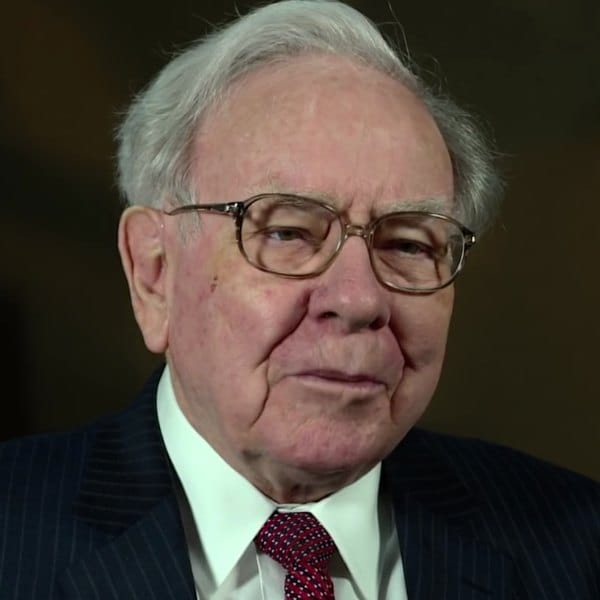
Introduction: What do you need to know about the 2016 meeting?
TL;DR: The key numbers of the 2016 meeting, Berkshire’s share price against the market, the people on stage and the key takeaways for long-term investors.
- Low-cost index funds beat the helpers. Buffett said active investors as a group pay fees and lag the market. Owners who just hold American business get its full record. After eight years of the hedge fund bet, the Vanguard index fund led by 40-some points. The rival had picked funds of funds with several hundred managers. [02:16:18] [02:17:18] [02:20:50] [02:24:51]
- Size is the enemy of performance. The ideal business grows without capital. Berkshire’s size pushes it into railroads and utilities that need a lot of it. Capital gains from investments and derivatives came to some 32 billion dollars after tax. Buffett said their main use is to buy more businesses. [00:12:37] [00:15:43] [00:16:59] [00:18:38]
“size is the enemy of performance to a significant degree.” (Buffett, [02:32:25]) - Buy back stock only below value. Buffett said buying dollar bills for less than a dollar is the surest way to add value per share. Munger warned against buybacks at any price. Since the Gen Re merger in 1998, shares outstanding rose only 8.2%, while operating earnings grew. [00:09:35] [02:44:05] [02:47:17] [02:47:55]
- Due diligence is about economics and people. Buffett said the real risks are the basic economics and the manager’s character. Small legal details rarely decide a deal. Sellers who join Berkshire want its culture. [03:28:15] [03:29:16] [03:30:13]
“When they sold their businesses to us, they wanted to join that culture.” (Buffett, [02:30:55]) - Emotional control beats a high IQ. Buffett said Berkshire swings only at pitches in its strike zone. Very smart people still do very stupid things. He learned by watching why some businesses work and some do not. [00:27:40] [03:22:04] [03:23:19]
“I spent a lifetime, you know, looking at businesses and why some work and why some don’t work.” (Buffett, [03:21:09]) - Reward exactly what you want. GEICO pays on growth in policies and profit on seasoned business. Munger said you get what you reward for. [04:03:26] [04:05:01] [04:12:40]
- Climate risk is real but priced yearly. Buffett agreed climate change is important. He said the insurers reprice each year, so the proposal does not fit the business. It got 69,114 votes for and 531,724 against. The 2016 meeting was webcast for the first time and translated into Mandarin. [00:00:54] [05:03:06] [05:04:01] [05:08:19] [05:23:02]
Precision Castparts · BNSF · GEICO · Kraft Heinz (KHC) · Lubrizol · Van Tuyl · NV Energy · Sequoia Fund · Valeant
Berkshire Hathaway Energy · MidAmerican Energy · General Re · National Indemnity · Berkshire Hathaway Reinsurance · Berkshire Hathaway Specialty · Duracell · Nebraska Furniture Mart · See’s Candies · XTRA · Union Tank Car · Procor · Applied Underwriters · Buffalo News
Munich Re · Swiss Re · Progressive (PGR) · State Farm · Amazon (AMZN) · Coca-Cola (KO) · Wells Fargo (WFC) · Bank of America (BAC) · American Express (AXP) · IBM (IBM) · Phillips 66 (PSX) · Kinder Morgan (KMI) · Seritage Growth Properties · Walmart (WMT) · Canadian Pacific (CP) · Norfolk Southern (NSC) · Canadian National (CNI) · 3G Capital · Vanguard · Procter & Gamble (PG) · General Mills (GIS) · Capital Cities · Salomon
in five guides




How did Warren Buffett open the first webcast meeting?
TL;DR: Buffett welcomed viewers of the first webcast, introduced the directors and showed first quarter results. Operating earnings rose since 1999 while the share count barely changed.
Warren Buffett [00:00:02] Good morning. I’m Warren Buffett, this is Charlie Munger. I’m the young one. And you may notice in the movie, incidentally, that Charlie is always the one that gets the girl. And he has one explanation for that, but I think mine is more accurate, that, as you know, every mother in this country tells her daughter at an early age, if you’re choosing between two very old and very rich guys, pick the ones that’s older. (Applause)
I’d especially… We’re webcasting this for the first time, so I’d especially like to welcome our visitors from all over the world. We’re having this meeting simultaneously translated into Mandarin, and that poses certain problems for me and Charlie because I’m not sure how sensible all our comments will come out once translated into Mandarin. In fact, not so sure how sensible they come out initially sometimes. But we’re delighted to have people around the world joining us now.
The drill today is that I’ll make a couple of introductions and we’ll show a couple of slides, and then we’ll go on to questions from both our two panels and from the audience. We’ll rotate them, and we’ll do that until about noon. Actually, about a quarter of 12, I’ll give you a rundown on a bet that was made that we report on every year, but then also, in connection with that, explain, and it ties in with it, what I really think is probably the most invest… important investment lesson in the world. So we’ll have that about a quarter of 12, and I hope that keeps you around. And then we’ll break at noon for an hour for lunch, we’ll reconvene at 1 o’clock, we’ll proceed until 3:30 with questions, we’ll then adjourn for 15 minutes, and at 3:45 convene the formal meeting.
I’d like to just make a couple of introductions. I hope Carrie Sova is here. Do we have a spotlight? Carrie puts this whole meeting together. There she is, Wonder Woman. (Applause) Carrie joined us as a receptionist about six years ago, and I just kept throwing more and more problems at her, and she put together the 50th anniversary book, which we’ve actually expanded further this year. We have a revised edition. Charlie and I autographed 100 of them. We interspersed them among the group being sold. And Carrie, while doing that, she also had a young baby girl, her second baby, late in January. But then she’s gone ahead to put on this whole annual meeting. It’s a remarkable achievement, and I really want to thank her. It’s been terrific. (Applause)
Actually, we have one surprise guest. I think my youngest great-grandchild will be about seven months old, is also here today. And if he happens to break out crying a lot, don’t let it bother you. It’s just his mother’s explaining to him my views on inherited wealth.
And we also have our directors with us, and they’re here in the front row. I’ll introduce them, if they’ll stand when introduced. Withhold your applause no matter what, how extreme the urge to applaud them individually, and when we finished, then you can go wild. First of all, Howard Buffett, Steve Burke, Sue Decker, Bill Gates, Sandy Gottesman, Charlotte Guyman, Tom Murphy, Ron Olson, Walter Scott, and Meryl Witmer. And that’s our wonderful group. (Applause)
Now, we just have two slides to show you. Now, the first one is a preliminary summary, figures for the first quarter, and you’ll notice that insurance underwriting, these are after-tax figures by category, are down somewhat. The basic underwriting at GEICO is actually improving, but we had some important hail storms in Texas toward the end of the quarter. We’ve actually had some since the end of the quarter, too. So there were more cat losses in the first quarter than last year. And the railroad earnings are down significantly. And railroad car loadings throughout the industry, all of the major railroads, were down significantly in the first quarter and probably will continue to be down, almost certainly will continue to be down, the balance of the year.
We have two companies which we added to the manufacturing, service and retailing field, Precision Castparts and Duracell, but they were added during the quarter, so their full earnings aren’t shown in the figures. In the other category we have… I don’t like to get too technical here, and you should read the 10-K, one, or 10-Q, when it comes out next weekend. But when we borrow money in other currencies, and the only currency we’ve done that with is the euro, but we have a fair amount of money that we borrowed in euros, and the nature of accounting is that the change in value, the foreign exchange change in value each quarter, is actually shown in interest expense. So if the euro goes up, we have a lot of extra interest expense. They’re shown that way. It’s not a realized factor, but it moves from quarter to quarter. And if the euro goes down, it offsets interest expense. It’s a technicality to some extent, because we have lots of assets in Europe, and they’re expressed in euros. When they go up, it does not go through the income account, it goes directly to other comprehensive income. So I just… that figure, which looks a little unusual, that’s the reason for it.
And we always urge you to pay no attention to the figures below operating earnings, that they will bounce around from quarter to quarter, and we make no attempt to manage earnings in any way to have them be smoother. We could do that very easily, but it’d be ridiculous. We make investment decisions solely on the basis of what we think the best investment decision is, not on the basis of how it will affect earnings in any quarter or in any year. And in the first quarter we exchanged… We completed a transaction that was begun over a year ago, whereby we exchanged our Procter & Gamble stock for cash and for Duracell, and that accounts for the large, largely accounts for the large capital gain in the quarter. So those are the figures for the first quarter.
And then to illustrate what we’re sort of all about here, I put up a second slide. And I started this slide in 1999, the reason being that at the end of 1998 we affected a large merger with General, and at that point we sort of entered a different era. After 1998, merger with Gen Re, had a little over 1,500-and-some thousand A-equivalent shares out. And our shares, up to that point, we’d increased the outstanding shares by more than 50% in the, over the 30-some years receiving that point. Since that time, as I note here, we’ve only increased the number of shares over the next 17 years, we’ve only increased the shares outstanding by 8.2%. So these figures represent a fairly unchanged share count since that point, whereas the share account had changed quite a bit before.
And as you’ll note, in terms of operations, I’ve told you that our goal at Berkshire is to increase the normalized earnings, operating earnings, every year. And I’ve said sometimes it’ll, we hope it’ll only be, it’ll turn out to be only a little bit, and sometimes we can get some fairly decent jumps, but that’s the goal. Now, earnings will not increase every year, because there’s such a thing as a business cycle, and in times of recession we’re going to earn less money, obviously, than in times when things are much better overall. And on top of that, we’re heavily in an insurance business, and earnings there can be quite volatile because of catastrophes.
And this chart shows you what’s happened to the operating earnings since that time, again pointing out that shares outstanding have gone up very little during that period. You’ll notice in 2001, when we suffered significant insurance losses due to 9/11, we actually were in the red in terms of operating earnings. And you’ll notice the figures are very irregular, but over time, by adding new subsidiaries, by further developing the businesses we have, by bolt-on acquisitions, by reinvestment of retained earnings, the earnings have moved up in a very irregular fashion, quite substantially.
I put in also the capital gains we’ve achieved through investments and derivatives, and they total some $32 billion after tax, close to $50 billion pre-tax. Those are not important in any given year. Those numbers can go all over the place. The main advantage, from my standpoint, in that $32 billion is it gives us money to buy other businesses. What we really want to focus on, what we hope is that, and what we hope is that the bigger, under operations five or 10 or 20 years from now grows substantially, partly because we retain earnings from operations, partly because our operations improve in their own profitability, partly because they make bolt-on acquisitions, partly because we have gains from securities which enable us to buy even more businesses.
But we don’t manage, as you know, we don’t manage to try to get any given number from quarter to quarter. We never make a forecast on earnings. We don’t give out earnings guidance. We think it’s silly that we do not have budgets at the parent company level. Most of our subsidiaries have budgets, but they don’t submit them, or they’re not required to submit them, to headquarters. We just focus day after day, year after year, decade after decade, on trying to add earning power, sustainable and growing earning power, to Berkshire. So that’s a quick summary.
Now we’ll move on to the questions. I just asked with the audience that you limit your question to one question. The multiple questions have a way of sneaking in occasionally, but so let’s keep them to a single question. We’ll start off with the journalist group on my right, and we’ll start off with the Carol Loomis.
What did they say about capital-heavy businesses and Precision Castparts?
TL;DR: Buffett said size forces Berkshire into businesses that need more capital. He praised Mark Donegan of Precision Castparts and said he could not be happier at 85.
Why does Berkshire now buy capital-heavy businesses?
CLCarol Loomis [00:14:41] Good morning. I’ll make my very short little speech about the fact that the journalists, and the analysts too, have given Charlie and Warren no hint of what they’re going to ask, so they will be learning for the first time what that’s going to be. Also, this question comes from Eli Moises. “In your 1987 letter to shareholders, you commented on the kind of companies Berkshire like to buy, those that required only small amounts of capital. You said, quote, ‘Because so little capital is required to run these businesses, they can grow while concurrently making almost all of their earnings available for deployment in new opportunities.’ Today, the company has changed its strategy. It now invests in companies that need tons of capital expenditures, are over-regulated, and earn lower returns on equity capital. Why did this happen?”
Warren Buffett [00:15:43] Yeah, well, it’s one of the problems of prosperity. The ideal business is one that takes no capital but yet grows. And there are a few businesses like that, and we own some. But we are not able, we’d love to find one that we could buy for $10 or $20 or $30 billion that was not capital intensive, and we may, but it’s harder. And that does hurt us in terms of compounding earnings growth, because obviously if you have a business that grows and gives you a lot of money every year and doesn’t take it, it isn’t required in its growth, you know, you get a double-barreled effect from the earnings growth that occurs internally without the use of capital, and then you get the capital it produces to go and buy other businesses. And See’s Candy was a good example of that. I’ve used that. Back when the newspaper business was good, our Buffalo newspaper, for example, was a good example of that. The Buffalo newspaper was making at one time $40 million a year and had no capital requirements, so we could take that whole $40 million and go and do, go buy something else with it.
But capital, increasing capital, acts as an anchor on returns in many ways, and one of the ways is that it drives us into, just in terms of availability, it drives us into businesses that are much more capital intensive. You just saw a slide, for example, on Berkshire Hathaway Energy, where we just announced, just in the last couple of weeks, we announced a $3.6 billion investment coming up in wind generation, and we pledged overall to have $30 billion in renewables. Anything that Berkshire Hathaway Energy does, anything that BNSF does, takes lots of money. We get decent returns on capital, but we don’t get the extraordinary returns on capital that we’ve been able to get into some of the businesses we require that are not capital intensive. As I mentioned in the annual report, we have a few businesses that actually earn 100% a year on true invested capital. And clearly that’s a different sort of operation than something like Berkshire Hathaway Energy, which may earn 11% or 12% on capital, and that’s a very decent return, but it’s a different sort of animal than the business, the very low capital intensive, intensity. Charlie?
Charlie Munger [00:18:31] Well, when our circumstances changed, we changed our minds slowly and reluctantly.
In the early days, quite a few times, we bought a business that was soon producing 100% per annum. I know we paid for it, and didn’t require much reinvestment. If we’d been able to continue doing that, we would have loved to do it. But when we couldn’t, we went to Plan B. And Plan B is working pretty well. And in many ways, I’ve gotten so I sort of prefer it. How about you, Warren?
Warren Buffett [00:19:04] Yeah, that’s true. And when something’s forced on you, might as well prefer the… Yeah, the… But it, I mean, we knew that was going to happen. And the question is, does it prod, does it lead you from what looked as a sensational result to a satisfactory result? And we don’t, we’re quite happy with the satisfactory result. The alternative would be to go back to working with very tiny sums of money, and that really hasn’t gotten a lot of serious discussion between Charlie and me. OK, from the analyst group, Jonathan Brandt.
What makes Precision Castparts worth a high price?
JBJonathan Brandt [00:19:44] Hi Warren, thanks for having me again.
Warren Buffett [00:19:46] Thanks for coming.
JBJonathan Brandt [00:19:48] My first question is about Precision Castparts. Besides your confident, Precision Castparts, besides your confidence in its talented CEO Mark Donegan, what in particular do you like about their business that gave you the confidence to pay a historically high multiple? Are there ways Precision can be even more successful as an essentially a private company? For instance, are there long-term investments to support client programs or acquisitions that Precision can make now that they couldn’t realistically have done as a publicly traded entity?
Warren Buffett [00:20:23] Yeah, we completed the acquisition of Precision Castparts at the end of January this year. We agreed to, we made the deal last August. And you covered the most important asset in your question, Mark Donegan, who runs Precision Castparts, as an extraordinary manager. I mean, we’ve seen very… Charlie and I have seen a lot of managers over the years, and I would almost rank Mark is one of a kind. I mean, he is doing extremely important work in terms of making, primarily making aircraft parts.
I would say that there are certainly no disadvantages to him to be working as a, and for that company to be a subsidiary of Berkshire and not be a public company. And I think he would say, and I think Charlie and I would agree with him, that over time there could be some significant advantages. For one thing, he can spend 100% of his time now on figuring out better things to do with aircraft engines, and it was always his first love to be thinking about that. And he did spend most of his time, but he also had to spend some time, you know, explaining quarterly earnings to analysts and perhaps negotiating bank lines and that sort of thing. So his time, like all of our managers, can be spent exactly on what makes the most sense to them in their business. Mark does not have to come ever to Omaha to put on some show for me in terms of justifying a billion-dollar acquisition or planned investment. He weighs, doesn’t have to waste his time on anything that isn’t productive. And running a public company, you do waste your time on quite a bit of stuff that isn’t productive.
So I would say we’ve taken the main asset of Precision Cast and made it, made him in this case even more valuable to the company. In terms of acquisitions, Precision’s always made a number of them, but as being part of Berkshire, there’s really no limitations on what can be done. So there again, his canvas has been broadened, enlarged, with the acquisition by Berkshire. I see no downside whatsoever. And if he needs capital, he… I’ve got an 800 number. And, you know, he wasn’t paying much of a dividend before, but he doesn’t have to pay any dividend now. And it, Precision Cast will do better, better under Berkshire than it would have independently, although it would have done very, very well independently. Charlie?
Charlie Munger [00:23:25] Yeah, well, in the early days we used to make wise-ass remarks, and Warren would say, we buy a business that an idiot could manage, because sooner or later an idiot will. And we did buy some businesses like that in the early days, and they were widely available. Of course we’d prefer to do that, but the world has gotten harder, and we had to learn new and more powerful ways of operating. A business like Precision Castparts requires a very superior management that’s going to stay superior for a long time. And we gradually have done more and more and more of that. And it’s simply amazing how well it works. I think, to some extent, we’ve gotten almost as good at picking the superior managers as we were in the old days of picking the no-brainer businesses.
Warren Buffett [00:24:24] Yeah, we would love to find, we won’t be able to find them, because they’re very rare birds, but we would love to find another three or four of a similar type to Precision Castparts, where they forever are going to be producing something that, where quality is enormously important, where the customers depend very heavily on them, when there’s contracts that extend over many years, and where people don’t simply just take the low bid in order to get this gadget of one sort or another. It’s very important that you have somebody there that has enormous skill running the business, and their reputation among aircraft manufacturers, you know, it’s absolutely unparalleled.
OK, now we go to the audience, and we’ll go up to section 1. And if you’ll give your name and where you’re from, I’d appreciate it.
What would they do differently in the search for happiness?
[00:25:27] Shareholder (Gaspar, London): Hi, good, good morning. My name is Gaspar. I’m Spanish and I come from London. I admire you both in many ways, but I would like to know that, when looking backwards, what would you have done differently in life in your search for happiness?
Warren Buffett [00:25:46] Well, I’m 85, and I can’t imagine anybody any happier than I am. So I, by accident or whatever, I still, I mean, you know, I mean, I’m sitting here eating exactly what I like to eat, doing it in life exactly what I love to do, with people I love. So it really doesn’t get any better than that. And I… (Applause)
I did decide fairly early in life that my favorite employer was myself. And that, I think that presented, I’ve managed to avoid them, really, aggravation of almost any sort, really. You know, if you or those around you that you love have health problems or something, I mean, that is a real tragedy, and there’s not much you can do about it, accept it, but accept it. But Charlie and I have really been blessed. I’m here, Charlie is 92, 85, and he’s doing every day something that he finds fascinating. You know, he, I think he probably finds what he is doing at 92 as interesting, as fascinating, as rewarding, as socially productive, you know, as any period you can pick in his life. And so we’ve been extraordinarily lucky. We’ve been, you know, it, we’re lucky it’s a partnership. It’s more fun doing things as a partnership. So I’ve got no complaints. It’d be very surely should be to have any kind of complaint. And I would say, if you’re talking about business life, I don’t think I would have started with a textile company. Charlie?
Charlie Munger [00:27:40] Well, looking back, I don’t regret that I didn’t make more money or become better known or any of those things. I do regret that I didn’t wise up as fast as I could have. And, but there’s a blessing in that too. Now that I’m 92, I still have a lot of ignorance left to work on.
Warren Buffett [00:28:12] OK. Becky Quick.
How do they see reinsurance, GEICO and Amazon?
TL;DR: Buffett said reinsurance will likely be worse for the next ten years, with more supply than demand. He expects GEICO to pass State Farm one day and called Amazon’s rise a huge trend.
Why sell Munich Re but keep Berkshire’s reinsurers?
 Becky Quick [00:28:14] This question comes from Solomon Ackerman, who’s in Frankfurt, Germany. He wants to know why Berkshire has significantly sold down their holdings in Munich Re, which is the world’s biggest reinsurance company, based in Germany, while sticking with the reinsurance operations within Berkshire, like Berkshire Hathaway, Berkshire Hathaway Reinsurance and General Re. “Would you reduce exposure to Berkshire Hathaway Reinsurance and General Re if they were listed companies?” And he’s hoping that this can bring out some of your insights as to what’s happening in the reinsurance business right now.
Warren Buffett [00:28:47] Yeah, we, I said in the annual report that I thought it was very likely that the reinsurance business would not be as good in the next 10 years as it has been in the last 10 years. I may be wrong on that, but that’s just a judgment based on seeing the contem… competitive dynamics of the reinsurance business now versus 10 or 20 years ago. Both Munich, we sold in our entire holdings, which were substantial, of Munich Re and Swiss Re. We owned about 3% of Swiss Re, and we own more than 10% of Munich Re. And last year we sold those two holdings. They’re fine companies. They’re well-managed companies. I like the people that run them. I think their business, the business of the re-insur… insurance companies generally, is less attractive for the next 10 years than it has been for the last 10 years.
In part, that’s because what’s happened to interest rates. A significant portion of what you earn in insurance comes from investment of the float. And both of those companies, and for that matter almost all of the reinsurance industry, is somewhat more restricted in what they can do with their float, because they don’t have this huge capital that Berkshire has, and also because they don’t have this great amount of unrelated earning power that Berkshire… Berkshire has more leeway in what it can do, simply because it does have capital that’s many times what its competitors have. And it also has earning power coming from a whole variety of non-divers…, of unrelated areas, unrelated to insurance. So it was not a negative judgment in any way on those two companies. It was not a negative judgment on their managements. But it was at least a mildly negative judgment on the reinsurance business.
Now, we have the ability at Berkshire to actually rearranged… To a degree, we are certainly affected by industry factors, but we have more flexibility in modifying business models, and we’ve operated that way over the years in insurance generally and in particularly in reinsurance. So a Munich, a Swiss, all the major reinsurance companies except for us, is pretty well tied to a given type of business model. They don’t really have as many options in terms of where capital gets deployed or something. They have to continue down the present path. And I think they’ll do fine. But I don’t think they will do as fine in the next 10 years as they have in the last 10. And I don’t think, if we played the same game as we were playing the last 10, we would do as well. But we do have considerably more flexibility in terms of how we conduct all of our insurance operations, but particularly in reinsurance. We have an extra string to our bow that the rest of the industry doesn’t have.
The amount of capital that’s come in to the reinsurance business, you know, it is no fun running a traditional reinsurance company and having money come in, particularly if you’re in Europe, and have money come in and look around you for investment choices and find out that a great many of the things that you were buying a few years ago now have negative yields. That the whole idea of float is that it’s supposed to be invested at a positive rate, and a fairly substantial positive rate. And that game has been over for a while, and it looks like it will be at least unattractive, if not terrible, for a considerable period in the future. Charlie?
Charlie Munger [00:33:10] Yeah, you know, there’s a lot of new capacity and reinsurance, and there’s a lot of very heavy competition. A lot of people from finance have come over into reinsurance, and all the old competitors remain too. That’s different from Precision Castparts, where most of the customers would be totally crazy to hire some other supplier, because Precision Castparts is so much more reliable and so much better. Of course we like the place with more competitive advantage. We’re learning the…
Warren Buffett [00:33:50] To put it in terms of Economics 101, and that, basically, in reinsurance, supply has gone up and demand has not gone up. And some of the supply is driven by investment managers who would like to establish something offshore where they don’t have to pay taxes. And reinsurance is sort of the easiest beer, what you might call beard, behind which to actually engage in money management in a friendly tax jurisdiction. And you can set up a reinsurance operation with very few people by taking large chunks of what brokers may offer. It’s not the greatest reinsurance in the world, and a couple of the operations that have done that have proven that statement to be right. But nevertheless, it is a very, very easy way to have a disguised investment operation in a friendly tax jurisdiction. But that becomes supply in the reinsurance field. And supply has gone up relative to demand, and it looks to me like that will continue to be the case. And couple that with the poor returns on float, and it’s not as good a business as it was. Now we’ll talk to an insurance man about it. Cliff Gallant.
Why is GEICO growing slower than Progressive?
CGCliff Gallant [00:35:14] Thank you. In terms of growth and profitability, GEICO really got whooped by Progressive Direct over the last year. In 2015, Progressive Direct auto business group policy count by 9.1%, GEICO only 5.4%. And in terms of profitability, the combined ratio at Progressive was a 95.1 and GEICO’s was a 98.0. Is this evidence that, that it, Progressive’s investments in technology like Snapshot, investments that GEICO has spurned, is it making a time and diffic… making a difference in a time of difficult loss trends? Why is GEICO suddenly losing to Progressive Direct?
Warren Buffett [00:35:49] Yeah, well, I would say this. Over the last, well, I forget what year was we passed Progressive, and what year was we passed also, but GEICO’s growth rate in the first quarter was not as high as in the past couple of first quarters, but it was quite satisfactory. Now, the first quarter is by far the best quarter for growth. But last year, both frequency, how often people had accidents, and severity, which is the cost per accident, in other words just how much those accidents cost you, both of those went up quite suddenly and substantially. And a Progressive figure showed that they were hit by that less than Allstate and GEICO and some others. But I don’t think you’ll see necessarily those same trends this year. The, it’s an interesting thing. Last year, for the first time in I don’t know how many years, the number of deaths in auto accidents per 100 million miles went up. Now, if you go back to the mid-1930s, there were almost 15 people killed per 100 million miles driven. It got down to just slightly over one. From 15 to 1.
You had almost as many, we had roughly as many people killed in auto accidents in the mid-1930s, about 30, 32, 33,000 a year, as we had last year or the year before, when people drove almost 15 times as many miles. Cars have gotten far, far, far, far safer. And it’s a good thing, because if we had the same rate of deaths from auto accidents as we had in the ’30s, relative to miles driven, we would have had over a half a million people die last year from auto accidents, instead of a figure closer to 40,000. But last year, for the first time, there was more driving, and I think there was more distracted driving. So you really had this uptick in frequency and, more important, in severity.
GEICO has adjusted its rates. As I mentioned, my own prediction would be that the underwriting margins at GEICO will be better this year than last year, although you never know when a catastrophes are coming along. March and April event a lot of cat activity. I made a bet a long time ago, a mental one, on the GEICO model versus the Progressive model. And as I say, they were significantly ahead of us in volume a few years back, and we passed them, and we passed Allstate. And as I put in the annual report, I hope on my 100th birthday that the GEICO people announced to me that they passed State Farm. But I have to do my share on that too, by getting to 100. So we’ll see what happens on that particular one. Charlie?
Charlie Munger [00:39:37] Well, I don’t think it’s a tragedy that some competitor got a little better ratio for one period. It, GEICO’s quadrupled its market share since we bought all of it.
Warren Buffett [00:39:55] Quintupled.
Charlie Munger [00:39:55] Yeah, quintupled. All right. I don’t think we should worry about the way somebody else had a good quarter. (Applause)
Warren Buffett [00:40:07] I think it’s far more sure that GEICO will pass State Farm someday then I’ll make it to 100. I’ll put it that way. OK, we’ll go to the shareholder from station 2.
How will the shift to pull marketing affect Berkshire?
[00:40:26] Shareholder (Norman Rentrop, Bonn, Germany): Greetings to all of you from the Midwest of Europe. I am Norman Rentrop from Bonn, Germany, a shareholder since 1992. My question is about the future of salesmanship in our companies. Warren, you have, or have always demonstrated a heart for direct selling. When we met you in the midst of a tornado warning in the barber shop, you immediately offered to write insurance for us.
Warren Buffett [00:41:06] That’s true. Now, they were all huddled down there in the barbershop, and there wasn’t going to be any tornadoes. So I told them, if they give me a dollar, I’d, they can go upstairs, and if anything happened, to my pam is, I forget, a million dollars or something of the sort.
[00:41:29] Shareholder (Norman Rentrop, Bonn, Germany): Now we see, with the rise of Amazon.com and others, a shift from push marketing to pull marketing, from millions of catalogues having been sent out in the past to now consumers searching on what they are looking for. What is your take on how this shift from push to pull marketing will affect our companies?
Warren Buffett [00:41:55] Well, Norman, the development you refer to is huge. I mean, really huge. And it isn’t just Amazon, but Amazon is a huge part of it. And what they’ve in a, accomplished a fairly short period of time, and continue to accomplish, is remarkable, the number of satisfied customers they’ve developed. Then we don’t make any decision, involving even the manufacturing of goods, the retailing, whatever it is, without thinking long and hard about what the world will look like in five or 10 or 20 years with that powerful trend, really hugely powerful trend, that you just described. So we’re not, we don’t look at that as something where we’re going to try and beat them at their own game. You know, they’re better than we are at that. And so Charlie and I are not going to out-Bezos Bezos by a long shot. But we are going to think about that.
It does not worry us, obviously, with the Precision Cast, but it doesn’t worry us in terms of the overwhelming majority of our businesses. But it is a huge economic trend that 20 years ago was not on anybody’s radar screen, and lately has been on everybody’s radar screen. And many of them have not, including us in a few areas, have not figured the way to either participate in it or to counter it. The GEICO is a good example of a company that, in an industry that had to adjust to change, and some people made the change better than others. We were slow on the internet. The phone had worked so well for us, and this traditional advertising and the phone had worked so well that, you know, there’s always a resistance to think about new possibilities. When we saw what was happening on the internet, we jumped in with both feet, and, you know, with mobile and whatever.
But there are capital, the nature of capitalism is somebody’s always trying to, if you’ve got some, a good business, they’re always trying to figure out how to take it away from you and improve on it. And the effect, I would say, just of Amazon, but others that are playing the same game, the effect on industry, the full effect, is far from having been seen. I mean, it is a big, big of force, and it will, it already has disrupted plenty of people, and it will disrupt more. I think Berkshire is quite well situated.
For one thing, we, one big advantage we have, is we didn’t ever see ourselves as starting out in one industry. I mean, we didn’t go into, we went into department stores, but we didn’t think of ourselves as depart…, I didn’t think of ourselves as steel guys or tire guys or anything that sort of. So we’ve thought of ourselves as having capital to allocate. If you start within a given industry focus, and you spend your whole time working on a way to make a better tire or whatever it may be, I think it’s hard to have the flexibility of mind that you have if you just think you have a large, hopefully large and growing, pile of capital, and trying to figure out what is the best next, best, best next move that you can make with that capital. And I think we do have a real advantage that way.
But I think the fellow that, I think Amazon’s got a real advantage too. And this intense focus on having, you know, hundreds of millions of generally very happy customers, getting very quick delivery, is something that they, they want to get promptly, and they want to shop the way they shop, and they, and if I owned a bunch of shopping malls or something like that, that would be, I would be thinking plenty hard about what they might look like 10 or 20 years from now. Charlie?
Charlie Munger [00:46:33] Well, I would say that we failed so thoroughly in retailing when we were young that we pretty well avoided the worst troubles when we were old. I think net Berkshire has been helped by the internet. The help of GEICO has been enormous, and has, it’s contributed greatly to the huge increase in market share. And our biggest retailers are so strong that they’re, they’ll be among the last people to have troubles from Amazon.
Warren Buffett [00:47:09] I didn’t get that dollar from you, Norman, actually, that after I gave you that wonderful advice. Andrew?
What did they say about Coca-Cola, renewables and bank derivatives?
TL;DR: Buffett defended Coca-Cola and explained why tax credits drive wind power. He said derivatives make banks hard to analyze and Berkshire avoids collateralized contracts.
What about the health effects of Coca-Cola?
ASAndrew Ross Sorkin [00:47:18] Thank you, Warren. Great to see you today. Got a lot of questions on this particular topic, and this question is a particularly pointed one. “Warren, for the last several years at this meeting, you’ve been asked about the negative health effects of Coca-Cola products, and you’ve done a masterful job dodging the question by telling us how much Coke you drink personally. Statistically, you may be the exception. According to a peer-reviewed study by Tufts University, soda and sugary drinks may lead to 184,000 deaths among adults every year. The study found that sugar-sweetened beverages contributed to 133,000 deaths from diabetes, 45,000 deaths from cardiovascular disease, 6,450 deaths from cancer.” Another shareholder wrote in about Coke, noted that you declined to invest in the cigarette business on ethical grounds, despite one saying, quote, “It was a perfect business, because it costs a penny to make, sell it for a dollar, it’s addictive, and there’s fantastic brand loyalty.” “Again, removing your own beverage consumption from the equation, please explain directly why we Berkshire Hathaway shareholders should be proud to own Coke.”
Warren Buffett [00:48:32] Yeah, I think people confuse, you know, the amount of calories consumed. I mean, I happen to elect to consume about 700 calories a day from Coca-Cola, so I’m about one-quarter Coca-Cola, roughly. I’m, but, not sure which quarter. I’m not sure we want to pursue the question. The… But I think if you decide that sugar generally is something that the human race shouldn’t have… I think the average person confused, assumes like 150 pounds of dash, dry white sugar here, 125 pounds. I mean, you know, it, what’s in Coca-Cola, largely, the more, the calories come from is sugar. I elect to get my 2,600 or 2,700 calories a day from things that make me feel good when I eat them. And that’s been my sole test. That wasn’t a test that my mother necessarily thought was great, or my grandfather.
But there are over 1.9 billion 8-ounce servings of some Coca-Cola drink. Now, they have an enormous range of products. You know, I mean, have a few that are called Coke, Diet Coke, Coke Zero and that sort of thing, but they have literally thousands of products. 1.9 billion, that’s, was a six, 693.5 billion 8-ounce servings a year, except it’s a leap year. That’s almost a hundred, a hundred 8-ounce servings per capita for 7 billion people in the world every year. And that’s been going on since 1886.
And I would find quite spurious the fact that somebody says, if you’re eating 3,500 or so calories a day and you’re consuming 2,700 or 2,800, and some of the 3,500 is Coca-Cola, to lay it, any particular obesity-related illnesses, on the Coca-Cola you drink. It, you have the choice of consuming more than you use. I mean, and I make a choice to eat, or to get 700 calories from this. I like fudge a lot, peanut brittle. And I am a very, very, very happy guy. And I don’t know, I think I, and I’m serious about this, I think if you were happy every day, you know, it may be hard to measure, but I think you’re going to live longer as well. So there may be a compensating factor.
And it, I really wish I’d had a twin, and that twin had eaten broccoli his entire life, and we both consumed the same number of calories. I’m, I know I would have been happier, and I think the odds are fairly good I would have lived longer if I… I do, I think Coca-Cola is a marvelous product. You know, I mean, it, if you consume 3,500 or 4,000 calories a day and live a normal life in terms of your metabolism, you know, something’s going to go wrong with your body at some point. But if you keep, I think if you balance out the calories so that you don’t become obese, I do, I have not seen evidence that convinces me that, you know, I’ll make it, I’m, it’ll be more likely I reach 100 if I suddenly switch to water and broccoli.
Incidentally, a friend of mine, Arjay Miller, a remarkable man, born about 100 miles from mayor of west, eighth child, near Shelby, Nebraska. He said Shelby’s population was 596, and it never changed, because every time some girl had a baby, a guy had to leave town. It was a very stable… But Arjay went on to be president of Ford Motor Company, from this farm near Shelby. And he had his 100th birthday on March 4th of this year. So I went out to see Arjay for his birthday on March 4th, and Arjay told me that there were 10,000 men in the United States that lived to be 100 or greater, and there were 45,000 women that were 100 or greater. So I came back and I checked that on the internet. I went to those census figures, and sure enough, that is the ratio. There’s 10,000 men over 100, roughly, and 45,000 women. So if you really wanna improve your longevity prospects, I mean, the guy in my position, you have a sex change. I mean, you know, you’re four and a half times more likely to get to be 100. That sounds like one of those studies that people put out now. It’s just a matter of fact, folks. I think I’ll have Charlie go first, though, on that one. Charlie, you have any comments?
Charlie Munger [00:54:16] Well, have some fun. I like, I like the peanut brittle better than that, but I drink a lot of Diet Coke. And I think the people who ask questions like that one always make one ghastly error that’s really inexcusable. They measure the detriment without considering the advantage. Well, that’s really stupid. That’s like saying we should give up air travel through airlines because 100 people die a year in air crashes or something. That would be crazy. The benefit is worth the risk. And if every person has to have about eight or ten glasses of water every day to stay alive, and it’s pretty cheap and sensible and improves life to add a little extra flavor to your water and a little stimulation and a little calories, if you want to eat that way, there are huge benefits to humanity and that, and it’s worth having some disadvantage. We ought to have almost a law, in the editorial, I’m sounding like Donald Trump, where these people shouldn’t be allowed to cite the defects without signing the offsetting advantage. It’s immature and stupid. (Applause)
Warren Buffett [00:55:32] OK. Gregg Warren.
How far can renewables grow at Berkshire Energy?
GWGregg Warren [00:55:33] Warren, with both coal-fired and natural gas plants continuing to generate around two-thirds of the nation’s electricity, and renewables accounting for less than 10%, there remains plenty of room for growth at this point. Berkshire Energy, which is invested heavily in the segment, is one of the nation’s largest producers of both wind and solar power, and yet still only generates around one-third of its overall capacity from renewables. As you noted earlier, MidAmerican recently committed another $3.6 billion to wind production, which should lift the amount of electricity it generates from wind to 85% by 2020. You’ve also had the company overall pledging to have around $30 billion in renewables longer term. The recent renewal about the wind and solar energy tax credits has made this kind of investment more economically viable and should clear the path for future investments. Eliminating coal fire plants looks to be the main priority, but natural gas-fired plants are also fossil fuel driven and are exposed to the vagaries of energy prices. Is the endgame here for Berkshire Energy to get 100% of its generation capacity converted over renewables, and what are the risks and rewards associated with that effort? After all, the company operates in a highly regulated industry where rates are driven by an effort to keep customer costs low while still providing adequate returns for the utilities.
Warren Buffett [00:57:01] Yeah, well, I think implicit in what you say is that we do… Any decision we make, including the one that we just showed on this, during the movie, to, on any decision about new generation, changes in generation, has to go through a, what’s usually called the public utility commission. They may have different names in a few states, but the utility industry has overwhelmingly regulated the state level, and we cannot make changes that are not approved by the public utility commission. We’ve had more problems, for example, in bringing in renewables in our western utility, PacifiCorp, because it’s in effect regulated by six states, I believe, in six states, and they don’t necessarily agree on how the costs and benefits should be divided if we put in a bunch of renewables, and we have to follow their instructions.
Iowa has just been marvelous about encouraging, I mean, at every level. I mean, the consumer groups, the governor, you name it, they have seen the benefits. And in Iowa, it’s literally true that we have one major competitor, called the Alliant, and they have not either been able to, I don’t know the reasons, but they have not pursued renewables the way we have. So our rates are considerably lower than theirs. And if you look at their budget projections, although they’re substantially higher rates than we have now, they may well need a rate increase within a year or so. And with our latest expansion, we have said that we will not need a rate increase until 2029 at the earliest, at 13 years off. So there have been great benefits if you have a regulation that works with you on that. But it is a determination that is made at the state level.
Now, the federal government has encouraged in a major way the development of renewables by this production tax credit, which currently amounts to about 2.3 cents per kilowatt hour. We would not have the renewable generation that we have if it hadn’t been for the fact that the building of those projects is subsidized by the federal government, because the benefits of reducing solar emissions, are, our carbon emissions, are worldwide, and therefore it’s deemed proper that the citizenry as a whole should participate in subsidizing the cost of reducing those emissions. And that is encouraged, in fact it’s allowed things like have happened in Iowa as well.
But the degree to which the renewables replace primarily coal, although there’s plenty of emissions connected with natural gas if you trace it all the way through, will depend on governmental policy. And I think so far, I think it’s been quite sensible in encouraging, having the cost borne by society as a whole in terms of reduced tax revenues, and having the benefits, which there’s less CO2 into the atmosphere, they also broadly, you know, they’re not just limited to the people of Iowa when we build that. They, that’s a benefit that accrues to the world. So I think you’ll see continued change. It will vary by jurisdiction. And we would hope, we’ve got the capital, we’ve got loss of taxes, federal taxes paid in our consolidated return, so we’re in a particularly advantageous position to take advantage of massive investments that companies with limited tax appetites couldn’t handle. I think you’ll see us be a very big player, but governmental policy is going to be, you know, the major driver. Charlie?
Charlie Munger [01:02:12] Yeah, I think we’re doing way more than our share of shifting to renewable energy, and we’re charging way lower energy prices to our utility customers than other people. If the whole rest of the world were behaving the way we are, it would be a much better world. I will say this about the subject, though, and that is that I think that the people who worry about climate change is the major trouble of earth don’t have my view. I think that we, I like all this shifting to renewables, but I have a different reason. I want to conserve the hydrocarbons, because eventually I think we’re going to use every drop, humanity, for chemical feedstocks. And so I’m in, I’m in their camp, but I got a different reason.
Warren Buffett [01:03:10] One thing you’ll find, might find kind of interesting. Nebraska’s not done much with wind power. And, well, maybe three miles from, two miles from where we’re sitting, right across the river, people are buying their electricity cheaper in Council Bluffs, right across the river, than they are in Omaha. And yet Omaha, Nebraska is entirely a public power state. So there’s no stockholders who have to have any earnings. The bonds are issued on a tax-exempt basis. And yet electricity is considerably cheaper right across the river. And, you know, the wind blowing doesn’t just start at the Missouri River. I mean, it comes across Nebraska, and that wind could be captured. And so far it really, it really hasn’t.
And the real irony is that because our electricity is so much cheaper in Iowa, you have these massive server farms of people like Google, and it’s become a tech haven for these operations that just gobble up electricity. And Iowa has gotten plant after plant after plant and job after job after job, and increased property tax, I mean, gotten more property tax revenues. And that’s being done, the Google server is probably seven or eight miles from here, and it’s located in Iowa because that we have cheap wind-generated electricity. And it’s great, it’s creating jobs, it’s fascinating. But, but Nebraska has prided itself on public power. It was originated back, I believe, in the ’30s, when George Norris was a very powerful senator here, and it’s been a source of pride, but lately it’s been a source of cost too. OK, shareholder, section 3.
How do they value banks with big derivative books?
[01:05:14] Shareholder (Adam Bergman, Virginia Beach): Good morning, Mr. Buffett and Mr. Munger. My name is Adam Bergman. I’m with Sterling Capital in Virginia, Virginia Beach. In your 2008 shareholder letter, you said, “Derivatives are dangerous. They have made it almost impossible for investors to understand and analyze our largest commercial banks and investment banks.” So my question for you is, how do you analyze and value companies like Bank of America, Merrill Lynch and other commercial banks that Berkshire has investments in, relative to their significant derivative exposures? Thanks.
Warren Buffett [01:06:08] Yeah, derivatives do complicate the problem very dramatically. Now, they are moving away to being collateralized, which helps. But there’s no question that if you ask me to describe the derivative position of the B of A, for example, I would know that they have done a conscientious job and worked hard at properly evaluating. But the great danger in derivatives is if there’s a discontinuity. If there’s not discontinuities, you probably don’t have much of a problem, assuming they get marked to market and collateralized and so on. But if the system stops for a while… The system stopped after 9/11 for three or four days. It stopped at the time of World War I. They closed the New York Stock Exchange for many months. They debated closing the Stock Exchange very seriously the day after October 19th, 1987, and it, it was, there were a lot of people that wanted to close it. But, and on that Tuesday morning, it looked like it was about to stop, but it continued.
But if you had a, if you have a major cyber, nuclear, chemical, biological attack on the country, which will certainly happen at some point, if you have a major discontinuity, then you’ll have a lot of problems, a lot of problems. But you will also, when things reopen, you will find there can be enormous gaps in things that you thought were fully protected by collateral and that sort of thing, or netting arrangements, and that type of thing. So I regard very large derivative position, derivative positions, is dangerous. We inherited a modest size position at January, and in a benign market we lost about $400 million just in trying to unwind it, with no pressure on us whatsoever. So I do think it continues to be a danger to the system.
Charlie Munger [01:08:39] By the way, the accountants blessed that big derivative position as being worth a lot of money. They were only off, what, many hundreds of millions.
Warren Buffett [01:08:49] Yeah, well, Charlie found one position when he was on the audit committee at Salomon. I think it was mismarked by $20 million. And I actually, by happenstance, happened, I do know of one incredibly mismarked position. Doesn’t affect any of our operations, but it almost staggers the mind to know the way that position is marked. And you can only come to the conclusion that some traitor somehow got, you know, influenced whoever did market, or market himself, heaven forbid, and probably just influenced someone, or they didn’t know enough. Some of these things get so complicated, they are very hard to evaluate. That’s the kind that have the most profit in them, usually. So they were quite enthusiastic about those when we were at Salomon. They can be extraordinarily hard to mark. And like I say, I know one that’s, that so much marks, it would blow your mind. And, you know, the auditors, I don’t think, are necessarily capable of holding that behavior in check.
It’s very interesting, because now there’s really four big auditing firms, and obviously they’re auditing companies where there’s a derivative position, and they’re auditing company A that’s on one side of the transaction, and they’re auditing company B that’s on the other side of the transaction. In some cases is the same auditor. And I will guarantee you that there’s plenty of times when the marks on the, what they’re attesting to, are significantly different, which would be an interesting exercise to pursue in terms of checking those numbers out.
Derivatives are still dangerous in large quantities. And we have, we would not do them on a collateralized basis, because if there was a discontinuity, I don’t know exactly where we would end up. And I’m never going to get us in a position where we could be, have money demanded of us and not be able to fulfill it with ease and with me sleeping well. So we won’t engage in it. We’ve got some in runoff, but so far we’ve made money and had the use of money for a decade or more, and it’s been very attractive for us. But that does not entice me at all into doing any derivative transactions that would involve collateral. And collateral is not required. It’s still a potential, a time bomb in the system. Anything where discontinuities, and basically that means closing up, stopping trading markets from functioning, anything where discontinuities can exist can be real poison.
And marcus Kuwait some years ago went to a very delayed system on settlement of stock purchases, so they didn’t have to settle up for six months or thereabouts, and it caused all kinds of problems, because, you know, you’ve got an IOU from somebody for six months, and if you’ve got the zillions of those, a lot of trouble can ensue. So I agree with your general caution. I’m not, I’m not in the least troubled by our Bank of America investment, nor Wells Fargo. We added to Wells Fargo. And our Bank of America position right now is a preferred stock, but we’re very likely to exercise the warrants on that. On the other hand, there are a great number of banks in the world. If you take the 50 largest banks in the world, we wouldn’t even think about probably 45 of them, wouldn’t you say that, Charlie?
Charlie Munger [01:12:31] Well, we’re in the awkward position where I think we’ll probably make about $20 billion out of derivatives and just those few contracts that you and I did years ago. All that said, were different from the banks. We would really prefer it if those derivatives had been illegal for us to buy. We’ve been better for our country.
Warren Buffett [01:12:54] Carol?
How do negative rates, coal and IPOs look to Buffett and Munger?
TL;DR: Buffett said negative rates hurt the value of float. He called the drop in coal at BNSF secular and told children not to envy IPO winners.
What would negative interest rates do to the float?
CLCarol Loomis [01:12:55] This question relates to something that Warren briefly said earlier today. A question comes from Lynn Palmer, who is just finishing her freshman year in a Houston, Texas high school. “My question,” she says, “concerns the float generated by Berkshire’s insurance companies. In Mr. Buffett’s 2015 annual letter, he said that the large amount of float that Berkshire possesses allows the company to significantly increase its investment income. But what happens when interest rates decline? If the U.S. were to implement negative interest rates in the same way that the eurozone and Japan have done, how would Berkshire be affected?”
Warren Buffett [01:13:46] Well, some of our float actually exists in Europe, and where we have the problem of negative interest rates on very high grade short-term and medium, even medium-term bonds. And obviously, anything that reduces the value of having money is going to affect Berkshire, because we’re always going to have a lot of money. We, because we have so much capital and so many sources of earning power, we have the ability, quite properly, to use our float, it in to a certain degree, in ways that most insurance companies can’t think about. So we can find things to do. But sometimes we get, you know, we, about, we’ve got 50-odd billion of short-term government securities now, and we’re going to get another $8.3 billion, in all likelihood, early in June, when our Kraft Heinz preferreds call. So we’ll be back over 60 billion again very soon. And so we’ve got 60 billion out, that’s out at, say, a quarter of 1%. Well, the difference between a quarter of 1% and minus a quarter of 1%, you know, it’s not that great. I mean, it’s almost as painful to have 60 million out of a quarter. Float is not worth as much to insurance companies now as it was 10 years ago or 15 years ago, and that’s true at Berkshire.
I think it’s worth considerably more to us than it is to the typical insurance company, because I think we have a broader range of options as to what to do with it. But there’s no question about it that having a lot of money around now… This is not just a problem for insurance companies. It’s a problem for retirees, it’s a problem for anybody that’s stuck with fixed-dollar investments and finds that their income now is a pittance, or, you know, in Europe, perhaps a negative rate. And that was not something in their calculation at all 15 years ago. We love the idea, however, of increasing our float. I mean, that money has been very useful to us over time. It’s useful to us today, even under present conditions, and it’s likely to be very useful to us in the future. It’s shown as a liability, but it’s actually a huge asset. Charlie?
Charlie Munger [01:16:30] I’ve got nothing to add.
Warren Buffett [01:16:32] Now he’s now at full swing. Jonathan?
Is the railroad slump cyclical or secular?
JBJonathan Brandt [01:16:36] The railroad industries seems right now to be suffering from exposure to some of the weakest parts of the economy, with volume declines of varying magnitudes in coal, oil, sand and metals. Even intermodal, usually a steady source of growth, has been relatively weak of late. How much of the weakness is cyclical, how much is secular? In the last 15 months, the other western railroads’ market capitalization is down by 30, 35% as projections of future growth have come down. Is your estimate of BNSF’s intrinsic value down by a material amount during the same period, or is your view of the value of BNSF’s irreplaceable network unaffected by these short-term wiggles?
Warren Buffett [01:17:34] Well, I would certainly… The decline in coal, which is a very important commodity, is about 20% of revenues, that’s secular. Now, there’s other factors that may cause the line of decline to jiggle around. We had a very mild winter, and we went into the winter with utilities carrying unusual amounts of coal. And ironically, part of the reason was that, for that, was that our service the year before had been bad, and they’d gotten low on coal. So then they compensated by bringing in more than they needed, just to catch up. And because the weather was mild, electricity use was poor in the wintertime. And so they continue at this point to have considerably more coal on hand than they would like. So they are not only, they’re trying to under-order what they will be using, and that has a little effect. But the declining coal, for sure, is secular, and at 20% of revenues, that’s a significant factor.
But, and it’s true that the market generally got very enthused about railroad stocks a year or two ago, so they sold up a lot. And now that people have seen that car loadings are down and earnings are down, in some places, that equity valuations have come down. We don’t, we love the fact we own the BNSF. We think we bought it at an attractive price. We’d love to be able to buy a second thing exactly like it at that price. We’d do it in a second. We’d even pay a little bit more, probably. But we don’t mark up and down our wholly owned businesses based on stock market valuations. Obviously stock market valuations are some factor in our thinking, but we are not marking our wholly owned businesses to market, because we’re going to hold them forever. And we regard the BNSF as a very good business to hold forever. But it will lose coal volume, and, you know, it may lose in other areas, but it will gain in other areas. It’s a terrific and valuable asset, and it will earn a lot of money this year, but it won’t, or as much money as it earned last year. Charlie?
Charlie Munger [01:20:16] I’ve got nothing to add.
Warren Buffett [01:20:18] OK, station 4.
How should children look at stocks and IPOs?
[01:20:19] Shareholder (Cora and Dan Chen, Los Angeles): Hi Warren, hi Warren and Charlie, great to see you. This is Cora and Dan Chen from Taulguard Investments of Los Angeles. This annual meeting reminds me of the magical world of Hogwarts of Harry Potter. This arena is our Hogwarts. Warren, you are our headmaster and Professor Dumbledore.
Warren Buffett [01:20:46] I haven’t read Harry Potter, but I’ll take it as a compliment.
[01:20:53] Shareholder (Cora and Dan Chen, Los Angeles): Charlie is our headmaster Snape, direct and full of integrity. The magic of long-term concentrated value investing is real, yet similar to Harry Potter, the rest of the world doesn’t believe we exist. Your letter to me has changed my life, and your Secret Millionaires Club has changed my children’s life. They go to class chatting about investing. My question is for my children’s watching at home today and the children in the audience. How should they look at stocks when every day in the media they see companies that never made a time of their life go IPO? They’re dilutive, and they see a lot of very short-term spin. The cycle is getting shorter and shorter. How should they view stocks, and what’s your message for them? Finally, Cora and I would love to thank you in person, shake your hand personally today. I’ll repeat what I said last year. Thank you for putting, setting the seeds for my generation to want to sit under shade, and for my children’s generation to sit in the shade with the Secret Millionaires Club. I truly walk amongst giants. Thank you.
Warren Buffett [01:22:34] Would you mind repeating the whole thing? The Secret Millionaires Club, we want to give great credit to Andy Heyward on that. I think it has helped, I know it’s helped thousands and thousands of children. And Andy, it was Andy’s idea, and it grows in strength. And having young children learn good lessons in terms of handling money and making friendships and just generally behaving as better citizens is a, it’s a great objective. And Andy makes it easy for him to do so. I, on his behalf, I accept your comments.
You don’t have to really worry about, you know, what’s going on in IPOs, or people making, my, people win lotteries every day. But there’s no reason to have that effect at all. You shouldn’t be jealous about it. I mean, you know, if they want to do mathematically unsound things, and one of them occasionally gets lucky, and they put the one person on television and the million that contributed to the winnings, with the big slice taken out for the state, you know, don’t get on there. It’s nothing to worry about. Just all you have to do is figure out what makes sense. And you don’t, and you look at buying, when you look, when you buy a stock, you get yourself in the mental frame of mind that you’re buying a business. And if you don’t look at a quote on it for five years, that’s fine. You don’t get a quote on your farm every day or every week or every month. You don’t get it on your apartment house. If you don’t want to be on a McDonald’s franchise, you don’t get a quote every day. You know, you want to look at your stocks as businesses and think about their performance as businesses. Think about what you pay for them as you would think about buying a business. And let the rest of the world go its own way. You don’t want to get into a stupid game just because it’s available. And I’m going to say a little bit more about that close to the break. But with that, I’ll turn it over to Charlie.
Charlie Munger [01:24:44] Yeah, well, I think that your children are right to look for people they can trust in dealing with stocks and bonds. Unfortunately, more than half the time they will fail in a conventional answer. So you, they really have to, they have a hard problem. If you just listen to your elders, they’ll lie to you and make superman spread a lot of following. But they really have an easy problem, but in the, in the sense that American business as a whole is going to do fine over time. So the only way that they can not…
Warren Buffett [01:25:24] The average client of a stock broker… Well, we’ll get to that later.
Charlie Munger [01:25:28] The stock broker will do fine.
Warren Buffett [01:25:30] The, yes, that’s true. Yeah. But they don’t have to do that, and we can talk… Well, I’d rather address that just a little later. But just, you don’t want to worry, you don’t want to be… A lot of problems, Charlie would say, are caused by envy. You don’t want to get envious of somebody who’s won the lottery or bought an IPO that went up. You have to figure out what makes sense and follow your own course. That… Becky.
Why did NV Energy fight rooftop solar, and what about oil and colleges?
TL;DR: Buffett and Greg Abel said 99% of customers should not subsidize the 1% with rooftop solar. Buffett said they cannot predict oil, and Munger doubted college efficiency.
Why did NV Energy push back on rooftop solar?
Becky Quick [01:25:56] This question comes from a shareholder named Elisa Kang Lee in Singapore, and this has to do with NV Energy’s issue with solar energy in Nevada. “Can the chairman help, as environmentally conscious shareholders, understand why NV Energy has lobbied for new rules in Nevada that make it prohibitive for households to use solar energy? Is there a good reason that we haven’t yet heard about? And can the chairman or vice chairman share their views on whether there’s a need to implement an environmental, social and governance policy on Berkshire investments going forward? I understand that Berkshire Hathaway typically lets the underlying operating companies and CEOs manage their own policies autonomously, but should Berkshire’s board influence better environmental protection policies going forward?”
Warren Buffett [01:26:46] Well, the public utility and the pricing policies and everything of in Nevada, as well as other places, but they’re determined by a public utility commission. So there are, I believe, three commissioners that decide what’s proper. The situation in Nevada is that in terms of rooftop power was that of, for the last few years, if you had a solar project on your roof, you could sell back excess power you generated to the grid, and a price that was far, far, far above what we as a utility could buy it for elsewhere. So you could sell it back, we’ll say it roughly 10 cents a kilowatt hour, and about 17,000, maybe a few more now, about 17,000 people had rooftop installations. Now they got, there were federal credits involved, but those usually got sold to other people in terms of tax credits. So they were being subsidized by the federal government, and that encouraged solar generation, as it’s encouraged us to do solar generation and wind generation as well.
But the people who had these 17,000 rooftop installations we’re selling back to the grid at 10 cents roughly a kilowatt hour energy we could purchase, or produce either, but purchase elsewhere too for three and a half cents or thereabouts. So 99% of our consumers were being asked to subsidize the 1% that had solar units by paying them a significantly, a triple the market price basically of what we could otherwise buy by electricity to sell to the 99%. So then it’s just a question of whether you wish to have the 99% subsidize the 1%. And the public utility commission in Nevada, they had originally left this small amount of rooftop solar generation be allowed as an experiment with this 10, roughly 10 cent rebate, and they decided that they did not believe that the 99% should be subsidizing the 1%.
There may, there’s no question that for solar to be competitive, just like wind, it needs subsidization. It, the costs are not yet at a level where it becomes competitive with natural gas, for example. And who pays the subsidy gets to be a real question. If you want to encourage people to use renewables, and in general the federal government has done it through tax subsidies, which mean taxpayers generally throughout the country subsidize it. And the public utility commission in Nevada decided, after seeing this experiment, they decided that it was not right for a million, or well over a million customers to be buying electricity at a price that subsidized these 17,000 people and therefore increase the prices of electricity for the million.
And that question of who subsidizes renewables and how much, you know, is going to be a political question, you know, for a long time to come. And I personally think that if society is the one that’s benefiting from the lack of, of re, reduction of greenhouse gases, that society should pick up the tab. And I don’t think that somebody sitting in a house in some, someplace in Nevada, we’ll call it Las Vegas, but it could be other cities because we serve most of Nevada, should be picking up the subsidy for their neighbor. And the public utility commission agrees with that. I think we have Greg Abel here who, NV Energy is a subsidiary of MidAmerican, of Berkshire Hathaway Energy. Is, Greg, was there anything you want to add? Can we get a spotlight down here maybe? Then it’s not live there. It’s on. I think it’s on now.
Greg Abel [01:31:51] So as usual, Warren, you summarized it extremely well. When we think of Nevada, it’s exactly as you described. We just had a few things. One, as you’ve touched on earlier, we absolutely support renewables. So we start with the fundamental concept that we are for solar. But as you highlighted, we want to purchase renewable energy at the market rate, not at a heavily subsidized rate that 1% of the customers will benefit from and harm the other 99%. And it goes back to being as fundamental as this. If you take, as you touched on, a working family in Nevada who can’t afford the rooftop unit, and you ask them, do you want to subsidize your neighbor, that 1%, the answer is clearly no. At the same time, we’re absolutely committed to Nevada utilizing renewable resources, and absolutely proud of what our team’s doing. By 2019 we’ll have eliminated a, retired 76% of our coal units and be replacing it with solar energy. So we’re on a great path there. Thank you. And we’re just going to encourage our team, and with the work of the, you, the commission and obviously led by the state, we’ll head down a great path. Thank you.
Warren Buffett [01:33:20] Yeah. Yeah. If the projectionist would put up slide 7, it will give you a view of what the situation is. And this counts all of our Berkshire Hathaway Energy operations, and you can see in the 20-year period we’ll have a 57% reduction. You wouldn’t want 100% reduction tomorrow, believe me, the lights would be off all over the country. But it’s moving at a fast pace. But you do, you want to be sure that you treat fairly the people involved in this, because somebody pays the cost of, of a electric generation. And I do think that if you’re doing something that’s to benefit the planet, and it’s important that it be done, but that you have the cost be assessed for that, not on a specific person who’s having trouble perhaps meeting ends meet in their job. And obviously if you got over a million customers in Nevada, a lot of them are struggling, a lot of them are doing fine too, but they are not the ones, in my view, to subsidize the person who could afford to put the solar unit in. Okay, Cliff.
Is Berkshire betting on the price of oil?
CGCliff Gallant [01:34:56] Over the past year we’ve learned, perhaps I’ve learned, that Berkshire’s results are more influenced by oil markets than I previously appreciated. Revenues at the railway company and some of Berkshire’s manufacturing businesses were negatively impacted, and arguably low gas prices hurt GEICO’s loss ratio. Yet during this year Berkshire invested in Phillips 66, Kinder Morgan, and even PCP has revenues associated with the oil and gas industries. I know Berkshire wouldn’t make a bet on a commodity like oil, but is Berkshire making a statement about the long-term outlook for oil?
Warren Buffett [01:35:28] I’m making a statement about what? Oil price?
CGCliff Gallant [01:35:31] Price of oil, yes.
Warren Buffett [01:35:32] No, we haven’t the faintest idea what the long-term price of oil was. And there’s always a better system available. You can buy oil, as you know, for delivery a year from now or two years from now or three years from now. We actually did that once, Charlie, didn’t we, some years back?
Charlie Munger [01:35:51] Too soon.
Warren Buffett [01:35:51] Yeah, we made money, but we could have made a lot more money. But the, we don’t, we don’t think we can predict commodity, two fellows who think we can predict the price of soybeans or corn or oil or anything else. So anything you have seen in our investment transactions, some of the securities you mentioned there were bought by Todd or Ted and one was bought by me, but neither they nor I bought those, or if we sell them, sell them based on commodity price predictions. We don’t know how to do it. But, and we’re thinking about other things when we make those decisions. Charlie?
Charlie Munger [01:36:42] I’m even more ignorant than you are.
Warren Buffett [01:36:46] Well, that’d be hard to be. Okay. I think that’s the first time I’ve heard him say that. Has a nice ring to it. Okay, station 5.
Should philanthropists found new colleges?
[01:36:59] Shareholder (Ken Martin, Tuck School at Dartmouth): Hi, Warren. Hi, Charlie. Hi, I’m Ken Martin. I’m an MBA student from the Tuck School at Dartmouth. My question is about college tuition and the problem of rising student debt balances. In the past, prominent philanthropists have founded institutions that are now prominent research universities in our country. Why is this not a bigger part of today’s philanthropic debate? The founding of new colleges, would not new supply in higher education be at least part of the solution to this problem?
Warren Buffett [01:37:30] Charlie, you want to tackle that? When you’re more of an expert than I am.
Charlie Munger [01:37:36] Yeah, I think if you expect a lot of efficiency, financial efficiency in American higher education, you’re howling at the wind.
Warren Buffett [01:37:45] Well, I think he’s also talking about just more philanthropy to deliver there. Am I right? I want to give him the light back on there and…
[01:37:58] Shareholder (Ken Martin, Tuck School at Dartmouth): Yeah, that’s right.
Charlie Munger [01:37:59] What’s the question again?
Warren Buffett [01:38:01] The question about is maybe whether more philanthropy ought to be devoted to that relatively because of the cost, but…
Charlie Munger [01:38:11] Well, I do a lot more than Warren does in this field, and I’m frequently disappointed. But the monopoly has kind of, and bureaucracy have kind of pernicious effects everywhere, and the universities aren’t exempted from it. But of course they are the glory of civilization, and if people want to give more to it, I’m all for it.
Warren Buffett [01:38:41] Yeah, it, you know, that you’ve got the option of very good state schools, and then we spend a lot of money on education in this country. You know, if you just take, you take kindergarten through 12, it’s interesting, people talk about entitlements in this country, it’s terrible, we have all these entitlements for Social Security and everything. We have entitlements for the young. We spent $600 billion a year educating 50 million kids in the public schools between kindergarten and 12th grade. And just think what that is, is an entitlement. Nobody ever seems to bring that up, but it’s a huge, and I believe in it, obviously. But you know, the people in their working ages, generally speaking, I think have an opera, in a rich society, have an obligation to both the young and the old. And based on the amount we spend, you know, if we have problems with our school system, it’s not because we’re cheap. You know, there are other problems that contribute. In terms of, in terms of the money we put out, we’re right up there.
Charlie Munger [01:40:06] But I was the trustee of a college that saw the endowment go from $8 million to over a billion, and I didn’t see the tuition come down, and I didn’t see the number of students go up. Nothing went up except the professor’s salaries.
Warren Buffett [01:40:26] Yeah, from $8 million to a billion. I mean, and very, very decent people running the place. But when you read the figures on endowment of the big schools, you know, and some of them have really gotten up into big numbers, the main objective of the people running the endowment is have the endowment grow larger. And that will be ever thus. That is the way humans operate. You have any more comments on that, Charlie? You’ve seen a lot.
Charlie Munger [01:40:58] I’ve made all the enemies I can afford at the moment.
Warren Buffett [01:41:03] Okay. That’s never slowed them down in the past. Andrew.
What did they say about politics, railroad mergers and investment banks?
TL;DR: Buffett said America’s businesses have done well under every government. Matt Rose explained why BNSF opposed new rail mergers, and Buffett said Wells Fargo is owned for its banking.
What risks would a Trump presidency bring?
ASAndrew Ross Sorkin [01:41:07] Thank you, Warren. This from a shareholder asked to remain anonymous. “If Donald Trump becomes the president of the United States, and recognizing your public criticism of him and your public support for Hillary Clinton, what specific risks, regulatory, policy or otherwise, do you foresee for Berkshire Hathaway’s portfolio of businesses?”
Warren Buffett [01:41:32] That won’t be the main problem. Well, government, you know, is a very big factor in our business and in all businesses. I mean, there’s the very broad policies that affect practically everybody, and sometimes there can be some pretty specific policies. But I will predict that if Donald, either Donald Trump or Hillary Clinton becomes president, and one of them is likely to be, very likely to be, I think Berkshire will continue to do fine. Charlie?
Charlie Munger [01:42:15] I’m afraid to get into this area.
Warren Buffett [01:42:19] Yeah, it, we’ve operated under all, I mean, we’ve operated our price controls. I mean, they’re, we’ve had 52% federal taxes applied to our earnings for many years, even, I mean, they were higher at other times. But they’ve been, you know, we’ve had regulations come along, and in the end, business in this country has done extraordinarily well for a couple of hundred years, and it is adapted to the society and the societies adapted to business. You know, it, this is a remarkably attractive place in which to conduct a business.
Imagine in a world of practically zero interest rates, you know, American business earning terrific returns on tangible equity. I mean, those are the assets that were actually employed in the business. The numbers are staggering. And you know, people who’ve had their money in savings accounts or something, that gets destroyed. But owners of business, if you look at returns on tangible equity, just check them out sometime, and they have not suffered, even as people who own fixed interest, fixed income instruments have suffered enormously. And you know, farm prices are down now, farmer income has fallen off a lot in the last couple of years. But businesses managed to take care of itself, and for a good reason, because it contributes to, and has been the engine of a market economy that’s delivered output that is staggering by the imagination of anyone that might have existed 100 years ago. In my lifetime, the GDP per capita in real terms of the United States has gone up six for one. Can you imagine, in a society where in one person’s lifetime, overall, people have six times the real output that they had at the beginning? It’s, the system works very well in terms of aggregate output. In terms of distribution of that output, sometimes it can fall very short, in my view, but it’ll keep working. You don’t have to worry about that here. 20 years from now there’ll be far more output per capita in the United States in real terms than there is now. In 50 years it’ll be far more, and the quality will get better. It, and no presidential candidate, or president is going to end that. They can, they can shape it in ways that are good or bad, but they can’t end it. Now, Charlie, get something pessimistic here to balance me.
Charlie Munger [01:45:19] No, I want to, I want to say something optimistic. And I think that the GDP figures greatly understate the real advantage that our system has given our citizens. It underweighs a lot of huge achievements because they don’t translate right into money in a certain way that the economist can easily handle. But the real achievements are, over the last century say, are way higher than are indicated by the GDP figures, and the GD figures are good. I don’t think the future is necessarily going to be, it’s quite as good as the past, but it doesn’t have to be.
Warren Buffett [01:46:05] There’s no one you’ll run into, at least in my experience, that says, with my same talents, I wish I’d lived 50 years ago instead and born 50 years earlier. But a significant, a majority of the American public thinks that it’s a bad time to be born today compared to when they were born. They think your children will not… They’re wrong. I mean, it’s the pace, the pace of innovation. Just think how different you’re living compared to 20 years ago, in terms of what you do with your time now. A lot of people may condemn it or something of sort, but you’re making free choices that were not available to you 20 years ago, and you’re making them in a different direction than… Yeah, I’m still saying with the landline, but you people are way ahead of me. Okay, Greg Warren.
Are big railroad mergers still possible?
GWGregg Warren [01:46:56] Late last year we saw Canadian Pacific make a hostile bid for Norfolk Southern, a combination that would have linked Canada’s second largest carrier with one of the two largest railroads in the eastern U.S. This move led to a largely negative reaction from not only Norfolk Southern but from federal and state lawmakers, shippers and other railroad operators, even though a formal evaluation process hadn’t even begun with the U.S. Service Transportation Board. Canadian Pacific eventually backed down. Looking back to 1999, when the Transportation Board blocked a proposed merger between BNSF and Canadian National, the attitude was that any additional merges amongst railroads would have to be accretive to competition. What do you think they meant by this? And if one believes that the hookup of one of the two major western railroads with one of the two eastern railroads would not alter the current landscape, where most shippers have just two choices amongst the large railroads operating in the region, and could actually generate inefficiencies and cost savings that could be passed along to customers, how does a combination of someone like BNSF with Norfolk Southern or CSX not satisfy their goal?
Warren Buffett [01:48:06] I think now there’s, and Matt Rose, is he here? If he can probably answer that, some of that better than I can. Certainly he can answer all of it better than I can. Well, there, yeah, there’s Matt. Yeah.
MRMatt Rose [01:48:22] Yeah, so the statement is actually right. Back in 1999 we had a failed merger with Canadian National. New rules were put in place by our regulator, a little group called the STB, and what they said was that the public litmus test for the next merger would have to be different. And at that point in time we didn’t really think that a large merger was possible. And so when Canadian Pacific announced their merger of the Norfolk Southern, when we think about our four constituencies, and those four are our customers, the labor groups, the communities in which we serve, and shareholders, which our shareholder of course is BRK, we didn’t see any interest in the final round of these mergers occurring outside of the shareholder community. And so our position was simply to say, if the rest of the shipping community believes that we ought to see this final round, that’s fine, we’ll participate, but we don’t see it occurring right now. We do believe that when that final round occurs there will be great efficiencies made for shippers and communities, but right now we don’t see the dynamics in place. So what are those dynamics? It’ll be as the country continues to grow in population, from where we are today, 315 million people, to say 320, 330, 350, transportation becomes more scarce, and the railroads will need to do more. And that’s really when we think the next round will occur.
Warren Buffett [01:50:09] Okay, station 6.
How do they see the outlook for investment banks?
[01:50:10] Shareholder (Michael Mazzia, Brooklyn, New York): Hi, my name is Michael Mazzia. I’m from Brooklyn, New York, and I’ll be starting at Warren Bush School in the fall. In an interview with Bloomberg Markets recently, Jamie Dimon defended the role banks playing financial markets, saying banks aren’t markets. The market is immoral. You’re a trade to the market. A bank is a relationship. But banks, namely investment banks, have struggled as regulators have favored market-based solutions, and many of those relationships investment banks have worked so hard for have proven to be less lucrative, especially compared to the growing fixed cost of supporting them. As it relates to our marketable securities portfolio, how do you feel about the investment in the investment banking component, particularly as Wells moves into that space? Would you feel differently if the cost basis was higher? And Warren, Charlie, thank you so much for doing this every year.
Warren Buffett [01:51:10] Thank you. I didn’t totally get that, but does he feel the investment banking firms are being disadvantaged?
Charlie Munger [01:51:16] Well, he’s basically, how do we feel about, and Jamie says that you can’t make as much money as you used to out of our relationships, and it’s getting tougher and so forth.
Warren Buffett [01:51:29] Yeah. Well, the public policy since 2009 has been to very much toughen up capital requirements in a variety of ways for banks, but it is specifically been designed to make large banks, very large banks, less profitable relative to smaller banks. And you do that by increasing capital requirements. You can change the math of banking and the attractiveness of banking totally by capital requirements. Obviously, if you said every bank had to be 100% equity, it would be a terrible business. You can, couldn’t possibly earn any money that was significant on capital. And if you let people operate with 1% capital ratios, they can make a lot of money and they will cause the system all kinds of trouble. So since 2009, the rules have been tilted against the larger banks, primarily through capital requirements, and that just means returns on equity go down. But returns on equity were awfully high prior to that. So it does, it hasn’t turned it into a bad business. It’s turned it into a less attractive business than earlier. And that, some of the investment banks operate as bank holding companies still, and they’ve been affected by those capital requirements too. I’m not sure getting 100% to your question, so I invite you to give me a follow-up if you’d like on that.
[01:53:20] Shareholder (Michael Mazzia, Brooklyn, New York): In the marketable securities portfolio, do you feel good about the going forward prospects of the investment business, the investment banking companies, especially as Wells Fargo moves into that business?
Warren Buffett [01:53:33] Well, Wells Fargo has an investment banking aspect to it that primarily came in through Wachovia, and it’s not insignificant. But our ownership of Wells Fargo, which is very large, it’s our largest single marketable security, not, I’m not counting Kraft Heinz, which is about the same size, because that, in that situation we’re in a control position. But it’s the largest non-controlled situation that we have at Wells Fargo, and that’s why, intent, I like it extremely well compared to other securities, not because it has the most upside, but I feel that waited for upside and downside that…
Charlie Munger [01:54:19] It’s not the investment banking that charms you, invest in Wells Fargo, it’s the general banking that…
Warren Buffett [01:54:25] Yeah, no, it, we’re not a, it isn’t that big a deal, and that’s not what attracts us. We think Wells Fargo is a very, very well-run bank. But we didn’t, we didn’t make any decision to buy a single share based on the fact they were going to be more in the investment banking business because of the Wachovia acquisition. They’ve got a lot of sources of income. They’ve got a huge base of very cheap money, but unfortunately they’ve got it out at very cheap rates on the other side now. But spreads will probably work in their advantage eventually. And we just, we think it’s a very well-run bank. Investment banking business, Charlie and I are probably a little affected by the experience we had in running one for a short period of time. It’s not been something we invested in significantly. We obviously made a major investment in Goldman Sachs, and we continue to hold shares that came out of the warrants that we received when we made the investment in 2008. But I think I can’t recall us making a investment banking purchase, a marketable security involving an investment bank, for a long time. Can you, Charlie?
Charlie Munger [01:55:49] No, I think generally we fear the genre more than we love it.
Warren Buffett [01:55:56] Carol.
What did they say about activists, Valeant and the hedge fund bet?
TL;DR: Buffett said buybacks near value protect Berkshire from a breakup. He called Valeant’s model flawed and said the hedge fund bet shows how fees eat returns.
Could activists one day try to break up Berkshire?
CLCarol Loomis [01:55:56] In the conclusion of the book “Dear Chairman,” which you recommend in this year’s annual letter, a new book you recommend, the author argues that, quote, “the life’s work of great investors is reabsorbed into the industrial complex with little acknowledgement of their accomplishments.” He then argues that Berkshire Hathaway will eventually be targeted by activist investors if it trades at too sharp a discount to intrinsic value. Do you agree with this assessment, and have you considered installing corporate defenses that might prevent future generations of activists from trying to break up Berkshire Hathaway?
Warren Buffett [01:56:44] Yeah, I used to worry more about that than I do now. Partly size is one factor. The, I think the more important factor would be that Berkshire will always be in a position to repurchase very significant amount of stock. And as long as it’s willing to buy that socket some price, and it should be close to intrinsic value, there should not be a large margin in terms of anybody that might come along and think there’d be a lot of money to be made by breaking up. There would be money lost by breaking it up, in terms of, we’d lose, there’d be certain advantages lost. MidAmerican Energy could not have done what it has done in renewables without Berkshire being the parent. I mean, if it had been split off, it would have been worth, the parts would have been worth less than the whole. And there are other ins, I could give you some significant instances of that in other cases. So I don’t think there will be a spread that will be enticing to anyone, and beyond that, I think the numbers involved would be staggering.
And I think we have a shareholder base that recognizes the advantages of both the Berkshire businesses and its culture and them. So I think it’s very, very unlikely. But there have been periods in business history where stocks sold, that were practically all stocks sold, or dramatic discounts from what you might call intrinsic value. And it’s interesting that very little activity occurred there in the 1974 period, 1973 and ’74. You know, there were a company, really good companies, one of which was Cap Cities, for example, that Tom Murphy ran, it was something at a huge discount to what it was worth, but people did not come along. And so to some extent, when the discounts are huge, money is hard to get. It’s not a, it’s not a huge worry with me, actually. In my own case, because of the way my stock will get distributed to philanthropies after I die, the, there’ll be a, it’s very likely that my estate, for some years, would be by far the largest shareholder of Berkshire in terms of votes, even with this distribution policy that occurs. So I, it’s not something I worry about now. I used to worry about it some, but it’s not a factor now. Charlie?
Charlie Munger [01:59:33] Well, I think we have almost no worries at all on this subject, and that most other people have a lot of thoroughly justifiable worry, and I think that helps us. So I look forward, in this, on this subject, with optimism.
Warren Buffett [01:59:52] I want to explain how it helps us, Charlie.
Charlie Munger [01:59:56] Well, if you’re being attacked by people you regard as evil and destructive and so on, and you want a strong ally, how many people would you pick in preference to Berkshire?
Warren Buffett [02:00:11] My name is Warren Buffett, and I approve of that a message. Jonathan.
What are Berkshire’s edges in leasing?
JBJonathan Brandt [02:00:19] Leasing has quietly become a, an important things with its several leasing units logging about $1 billion in combined annual pre-tax income. Could you talk about Berkshire’s competitive advantages in its various leasing businesses, including containers, cranes, furniture, tank cars and rail cars? Are there other leasing businesses you would be interested in entering, for instance airplanes or commercial auto fleets? Plane leasing companies in particular seem to sell for reasonable prices and are often available.
Warren Buffett [02:00:57] Yeah, well, we’ve got a very good truck leasing business in XTRA, and we’ve got a good, primarily tank cart leasing business at Union Tank Car and Procor, and we expanded it by a billion dollars when we bought the GE fleet recently. Leasing generally isn’t something that will, we have to bring something to the party. At XTRA, that’s much more than just handing, handing people a trailer and taking a check every month. There’s, there’s important service advantages brought to that. But pure leasing, leasing of new cars, which is a huge business, the math is not that attractive for us. The banks have an advantage over us because their cost of funds are so low. Now it’s not quite as low as it looks, but I think Wells Fargo, I think the last figure was, you know, down around 10 basis points. And when somebody has, you know, maybe a trillion dollars or so, and they’re paying 10 basis points for it, I don’t feel very competitive at Berkshire in that situation. So pure money type leasing is not an attractive, not an attractive business for us when we’ve got other people with a lower cost of funds. I mean, they, that they, they’ve got the edge. And we’ve got, rail car leasing involves a lot more than just a financial transaction. I mean, we repair, we’ve got huge activity in the repair field, and those cards require servicing, in the same way in our trailer business. But you will not see us getting, aircraft leasing doesn’t interest me in the least. We’ve looked at that a lot of times. Had various aircraft leasing companies offered to us, and that, that’s a scary business. And some people have done well in it, by, but in recent years by using short-term money to finance longer-term assets which have big residual risks, and that just isn’t for us. Charlie?
Charlie Munger [02:03:18] I think you’ve said it pretty well. We’re well located now, but we, I don’t think we’ve got huge opportunities.
Warren Buffett [02:03:28] Okay, station 7.
Which competitor would they take out if they could?
[02:03:29] Shareholder (Vanda Merced, Philippines): Good morning, Warren and Charlie. I am Vanda Merced from the Philippines. Warren, my wife and I sent original paintings to your office two days ago. We hope you like them. Thank you. Today, sorry. Today, Berkshire’s size ensures that it faces competition from numerous businesses. If you had a silver bullet, which competitor would you take out, and why? And sorry, you, and you can’t say Donald Trump.
Warren Buffett [02:04:05] Which competitor, and which businesses? I mean, you’re asking about which, which bet, which competitor would you kill if you could?
Charlie Munger [02:04:15] I don’t think we, I don’t think we have to answer this one.
Warren Buffett [02:04:21] Charlie’s a lawyer, but I’ve thought about the question. Now, we have, we have lots of tough competitors, and we’re in many areas, we’re a pretty tough competitor ourselves. And the real, what we want our managers to be doing, you know, is thinking every day about how to achieve a stronger competitive position. We call it widening the moat. But we want to turn out better products, we want to keep our costs down to a minimum. You know, we want to be thinking about what our customers likely to be wanting from us, you know, a month, a year, 10 years from now. And generally, if you take care of your customer, the customer takes care of you. But there are cases where there is some force coming along that really is, you may not have the answer for, and then, you know, you get out of that business. We had that department store in Baltimore in 1966, and if we kept it, we would have gone out of business. So recognizing reality is, is also important. I mean, you do not want to try and fix something that’s unfixable. And we’re not targeting competitors for destruction. We’re just trying to do the best we can everywhere.
Charlie Munger [02:05:50] Spoken like an anti-trust lawyer.
Warren Buffett [02:05:52] Okay. We really hope to be the ones that the other guys want to use the silver bullet on. It, Becky.
What do they think of Sequoia Fund and Valeant?
Becky Quick [02:06:02] This question comes from Rahm and Raji Tarakad from Sugarland, Texas. He writes, “My wife and I have the vast majority of our net worth invested in Berkshire and in shares of the Sequoia Fund. Mr. Buffett, you have endorsed the Sequoia Fund on more than a few occasions. Recently the Sequoia Fund has been in the news because of its large position in Valeant Pharmaceuticals. Mr. Munger has termed Valeant’s business model highly immoral. Mr. Buffett, do you agree with Mr. Munger’s assessment? Have your views about Sequoia Fund changed? Also, as you know, Sequoia is an admirer and large holder of Berkshire stock.”
Warren Buffett [02:06:44] Yeah. In a sense, I’m the father of Sequoia Fund, in that when I was closing up my partnership at the end of 1969, I was giving back a lot of money to partners, and these people have trusted me and they wanted to know what they should do with their money. And we helped out those who wanted to put in municipal bonds. For a few months, Bill Scott and I stayed around and helped those people come up with those. But most of them were equity oriented type investors, and we said there were two people that we admired enormously in the investment business, not simply because they were terrific investors, but they were terrific people, and they would be the kind of people that you’d make trustee of your will. So those two, one of whom is in the room, Sandy Gottesman, our director, and one was Sandy and one was Bill Ruane. They were friends themselves. So Sandy took on a number of our clients, a number of our partners, and they became clients, and very happy clients, of this. And I’ll bet some of them are still clients, or their children or grandchildren are, to this day.
Others went with Bills, a lot of point with both of them, actually. In fact, I wouldn’t be surprised with the majority who had a lot of money gave some to Sandy and gave something to Bill. But Bill, we had a lot of people whose total funds were really not of a size that made them economic individual clients. And so Bill, who would not have otherwise set up a fund, Bill said, I’ll set up a fund. And it actually had an office in Omaha. John Harding used to work for me, became the employee here, and a number of our ex-partners, my ex-partners, joined Sequoia Fund as a way to find a, an outstanding investment manager, like I say, both for ability and for integrity, and could deploy small sums with him. And Bill ran Sequoia until, I think, of roughly 2005, when he died, and did a fantastic job. And even now, if you take the record from inception to now, with the troubles I’ve had recently, I don’t know of a mutual fund in the United States that has a better record. There probably is one, maybe, or two. But there’s, but it’s far better than the S&P, and you won’t find any records that go for 30 or 40 years that are better than the S&P. So Bill did a great job for people.
And Bill died in 2005, and the record continued to be good until a year or so ago. And at that time, they, the management company, or the manager, I should say, took an unusually large position in Valeant, and despite the objection of some people on the board, not only maintained that position but actually increased it, after a fair amount of doubt had been expressed by the board about the advisability of doing that. The record, like I say, to date, still, from one started, is significantly better than average. My understanding is that the manager who made the decision on Valeant is no longer running the operation, that, and that other people would at ruin connect for doing so. And I have every reason to believe that there, I know that they’re very smart, decent people who are good, probably way better than average analysts in terms of Wall Street. So I think it was very unfortunate period when the manager got overly entranced with a business model which, if you…
I watched the Senate hearings a couple of days ago, when Senator Collins and Senator McCaskill interrogated three people from Valeant, and it was not a pretty picture. That, in my view, the business model of Valeant was enormously flawed. It had been touted to us. We had several people who urged us strongly to buy Valeant, want us to meet Pearson, all that sort of thing. But it illustrated a principle that, that Pete Kiewit, I think, said many, many years ago. He said, if you’re looking for a manager, find somebody that’s intelligent, energetic and has integrity. And he said, if they don’t have the last, be sure they don’t have the first two. If you’ve got somebody likes integrity, you want to be dumb and lazy, you know. And if you get an intelligent, energetic guy or woman who is pursuing a course of action which you put on the front page, you know, would be make you very unhappy, you can get in a lot of trouble. It may take a while.
But Charlie and I have seen, and we’re not remotely perfect at this, I don’t mean that, but we’ve seen patterns. You get, pattern recognition gets very important in evaluating humans and businesses. And the pattern recognition isn’t 100%, and none of the patterns exactly repeat themselves. But there are certain things in business and securities markets that we have seen over and over, and that frequently come to a bad end, but frequently looked extremely good in the short run. And one which I talked about last year, I’m not referring to Valeant in this regard, there’s the chain letter scheme, the disguise chain letter. This is, you’re going to see chain letters the rest of your life, and not that nobody calls them chain letters, because that has a connotation that will scare you off. But their disguise kind of chain letters, and many of the schemes in Wall Street that are designed to fool people have that particular aspect to it. And there were patterns at Valeant that I think, certainly if you, if you go and watch those Senate hearings, I think you’ll decide that there are patterns there that, that really should have been picked up on. And it’s been very painful to the people of Sequoia. And I personally think that the people that running Sequoia now are able people, and I’ll get into in a second the difficulty of managing money. But first I’ll give Charlie a chance to comment on this.
Charlie Munger [02:14:14] Well, I totally agree with you that Sequoia has reconstituted, it’s a reputable investment fund, and the manager has reconstituted, is a reputable investment advisor. And I’ve got quite a few friends and clients that use Ruane, Cunniff, and I’ve advised them to stay with the place as reconstituted. And I believe you’ve done the same thing, haven’t you?
Warren Buffett [02:14:42] Right.
Charlie Munger [02:14:42] So we, we trust, we think the whole, whole thing is fixed. A Valeant, of course, was a sewer, and those who created it deserve all the appropriation that they got. (Applause)
Warren Buffett [02:14:57] In a few minutes we’ll break, but I think it almost ties in with this last question. If we could put slide 3 up. I promise some years ago, I made a wager, and I promised to report before the lunch of the wager was coming out, and I’ve been doing that regularly. But it probably seems appropriate, since it’s developed this far, to point out a rather obvious lesson, which was what I hoped to drive home to some degree by offering to make the wager originally. Incidentally, when I offered to make the wager, namely that somebody could pick out five hedge funds, and I would take the unmanaged S&P index used by Vanguard Fund, and I would bet that over a 10-year period that the unmanaged index would beat these five funds that were all being managed. Presumably they could pick any five funds that were managed by people who were charging incredible sums to people because of their supposed expertise.
And fortunately there’s an organization called, or at least you go to, if you go to the internet, if you put in longbets.org, it’s a terribly interesting website. You have a lot of fun with it, because people take the opposite side of various propositions that have a long tail to them, and make bets as to the outcome, and then they both give their, each side gives their reasons. And you can go to that website and you can find bets about, you know, whether, what population will be doing 15 years from now, or all kinds of things. Yeah, hedge funds. These were funds of funds. In other words, there was a one hedge fund at the top, and then that manager picked out who he thought were the best managers underneath, and then bought into these other funds in turn. So that the five funds of funds represent maybe 100 or 200 hedge funds underneath.
Now bear in mind that the hedge fund, the fellow making the bet, was picking out funds where the manager on top was getting paid perhaps a half a percent a year plus a cut of the profits, for merely picking out who he thought were the best managers underneath, who in turn were getting paid maybe one and a half or 2% plus a cut of the funds on profits. But certainly the guy at the top was incentivized to try and pick out great funds, and at the next level those people were presumably incentivized too. So the result is, after eight years and several hundred hedge fund managers being involved, is that now the totally unmanaged fund by Vanguard, with very, very, very minimal costs, is now 40-some points ahead of the group of hedge funds.
Now that may sound like a terrible result for the hedge funds, but it’s not a terrible result for the hedge fund managers. These managers, a, you’ve got this top level manager that’s charging probably a half a percent, I don’t know that for sure, and down below you’ve got managers that are probably charging one and a half to 2%. So if you have a couple percentage points sliced off every year, that is a lot of money. We have two managers at Berkshire that each manage $9 billion for us. They both ran hedge funds before. If they had a 2 and 20 arrangement with Berkshire, which is not uncommon in the hedge fund world, they would be getting $180 million each, you know, merely for breathing, annually. That, I mean, that it’s a compensation scheme that is unbelievable to me. And that’s one reason I made this bet.
But what I’d like you to do is, for a moment, imagine that in this room we have the entire, you people own all of America, that all the stocks in America are owned by this group. You were, you are the Berkshire 18,000 or whatever it is, that have somehow managed to accumulate all the wealth in the country. And let’s assume we just divided down the middle, and on this side we put half the people, half of all the investment capital in the world. And that capital is what a certain presidential candidate might call low energy. In fact, they have no energy at all. They, they buy half of everything that exists in the investment world, 50%, everyone on the side. And so now half of it is owned by these, by these no energy people. They don’t, they don’t look at stock prices, they don’t turn on business channels, they don’t read the Wall Street Journal, they don’t do anything. They’re just, they are a slobbingly group that just sits for year after year after year owning half of the, half of the country, half of America’s business.
Now what’s their result going to be? That result is going to be exactly average, is how American business does, because they own half of all of it, but they have no, no expenses, no nothing. Now what’s going to happen with the other half? The other half are what we call the hyperactives. And the hyperactives’ gross result is also going to be half, right? They can’t, the whole, the whole has to be the sum of the parts here. And this group, by definition, can’t, can’t change from its half of the ultimate investment results. This half is going to have the same gross results. We’re going to have the same results as the low enter, no energy period people, and they’re also going to have terrific expenses, because they’re all going to be moving around, hiring hedge funds, hiring consultants, paying, paying lots of commissions and everything. And that half, as a group, has to do worse than this half. The people who don’t do anything have to do better than the people that are trying to do better. And that’s simple. And I hoped, through making this bet, to actually create a little example of that. But that offer was open to anybody, and I would make, incidentally, the same offer now, except, you know, being around in 10 years to collect gets a little more problematic as we go through life. But it is, it seems so elementary. But I will guarantee you that no endowment fund, no public pension fund, no extremely rich person wants, wants to sit in that part of the auditorium. They just can’t believe that, because they have billions of dollars to invest, that they can’t go out and hire somebody who will do better than average. I hear from them all the time.
So this group over here, supposedly sophisticated people, generally richer people, hire consultants, and no consultant in the world is going to tell you, just buy an S&P index fund and sit for the next 50 years. You don’t get to be a consultant that way, and you certainly don’t get an annual fee that way. So the consultant’s got every motivation in the world to tell you, this year I think we should concentrate more on international stocks, or this year this manager is particularly good on the short side. And so they come in and they talk for hours, and you pay them a large fee, and they always suggest something other than just sitting on your rear end and participating in American business without cost. And then those consultants, after they get their fees, they in turn recommend to you other people who charge fees, which, as you can see, over a period of time, community, cumulatively eat up capital like crazy.
So I would suggest that when I felt sure, I didn’t feel sure, because nothing, can’t tell for sure about any ten-year period, but I’ve certainly felt very probable, or I wouldn’t have stuck my neck out. It just demonstrates so dramatically. I’ve talked to huge pension funds, and I’ve taken them through the math, and when I leave they go out and hire a bunch of consultants and pay them a lot of money. And I, it just unbelievable. And the consultants always change the recommendations a little bit from year to year. They can’t change them 100%, because then they didn’t look like they knew what they were doing the year before. So they tweak them from year to year, and they come in and they have lots of charts and PowerPoint presentations, and they recommend people who in turn are going to charge them a lot of money. And they say, well, you can only get the best talent by paying 2 and 20 or something of sort. And the flow of money from the hyperactive to what I call the helpers is dramatic.
Well, this group over here sits here and absolutely gets the record of American industry. So I hope you’ll realize that for most, for the population as a whole, American business has done wonderfully, and the net result of hiring professional management, you know, is a huge minus. And at the bookstore we have a little book called “Where Are the Customers’ Yachts?” written by Fred Schwed. I read it when I was about 10 years old. Been updated, if it hadn’t been updated it, but new editions have been put on a few times, but the basic lessons are there. That lesson is told in that book from 1940. It’s so obvious. And yet all the commercial push is behind telling you that you’ve got to think about doing something today that’s different than you did yesterday. You don’t have to do that. You just have to sit back and let American industry do its job for you. Charlie, do you have anything to add to my sermon?
Charlie Munger [02:25:53] You’re talking to a bunch of people who have solved their problem by buying Berkshire Hathaway. That worked even better.
Warren Buffett [02:26:00] And there have been a few of these managers, the managers who’ve actually succeeded. There are a few in the universities who are really good, but it’s a tiny group of people. It’s like looking for a needle in a haystack. And when I was given the job of naming two in 1969, I knew, I knew too, I knew a couple of others. Charlie wasn’t interested in managing more money then, and my friend Walter Schloss would not, he did not scale up well, although he had a fabulous record over 45 years or thereabouts. But you know, that was all I could come up with at that time. And fortunately, you know, I did have a couple, and the people who went with Sequoia Fund have been well served if they stayed for the whole period. But the people, there’s been far, far, far more money made by Wall Street, by people in Wall Street, through salesmanship abilities than through investment abilities. There are a few people out there that are going to have an outstanding investment record, but there are very few of them, and the people you pay to have identified them don’t know how to identify them, and they do know how to sell you. And that’s my message. We’ll come back at one o’clock. Thanks. (Applause)
How will Berkshire keep its culture, board and buyback rules?
TL;DR: Buffett said the culture is deeply set and turnover is low. He picks directors for business sense and owner focus, and he would buy back stock at 1.2 times book.
Okay, if you’ll take your seats, we’ll get underway. And next up is, is Cliff.
Can commercial insurance be sold direct online?
CGCliff Gallant [02:27:45] Thank you. Berkshire has an online portal for commercial insurance business. I believe it’s coveryourbusiness.com. Is there an opportunity in commercial lines to go direct, akin to what we’ve seen GEICO do in personal auto insurance?
Warren Buffett [02:28:04] Yeah, well, the answer to that is we’ll find out. We have actually two online arrangements. I’m not sure whether they’re both up yet. One is, is called, I believe it’s called big, I think we got that domain name, big, and that will be run by the Applied Underwriters, which is a subsidiary of ours and rights workers comp. And the other is run by Ajit. And then actually, we do, do, we do commercial auto, some commercial auto through GEICO as well. So we will learn soon. I guess my message about inherited wealth is getting delivered here. Kids probably wants to put himself up for adoption now. The, so we, we will be, we have been a little bit and we will be experimenting more with various insurance lines. That, when you look at what has happened, you know, just take Amazon. You have to, you want to try a lot of things. And it amazed me how fast the inquiries on personal auto migrated from phone to the, to the internet. And you know, I would have thought that the younger people would do it, but the people like myself would be very slow to do it. But the adaptation by the American public of, of internet response has really been pretty incredible, and shows no sign of slowing down. So the answer is, we’ll try various things, and we’ll make some mistakes, and my guess is that 10 and 20 in 30 years from now it’ll be a lot different. Station 8.
How will Berkshire keep its culture over decades?
[02:30:20] Shareholder (Matt Claiborne, Columbus, Ohio): Hi, my name is Matt Claiborne from Columbus, Ohio, and thank you for putting this on for all of us. My question is, you’ve said before that your role will be divided into parts for your succession, one of which will be, is the responsibility of maintaining culture, by having Howard as non-executive chairman. What is the plan for how Berkshire will maintain his culture when Howard no longer fills the role, and what should shareholders watch for to make sure that the culture is being properly maintained decades from now, when I am your age?
Warren Buffett [02:30:55] Yeah, well, that’s a question we’ve obviously given a lot of thought to. And although I hope that Howard has made chairman just for the reason that if a mistake is made in selecting a successor, it’s easier to correct it if you have a non-executive chairman. But that’s a very, very, I mean, that’s a one in 100 or one maybe in 500 probability, but there’s no sense ignoring it totally. It’s not a, it’s not a key factor. The main, by far the main factor in keeping Berkshire’s culture is that you have a board, and you’ll have successor board members, you have managers, and you’ll have successor managers, and you have shareholders that clearly recognize the special nature of the culture, that have embraced the culture. When they sold their businesses to us, they wanted to join that culture. It’s a, it’s a, it, it trusts out people that really aren’t in tune with it, and there are very few of them, and it embraces those who enjoy and appreciate it. And I think to some extent we don’t have a lot of competition on it, so it becomes very identifiable, and it works.
So I think the chances of us going off the rails in terms of culture are really very, very, very slight, regardless of whether there’s a non-executive chairman or not. But that’s just a small added prediction. So it’s, I think that the main problem that Berkshire will have will be size. And I’ve always, I thought that when I was managing money, when I first started managing money, size is the enemy of performance to a significant degree. But I do think that the culture of Berkshire adds significantly to the value of the individual components viewed, and viewed individually. And I don’t see any evidence that there’d be any board member, any managers or anything, that would, couldn’t anyway really move away from what we have now for many, many decades. Charlie?
Charlie Munger [02:33:28] I’m even more optimistic than you are.
Warren Buffett [02:33:32] I’ve never noticed it.
Charlie Munger [02:33:33] I really think the culture is going to surprise everybody by how well it lasts and how well they do. They’re going to wonder why they ever made any puzzle over us in the first place. It’s going to work very well. We’ve got so many good ingredients in place, just in terms of the businesses and the people already here. You know, that, that’s the companies, that’s what I’m saying. It’s just, there’s just so much power in place.
Warren Buffett [02:34:02] Another thing that’s interesting is how little turnover we get in it, too. So that the number of managers that have been needed, we’ve had to replace in the last 10 years, are very few. They, you know, with, without a retirement age, and I tend to bring that up at every meeting to reinforce the idea, the, with, but without a retirement age, and with people working because they love their jobs, and they like the money as well, but their primary motive is that they really like accomplishing what they do in their jobs. And that means that we get long tenure out of our managers. So the turnover’s low. The directors are not here for the money, and so we have great tenure among the directors, and I would argue that’s a huge plus. It’s going to go on a very long time. Andrew.
Should Berkshire care more about diversity?
ASAndrew Ross Sorkin [02:34:56] Thank you, Warren. The following question comes from Ariz Galdos, and several other shareholders asked similar questions that are part of this as well. It’s a bit of a multi-part question. “About two dozen men and women work with you, Warren, at our corporate office. I see from last year the quality of the picture has been improved in the annual report, so congratulations on that. However, looking at it, there is something that comes to anyone’s attention, and is the lack of diversity among the staff. A 2015 analysis by Calvert Investments found that Coca-Cola was one of the best companies for workplace diversity, while Berkshire Hathaway was one of the worst. You’ve explicitly stated that you do not consider diversity when hiring for leadership roles and board members. Does that need to change? Are we missing any investment opportunities as a result? And do you consider diversity, however defined, of company leadership and staff when analyzing the value of a company that you may want to purchase?”
Warren Buffett [02:35:58] Well, there’s a multiple part question. The last answer to the last one is no. What was the one before it?
ASAndrew Ross Sorkin [02:36:06] You’ve explicitly stated you do not consider diversity when hiring for leadership roles in board members. Does that need to change, and are we missing any investment opportunities as a result?
Warren Buffett [02:36:19] No. We, we will select board members, they, and we lay it out, and we’ve done so for years, and I think we’ve been much more explicit than most companies. We are looking for people who are business savvy, shareholder oriented and have a special interest in Berkshire. And we found people like that, and as a result, I think we’ve got the best board that we could have. They, they’re not in it, they’re clearly not in it for the money. I get called by consulting firms who’ve been told to get candidates for directors for other companies, and by the questions they ask, it’s clear they’ve got, they’ve got something other than the three questions we ask in terms of, of directors in mind. They really want somebody whose name will reflect credit on the institution, which means a big name, you know. And, you know, one organization recently, the one that did the blood samples with small pricks, got, they got some very big names on their board. And Theranos, I think, is that the way you pronounce it, Charlie? There are no… Yeah. Yeah. And I mean, the names are great.
But we, we’re not interested in people that want to be on the board because they want to make a two or three hundred thousand dollars a year, you know, for 10% of their time. And we’re not interested in the ones who, for whom it’s a prestige item, and who want to go and check boxes or that sort of thing. So I think we’ve, we’ve got, we will continue to apply that test: business savvy, shareholder oriented, and with a strong personal interest in Berkshire. And every share of the Berkshire that our shareholders own, they bought just like everybody else in this room. They haven’t gotten them on option or haven’t been, you know, I’ve been on boards, but they’ve given me stock, you know, they, I get it for breathing, basically, that half a dozen places, that are maybe three or four that I was on the board of. We want our shareholders to walk in the shoes, I mean, our directors to walk in the issues of shareholders. We want to care a lot about the business, and we want to be smart enough so that they know enough about business that they know what they should get involved and what they shouldn’t get involved in.
The people in the office, I’m hoping that when we take the Christmas picture again this year, they’re exactly the same 25 that were there last year, even though we might have added 30,000 employees elsewhere and maybe $10 billion of sales or something like that. It’s a remarkable group of people. And they, I mean, just take this meeting. Virtually every one of the 25, our CFO, my assistant, whatever, they’ve been doing job after job connected with making this meeting and a success and a pleasant, a pleasant outing for our shareholders. Like that, it’s, it’s a cooperative effort. The idea that you would have some department called annual meeting department, and you know, you’d have a person in charge of it, and she’d, or he would have an assistant, then they would go to various conferences about holding annual meetings and build up, you know, and then they’d hire consultants to come in and help them on the media. We just don’t operate that way. And it’s, it’s a, it’s a place where everybody helps each other. (Applause)
Part of the, what makes, part of what makes my, well, my job is extraordinarily easy, but the people around me really make it easy. And part of the reason it’s easy is because we don’t, I, we don’t have any committees. Maybe we have some committee I don’t know about, but I’ve never been invited to any committees, I’ll put it that way, at Berkshire. And we don’t, we may have a PowerPoint someplace, I haven’t seen it, and I wouldn’t know how to use it anyway. The, we just don’t do, we don’t have make-work activities. And we might go to a baseball game together or something like that, but it, I’ve seen the other kind of operation, and I like ours better, I’ll put it that way. Charlie?
Charlie Munger [02:41:06] Well, years ago I did some work for the Roman Catholic Archbishop of Los Angeles, and my senior partner pompously said, “You know, you don’t need to hire us to do this. There’s plenty of good Catholic tax lawyers.” And the archbishop looked at him like he was an idiot and said, “Mr. Peeler,” he says, “last year I had some very serious surgery, and I did not look around for the leading Catholic surgeon.” That’s the way I feel about board members. (Applause)
Warren Buffett [02:41:54] Okay, Greg Warren.
Why so few buybacks near 1.2 times book?
GWGregg Warren [02:41:56] While Berkshire has authorized the shari purchase program, originally aimed at buying back shares at prices no higher than 10% premium to the firm’s most recent book value per share, a figure that was subsequently increased free purchase shares that price is no higher than 20% premium to book value, there has been relatively little sherry purchase activity during the last four and a half years, even as the shares dipped down below the 1.2 times book value threshold during both January and February of this year, if you base it on a buy back price calculated on book, Berkshire’s book value per share at the end of 2015, a number that had not yet been published when the stock did, did it that low. Given your belief that Berkshire’s intrinsic value continues to exceed its book value, with the difference continuing to widen over time, are we at a point where it makes sense to consider buying back stock at a higher break point than Berkshire currently has in place? And would you ever consider stepping in and buying back shares if they did dip down below 1.2 times book value per share, even if that prior year’s figure had not yet been released?
Warren Buffett [02:43:02] Yeah. Greg, you mentioned that it sold all 1.2, and I don’t think that’s correct. I keep a pretty close eye on that, and it’s, it’s come fairly close to 1.2, but it, it, I can almost guarantee you that it has not hit 1.2, or we would have done it. And I’d be happy to send you figures on any day that you might feel that it did hit the 1.2. Clearly, in my view, Charlie’s view of the boards, this, the stock is worse significantly more than 1.2, but it should be worse significantly more or we wouldn’t have it at that level. On the other hand, we did move it up from 1.1 to 1.2 because we had acquired more businesses over time that were, were, where the differential between our carrying value and the book and, and the intrinsic value really had widened from when we set the 1.1.
I have mixed emotions on the whole thing, in that, that from strictly a financial standpoint, and from the standpoint of the continuing shareholders, I love the idea of buying it at 1.2, which means I probably would love the idea of buying a little higher than 1.2. On the other hand, I don’t take, and, and it’s the surest way of making money per share there is. I mean, is if you can buy dollar bills for, for anything less than a dollar, you know, there’s, there’s no more certain way of making money. On the other hand, I don’t particularly like, enjoy the actual act of buying out people who are my partners at a price that is below, well below, what I think the stock is worth. So, but we will buy stock, almost certainly. We don’t make it a 100% pledge because it’d be a lot of ramifications to that, but the odds are extremely high that we would buy a lot of stock at 1.2 times or less. But we would do it in a manner where we were not propping the stock at any given level. And if it happens, it will be very good for the stockholders continue.
It is kind of an interesting situation, though, because if it’s true that we will, and are eager, even from a financial standpoint, to buy it at that price, it’s really like having a savings account where if you take your money out as a dividend or as an interest payment on a savings account, you know, you get, you get a dollar, but if you leave it in, you’re almost guaranteed that we’ll pay you $1.20. I mean, why would anybody want to take money out of a savings account if they could cash it in, what they left, at 120? So it’s a, it acts as a, as a backstop for ensuring that a no dividend policy results in greater returns than it would be if we paid out a dollar and people got a dollar. If they leave a dollar in, they’re going to get at least $1.20, in my view, at least. It’s not a total guarantee, but it’s a pretty strong probability. So would we Increase that number? Perhaps, if we run out of ideas. And I don’t mean, you know, day by day, but if it really becomes apparent that we can’t use capital effectively within the company, in the quantities with which, in which, with which it’s being generated, then at some point the threshold might be moved up a little, because it could still be attractive to buy it. And you don’t, you know, you don’t want, you don’t want to keep accumulating so much money that it burns a hole in your pocket. And it’s been said actually that, you know, the full wallet’s a little like a full bladder, that you may get urged very quickly to pee it away. And we don’t want that to happen.
But so far that hasn’t happened, and we will, we will again, if it ever gets to where we have $100 billion or $120 billion or something like that around, we might have to increase the price. Anytime you can buy stock in for less than it’s worth, it’s advantageous to the continuing shareholders. And, but it should be by a demonstrable margin. You can’t, intrinsic value can’t be that finely calculated that you can figure it out to four decimal places or anything of the sort. Charlie?
Charlie Munger [02:47:55] Well, you’ll notice that elsewhere in corporate America these buyback plans get a life of their own. It’s gotten quite common to buy back stock at very high prices that really don’t do the shareholders any good at all. I don’t know why people are exactly are doing it. I think it gets to be fashionable.
Warren Buffett [02:48:12] It’s fashionable, and they get sold on it by advisors.
Charlie Munger [02:48:15] And that’s true too.
Warren Buffett [02:48:16] Yeah. Can you imagine somebody going out and saying, “We’re going to buy a business and we don’t care what the price is”? You know, “We’re going to spend $5 billion this year buying a business, we don’t care where the price is.” But that’s what companies do when they don’t attach some kind of a metric to what they’re doing on their buybacks, to say, “We’re going to buy back $5 billion of stock.” Maybe they don’t want to publicize the metric, but certainly they should say, “We’re going to buy back $5 billion of stock if it’s advantageous to buy back.” But they don’t. They, you know, if they say, “We’re going to buy the XYZ company,” they say, “We’ll buy it at this price, but we won’t buy it at 120% of that price.”
But I have very rarely seen… Jamie Dimon is very explicit about saying he’s going to buy back the stock when he’s buying it below what he considers intrinsic value of the million. But I have seen hundreds of buyback notices, and I’ve sat on boards of directors, one after another, where they voted buybacks, and basically, and they said they were doing it to prevent dilution or something like that. It’s got nothing to do with preventing dilution. I mean, if your dilution by itself is a negative, and buying back your stock at two higher prices and other negatives. So it has to be related to valuation. And as I say, you will not find a lot of press releases that, buybacks, that say a word about valuation. We occasionally…
Charlie Munger [02:49:45] We’re always behaving a lot like what someone called the Episcopal prayer, just, “We prayerfully thank Lord that we’re not like these other religions who are inferior.” And I’m afraid there’s probably too much of that in Berkshire, but we can’t help it.
Warren Buffett [02:50:05] Okay, station 9.
What did they say about the Dallas store, mass attacks and Lubrizol?
TL;DR: Buffett expects the Dallas furniture store to reach a billion dollars a year. He called cyber, nuclear, chemical and biological attacks the biggest threat to Berkshire.
How is Nebraska Furniture Mart doing in Dallas?
[02:50:06] Shareholder (Sean Montgomery, Fort Worth, Texas): Good afternoon, Mr. Buffett.
Warren Buffett [02:50:07] Hi.
[02:50:08] Shareholder (Sean Montgomery, Fort Worth, Texas): My name is Sean Montgomery from Fort Worth, Texas. The Nebraska Furniture Mart’s been open for about a year in Dallas, right? I was just curious how sales have been, how they compare to your other stores, and what you think they’ll be in the future. Thank you.
Warren Buffett [02:50:25] It’s our largest store in volume. But we had a problem there that we had in Kansas City, and we’ll probably have every time we open a store, and we generate so much initial volume that we had a delivery problem. Like I say, it was worse in Kansas City when that was the first one we opened. So we really had to take our foot off the gas pedal, because the last thing in the world we want to do, you know, is make first impressions with delivery problem, with, accompanied by delivery problems.
So it’s our largest store in volume. The deliveries have gotten far better. They actually are meeting our company standards that we have in Omaha, but that wasn’t the case for some months. And it’s hard to go open on… We opened up the largest home furnishing store in the United States, and we did it in an area where we naturally thought we trained the drivers as well as we could and everything, but delivery with 100 plus units out there in the new operation, you know, taking in carpet and people getting lost and routing being bad and all kind of… There was plenty of work to be done, and it’s been done.
So I expect that store, which already is the largest store we have, but I think it will be a billion dollar annual store before very long. We’re getting ready to step on the gas. But it’s a terrific, terrific area. We have 20 plus auto dealerships there, they, the loca… In the Dallas Fort Worth area we probably have three or four of them in the Furniture Mart. Is it, you know, that they can’t build fast enough down there. Toyota’s moving there, the Lexus and… It’s going, it already is a great store, but it’s going to be something even far beyond that.
The, we’ve opened up about, I think about four food places so far. We got four or five more in the works, and they’re doing terrific volumes. I’m starting to sound like Donald Trump here, you know, “tremendous, terrific,” you know, “fantastic,” you know, “I’ve never seen anything like that.” The, just wait a little, next year I’ll come back, I’ll really have, I’ll really be in shape. That, it’s doing well. We couldn’t have picked a better area. We have 400 and over 400 acres that we were very fortunate in corralling, a whole bunch of land. And we’re bringing prices and variety like they, nobody’s seen, and now we just got to bring delivery like nobody’s ever seen. Okay, Carol.

Should Buffett fund a campaign against mass attacks?
CLCarol Loomis [02:53:32] This question comes from Chris Gacho of New York. “Mr. Buffett, you have expressed concern about cyber, biological, nuclear and chemical attacks, but preventing catastrophe is not getting enough attention. For example, a bill passed the House unanimously to harden the electric grid against the high altitude nuclear explosion. Not too many bills passed unanimously these days, but then the bill got bottled up in the Senate. Have you considered funding… Wouldn’t it be a good idea for you to consider funding a lobbying and educational campaign to promote the public good in this area and counteract industry lobbyists, who are often more interested in short-term profits?”
Warren Buffett [02:54:25] Yeah, well, in my view there’s no problem remotely like the problem of what I call CNBC, cyber, nuclear, chemical and biological attacks, that either by rural organizations, even possibly individuals, rogue states. I mean, you know, you think about, you can think about a lot of things. And it will happen. I think we’ve been both lucky, and frankly the people have done a very good job in government, because government is the real protection on this, in not having anything since 1945. We came very, very close during the Cuban Missile Crisis, and I don’t know what the odds were, but I do think that if there had been, I can think of many people that they’d been in place of either Kennedy or Khrushchev, we would have had a very different result.
And it’s the ultimate problem. It’s, as I put in the annual report, it’s the only real threat to Berkshire’s economic, external threat to Berkshire’s economic well-being over time. And that, I just hope when it’ll happen, I hope when it happens that it’s minimized. But the desire of psychotics and megalomaniacs and religious fanatics and whatever to do harm on others is a lot more when you have seven billion people on earth than when you had three billion or so, which case when I was born, less than three billion. And unfortunately there are means of doing it.
You know, if you were a psychotic back far enough, you threw a stone at the guy in the next cave, and you were sort of linear relationship of damage to psychosis. But the, and that went along, you know, through bows and arrows and spears and cannons and various things, and in 1945 we unleashed something like the world had never seen, and that is a pop gun compared to what can be done now. So there are plenty of people that would like to cause us huge damage. And I came to that view when I was in my 20s, and in terms of my philanthropic efforts, I decided that that was one of two issues that I thought should be the main issue.
And I got involved with all kinds of things, like, I think, the concerned union conference year after year, and you’re directly all by yourself, yeah, union, the concerned side, money to the Nuclear Threat Initiative, that is going to create a sort of a Federal Reserve system, a bank to uranium, that will take away some of the excuse for countries to develop their own highly enriched uranium. So that… But it’s overwhelmingly a governmental problem. And when you’re dealing, and it should, it should be, and I think it actually has been the top priority for president after president. It’s not the thing they can go out and talk about every day, and they don’t want to scare the hell out of everybody, and they also don’t want to tip people’s hands as to what they’re doing.
But being an insurance business, you don’t have to be even be an insurance business, you can, you, you know that someday somebody will pull off something on a very, very, very big scale that will be harmful. Maybe it’ll, the United States is them probably the most likely place that happens, but it could happen a lot of other places. And that’s the one huge disadvantage to innovation, I mean, people warn you. I think he also asked why don’t we, Berkshire, spend a lot more time telling the government what it should be doing in thinking. Well, I’ve tried telling a lot of people, and nobody disagrees with you on it. They just, it seems sort of hopeless too. I mean, they don’t know, they don’t know what to do beyond what they’re doing.
And incidentally, they’ve done a lot of things. I mean, that, not all gets publicized. But, and I think, I think Kennedy and Khrushchev, I mean, you know, Khrushchev shouldn’t have been sending it over into Cuba, but at least he had enough sense, when he knew Kennedy meant business, to turn the ships around. But it’s, you can’t count on there being Kennedys and Khrushchevs all the time in charge of things. And the mistakes that are made, I see the mistakes that are made in business or human behavior, where people act so contrary to their own long-range self-interest, that the humans are very fr… You know, they’re a lot of frailties.
You know, you can argue that if Hitler hadn’t been so anti-Semitic, you know, he could have kept a lot of scientists that might have gotten him to the atomic bomb before we did. But he was, he drove out the best of his scientific minds and, fortune. Imagine a guy stupid enough to think the way to improve science, kick out all the Jews. No, it was, now that, the hero of the 20th century may have been Leo Szilard. I mean, Leo Szilard is the guy that got Einstein to co-sign a letter to Roosevelt and say, you know, one side or the other is going to get this, and we better get it first, basically. He said it much more elegantly than that. You can go to the internet and look up the letter.
But, you know, we’ve both been good and we’ve been lucky. But if you remember, post-9/11, people started getting a few envelopes with anthrax, and they went to like the National Enquirer and Tom Brokaw and Tom Daschle, I can’t remember. I mean, who knows what my, when, when you’re, when you’ve got a mind that’s going to send anthrax to people, you know, how that decision making is made is just totally beyond comprehension. And that person did not end up doing a lot of damage, but the capability for damage is absolutely incredible. I don’t know how, how Berkshire does anything about… I don’t know how to do it philanthropic. If I knew how to do, reduce the probabilities of the CNBC type mass attack, if I knew how to reduce the probability by 5%, all my money would go to that. No question about that. Maybe 1%.
Charlie Munger [03:01:34] It hasn’t been true. We haven’t been very good at getting the government to follow any of our advice.
Warren Buffett [03:01:41] Yeah, but this one’s important.
Charlie Munger [03:01:43] Yeah.
Warren Buffett [03:01:43] Well, yeah. Yeah, nobody argues with you about it. They just, they just sort of throw up their hands, and some people work for a while on it and just get discouraged and quit. They, I was, I was involved, I forget the exact name of it, but their idea was a bunch of nuclear scientists long ago, but their idea was to affect elections in small states, the theory being that government was the main instrument and you would have a maximum impact. And I just, one after another, you know, people took it up and got discouraged. I don’t, I don’t think it’s because we’ve had the wrong… Have been good on this, I think.
And I think, I think that any candidate, well, and I do not worry about the fact that either Clinton or Trump would regard that as the paramount problem of their presidency. But I just don’t know, and the offense can be ahead of the defense. And then, and that’s, it’s, you can win the game 99.99% of the time, but eventually any, anything that has any probability of happening, you know, will happen. I wish I could give you a better answer. Charlie?
Charlie Munger [03:03:04] I have no hope of giving a better answer.
Warren Buffett [03:03:07] That’s what they all say to me. Yeah. Jonathan.
How has Lubrizol done since the purchase?
JBJonathan Brandt [03:03:10] The Lubrizol lubricant additives business is one of your six largest non-insurance units, but there’s been relatively little disclosure about its performance since it was acquired nearly five years ago. Can you please update us on how the core business has done, and how the competitive landscape and end markets have evolved since it was acquired? I know the core business is not a growth business, but has the increase in miles driven help their top line at all? Could you also talk about the performance of one or two of their more important bolt-on acquisitions, whether it be Chemtool, the pipeline flow improver company, Warwick, Weatherford, or Lipotec?
Warren Buffett [03:03:54] Yeah. The additive business, there’s four companies in it, basically, and it’s a no growth but very good business, and we’re the leader. So it has performed almost exactly as you would anticipate since purchase. And other specialty companies have, some of which have, might have growth possibilities, but they’re small. So Lubrizol overall, on an operational basis, has been very much as we anticipated, or you would have anticipated if you looked at the perspectives of the time we bought it. They made one large acquisition, which is, was a big mistake. And that was in the oil, oil field, especially chemical area, and was made just about the time that, or even a little after that, that oil took a nosedive. So we’ve had a, we’ve had some decent acquisitions there, but the biggest acquisition should not have been made. It is, we still got the fundamental earning power of the additives business, and everything that has not disappointed us in any way. It’s a very well-rounded operation that way, but it’s not a growth operation. Charlie?
Charlie Munger [03:05:21] Nothing to add.
Warren Buffett [03:05:22] Okay, station 10.
How do they handle anchoring, personal investments and cash flow?
TL;DR: Munger said they try to destroy their previous ideas. Buffett keeps 99% of his net worth in Berkshire and counts earnings plus float growth as new cash.
How do they avoid anchoring and macro noise?
[03:05:23] Shareholder (Eric Silberger, New York City): Hello. Hello, Mr. Buffett and Mr. Munger. Thank you so much for your insights, teaching, and being great remodels. My name is Eric Silberger, a violinist based in New York City. A question for both of you is related to psychological biases. Through Berkshire Hathaway’s operations, you get a very good read on macroeconomic factors, yet Berkshire does not make investment decisions based upon macroeconomic factors. How do you control the effect of information, such as knowing macroeconomic factors, or the anchoring effect of knowing stock prices, because after a while it’s hard not to once you’ve analyzed them before? And how does that influence your rational decision making, whether you should ignore it or whether you should try to use it in a positive way?
Warren Buffett [03:06:18] Well, Charlie and I are certainly, we read a lot, so we, and we’re interested in economic matters and political matters for that matter, and so we know a lot, or we’re familiar a lot, I should say, with almost all the macroeconomic factors. Doesn’t mean we know where they’re going to lead. We don’t know where zero interest rates are going to lead, but we do know what’s going on. If we don’t know what, what is likely to…
Charlie Munger [03:06:49] There’s a confusion here. It says microeconomic factor.
Warren Buffett [03:06:52] Oh my gosh. We pay a lot of attention to those. Oh yeah. If you talk about max… I’m sorry. You don’t know anybody, anybody else? Yeah, he summed it up. The, in terms of the businesses we buy, and when we buy stocks we look at it as buying businesses, so they’re very similar decisions. We try to know all, as many as we can, though, of the microeconomic factors. We, I like looking at the details of a business, whether we buy it or not. I mean, I just find it interesting to study the species, and that’s the way you do study. So I don’t think there’s any lack of interest in those factors, or denying the importance of them. Not so, I am, I get any of this question or not. Charlie?
Charlie Munger [03:07:53] Well, there hardly could be anything more important than the microeconomics. That is business. Business and microeconomics is sort of the same term, I guess. Economics is what we do, and macroeconomics is what we put up with.
[03:08:09] Shareholder (Eric Silberger, New York City): Yeah, the anchoring effect, I mean, how do you deal with that as well?
Charlie Munger [03:08:15] Well, we’re not anchored to what we’re ignoring.
Warren Buffett [03:08:18] I see. But we, Charlie and I are the kind that literally find it interesting in every business. Well, we like to look at micro factors. If we buy, when we buy a See’s Candy in 1972, you know, there may have been 140 shops or something. We’ll look at the, we’ll look at numbers on each one, and we’ll watch them over time, and we’ll see how third-gear shops behave in the second year. And we really like understanding businesses. It’s just, it’s interesting to us. And some of the information is very useful, and some of it may look like it’s not, it helpful, but who knows when some little fact stored in the back of your mind pops up and really does make a difference.
So we’re fortunate in that we’re doing what we love doing. It, I mean, we love doing this like other people like watching baseball games, and which I like to do too. But they just, the very act, every pitch is interesting, and every moment, you know, when, whether you guys, you know, a double steel is interesting, or whatever it may be. And so that’s what our activity isn’t, is really devoted to, and we talk about that sort of thing.
Charlie Munger [03:09:35] We try and avoid the worst anchoring effect, which is always your previous conclusion. We really try and destroy our previous ideas.
Warren Buffett [03:09:44] Charlie says that if you disagree with somebody, you ought to be able to state their case better than they can.
Charlie Munger [03:09:53] Absolutely. And at that point you’ve earned the right to disagree with them. Otherwise you should keep quiet. It would do wonders for our politics if everybody followed my system. (Applause)
Warren Buffett [03:10:08] Okay, Becky.
Becky Quick [03:10:09] Oh, Warren, just a quick request. Would you please stop using CNBC as an acronym for mass destruction?
Warren Buffett [03:10:18] But if I use NBCC, then I’ve got a problem with Steve.
How does Buffett split personal and Berkshire investments?
Becky Quick [03:10:24] This question comes from Matt Bandy in Dallas, Texas. He’s asking about Seritage Growth Properties. He says, “In December 2015, you filed a personal 13G evidence, evidencing a roughly 8% ownership position in the real estate investment trust Seritage Growth Properties, which to my knowledge is not paralleled as a Berkshire investment. Alternatively, in September 2015, Warren filed a personal 13G evidencing ownership in Phillips 66, which is paralleled as a Berkshire investment. My question is, how do you decide when making a personal investment for your own account versus an investment for Berkshire? I understand market cap and ownership sizing are the likely factors, but does it still not behoove him to invest for the shareholders’ benefit in a company like Seritage that might have significant upside? And where are you putting your personal money to work?”
Warren Buffett [03:11:17] Right. I do not own a share, or never have owned a share of Phillips 66. I’m not sure where that person, what he’s referring to. It may be that there’s some way, when the form is filled out, that, because I’m CEO of Berkshire, that on some line and it imputes ownership to me or something. But the answer is, I’ve never owned a share of Phillips. And Seritage is a real estate investment trust that had a total market value of under $2 billion when I bought it.
And my situation is that I have about 1% of my net worth outside of Berkshire and 99% in it. And I can’t be doing things that Berkshire does. So a Seritage with a $2 million, $2 billion market cap is not really something that is a Berkshire size. Plus we’ve never owned a real estate investment trust, to my knowledge, in Berkshire at all. I mean, it’s just not a… So I could buy that and not have any worry about a conflict with Berkshire.
It, as a practical matter, you know, my best ideas are, I hope they’re my best ideas, are off limits for me, because they go to Berkshire if they’re sizable enough to have a significance to Berkshire. We will not be making investments, unless it’s something very odd, we will not be making investments in companies with a total market cap of a couple billion. Well, we’re, our president’s size. But so every now and then I see something that’s sub size for Berkshire that I’ll put my, that 1% of my net worth in, and the rest of the stuff is off limits, basically, unless Berkshire’s all done buying something or is it…
I mean, I own some Wells that I bought a long, long time ago, and Berkshire was not in, was not interested in. I mean, we bought enough or something at the time, or maybe we didn’t have money for investment. But I try to stay away from anything that could conflict with Berkshire. And if I’d been buying Phillips when Berkshire was buying Phillips, or immediate or prior or subsequently, there could be a case where it’d be okay, when we might have hit some limit. But hey, the answer is, I didn’t buy any and I’ve never owned any. Charlie?
Charlie Munger [03:13:59] Well, part of being in a position like that we occupy, you really don’t want conflict of interest or even the appearance of it. And it’s been 50 or 60 years. When have we embarrassed Berkshire by some of our side county? Both of us have practically nothing of significance in the total picture outside of Berkshire. I’ve got some Costco stock, the director of Costco. Berkshire’s got some Costco stuff. They’re two or three little overlaps like that. But basically, Berkshire shareholders have more to worry about than some conflict that Warren and I are going to give it. We’re not going to do it.
Warren Buffett [03:14:42] It may sound a little crazy, and it’s only because I can afford to say this, but I would much rather make money for Berkshire than for myself. I mean, it’s, it doesn’t make any difference to me anyway. I’ve got all the money I could possibly need, and way more. And I, on balance, my, my personality, everything’s more wound up in how Berkshire does then I am myself, because I’m going to give it all away. So I know my end result is zero, and I don’t want Berkshire’s results to be zero. So I’m on Berkshire’s side. Cliff. (Applause)
What drives Berkshire’s free cash flow?
CGCliff Gallant [03:15:17] One of the great financial characteristics of Berkshire today is its awesome cash flow. While a simple earnings less capex formula yields an annual free cash flow calculation, I figure, of around $10 to $12 billion, in reality it seems to be much higher, closer to $20 billion, and I think in part due to changes in the deferred tax asset year to year. What is the outlook for free cash flow, and can investors continue to expect similar dynamics going forward?
Warren Buffett [03:15:49] Yeah, it, there’s a lot of deferred tax that’s attributable to unrealized appreciation and securities. I don’t have the figure, but let’s just assume that $60 billion of unrealized appreciation and securities, well, then there would be $21 billion of deferred tax that isn’t really cash that’s available. It’s just an absence of cash that’s going to be paid out until we sell those securities. Summarizes through bonus depreciation, the railroad will have depreciation for tax purposes that’s a fair amount higher than for book purposes.
But overall, I think of primarily the cash flow of Berkshire, as a practical matter, relating to our net income plus our increase in float, assuming we have an increase. And over the years, float has added $80 billion plus to make available for investment beyond what our earnings have allowed for, and that’s the huge element. We’re going to spend more than our depreciation in our businesses, primarily be number one because of the right… Well, the railroad and Berkshire Hathaway Energy are two entities that will spend quite a bit more than depreciation, in all likelihood, for a long, long, long, long time. And the other businesses, unless we get into inflationary conditions, it won’t be a huge swing one way or the other.
So our earnings, the 17, not, not counting invest, not counting capital gains, but our earnings, which were whatever they were, you know, around $17 billion, plus our change in float, is the net new available cash. But of course we can always sell securities and create additional cash, we can borrow money and create additional cash. But it’s not a very complicated economic equation, that for sure. People didn’t, for a long time they didn’t appreciate the value of float. We kept explaining it to them, and I think they probably do now.
The big thing, the goal, what Charlie and I think about, we want to add every year something to the normalized, you know, the normalized earning power per share of the company. And we think we can do it, because we should be able to do it. We have retained earnings to work with every year to get that job done. Sometimes it doesn’t look like we’ve accomplished much, and we haven’t accomplished much. In other years, we, something big happens, and we don’t know ahead of time which year is going to be which. Charlie?
Charlie Munger [03:18:47] Well, there are very few companies that have ever been similarly advantaged. In the whole history of Berkshire Hathaway, we’ve lived in a torrent of money, and we were constantly deploying it and dispersed assets, and we were rising up as we went along. That’s a pretty good system. It’s allowed… We’re not going to change it.
Warren Buffett [03:19:09] And it’s allowed for a lot of mistakes. I mean, that’s the interesting thing. American business has been good enough that you don’t have to be, you don’t have to really be smart to get a decent result. And if you can bring a little bit of intellect, you know, you should get a pretty good result.
Charlie Munger [03:19:31] What you’ve got to do is be aversive to the standard stupidities. You just keep those out. You don’t have to be smart.
Warren Buffett [03:19:42] Thank God.
Charlie Munger [03:19:43] Yeah, thank God.
Warren Buffett [03:19:45] Okay, section 11.
What habits and deal methods do Buffett and Munger rely on?
TL;DR: Buffett said investing needs emotional control more than IQ. He explained fast due diligence and praised Ajit Jain taking over Gen Re’s reinsurance.
What simple truths helped them think ahead?
[03:19:46] Shareholder (Bruce Wang, Orlando, Florida): Hey, Warren and Charlie, thank you so much for your generosity and sharing your life’s accumulation of knowledge and financial capital to the progress of humanity. Thank you for that. And Berkshire managers, thank you for building important companies and stewarding our financial futures. Thank you, guys. This is Bruce Wang from MicroJig, traveling west from Orlando, Florida. Last year you kindly shared with me the importance of getting the best reputation you can and behaving well.
This year I’d like to ask, and preface with, Bill Gates wrote, “Warren’s gift is being able to think ahead of the crowd. It requires more than taking his affirmativeness to heart to accomplish that, although Warren is full of aphorisms well worth taking to heart.” And he also added that, “I’ve never met anyone who thought in business in such a clear way.” Warren, what elusive, yet obvious to you, truth has allowed you to think ahead of the crowd and build a clear mental framework to produce a historically significant institution, powerhouse brand? And Charlie, same to you, what obvious truth presents itself will clearly, so clearly to you, but many would fervently disagree with you upon?
Warren Buffett [03:21:09] I think I got the question. And I, that, you know, I owe a great deal to Ben Graham in terms of learning about investing, and I learned a great deal to Charlie in terms of learning a lot about business. And then I’ve also been around. I mean, I spent a lifetime, you know, looking at businesses and why some work and why some don’t work. You know, as Yogi Berra said, you can see a lot just by observing. And that’s pretty much what Charlie and I’ve been doing for a long time. And you do, I mentioned pattern recognition earlier. You know, there’s, you, and I would say it’s important to recognize what you can’t do.
So we have, we may have tried the department store business in a few things, but we’ve generally tried to only swing at things in the strike zone, and our particular strike zone. And it really hasn’t been much more complicated than that. You do not need, you don’t need the IQ in the investment business that you need in certain activities in life, but you do have, you do have to have emotional control. I mean, we see very smart people do very stupid things. And it’s fascinating how humans do that. Just, just take the people that get very rich and then leverage themselves up in some way that they lose everything.
I mean, that they are risking something that’s important to them for something that isn’t important to them. Well, you can say you can figure that one out in first grade, but people do it time after time. And then you see that, constantly, self-destructive behavior, one sort or another. I think we’ve probably, and it doesn’t take a genius to do it, but I think we’ve sort of avoided the self-destructive behavior. Charlie?
Charlie Munger [03:23:19] Well, there’s just a few simple tricks that work, work well, and particularly if you’ve got a temperament that has a combination of patience and opportunism in it. And I think that’s largely inherited, although I suppose it can be learned to some extent. Then I think there’s another factor that accounts for the fact that Berkshire’s done as well as we’re really trying to behave well. And I had a great grandfather, when he died, the preacher gave the talk, and he said, “Not end, none envied this man’s success, so fairly won and wisely used.” That’s a very simple idea, but it’s exactly what Berkshire’s trying to do.
There are a lot of people who make a lot of money, and everybody hates them, and they don’t admire the way they earned the money. And I’m not particularly admirable making money running gambling casinos. And, you know, we don’t own any, and we’ve turned down businesses, including a big tobacco business. So I don’t think Berkshire would work, it was, well, who were just terribly shrewd, but didn’t have a little bit of what the preacher said about my grandfather, ham. We want to have people think of us as having one fairly and used wisely. It works.
Warren Buffett [03:24:58] And we were very, very lucky to be born when we were and where we were. You know, and I mean, we, you could have dropped us at some other place in time or some other part of the world, and things would have turned out…
Charlie Munger [03:25:14] And think of how lucky you were to have your Uncle Fred Barnett, and uncle was one of the finest men I ever knew. I used to work for him too.
Warren Buffett [03:25:24] You know, a lot of people have terrible relatives.
Charlie Munger [03:25:28] That’s not an unimportant point.
Warren Buffett [03:25:29] Just yesterday we had a meeting of all my cousins and a whole bunch that we just get together at the annual meeting time. They’re probably 40 of us or 50 of us there. But, and they were pulling out some old pictures, and four, I had four aunts, they all in these pictures, and every one of them, you know, I mean, you were so lucky if you had one like that, and I had four. I mean, they just were, in every way, they reinforced a lot of things that needed some reinforcement in my case.
Charlie Munger [03:26:02] And I wish you’d had a couple more, but we’d be doing even better.
Warren Buffett [03:26:07] But he mentioned my Uncle Fred, but my Aunt Katie worked in the store too, my Aunt Alice worked at the store, and they just, you just couldn’t have been around better people. I think Charlie would agree with that.
Charlie Munger [03:26:20] Yeah. Well, we were very lucky.
Warren Buffett [03:26:22] Yeah. My grandfather was a little tough, however. (Laughter) Tell them what my grandfather used to do when he paid you on Saturday.
Charlie Munger [03:26:29] Well, that was very interesting. You know, Warren’s a Democrat, but he came from different antecedents. I worked for his grandfather, Ernest, and he was earnest. And when they passed Social Security, which he disapproved of because he thought it’d reduce self-reliance, and he paid me $2 for 10 hours work, there was no minimum wage in those days, on Saturday. And it was a hard 10 hours. At the end of the 10 hours, I came in, and he made me give him two pennies, which was my contribution to Social Security, and he gave me two one dollar bills and a long lecture about the evils of Democrats and the welfare state and the lack of self-reliance.
Warren Buffett [03:27:10] So I had the right, I had a antecedents too. I had Ernest Buffett telling me what to do. Okay, enough family history. I haven’t overstated that?
Charlie Munger [03:27:22] No, you haven’t overstayed it alone. No, you can’t believe it, people. And he thought he was doing his duty by the world to do that.
Warren Buffett [03:27:32] But we were lucky that the people we were around when we were young. We were very lucky. Andrew.
Does fast due diligence put Berkshire at risk?
ASAndrew Ross Sorkin [03:27:40] Warren and Charlie, you’re famous for making a deal over a day or two with nothing more than a handshake. You pride yourself on the small overhead of doing the diligence mostly yourself. Other successful acquisitive companies use teams of internal people, outside bankers, consultants and lawyers to due diligence, often over many months, to assess deals. Speed may be a competitive advantage. You’ve done some amazing deals, but does your diligence process also put us at greater risk? And if you’re ever gone, how would you recommend Berkshire change how we approach deal making?
Warren Buffett [03:28:15] Yeah, I get that question fairly often, some often from lawyers. In fact, our own, we talked to Munger Tolles, the law firm, and that was one of the questions I got, why we didn’t do more due diligence, which we would have paid them by the hour for. The, it’s interesting, the, we’ve made plenty of mistakes in acquisitions, plenty, and we made mistakes in not making acquisition. But the mistakes are always about making an improper assessment of the economic conditions in the future, of the industry, of the company. They’re not a bad lease, they’re not a specific labor contract, they’re not a questionable patent. They’re not the things that are on the checklist, you know, for every acquisition by every major corporation in America. Those are not the things that count.
What counts is whether you’re wrong about what you’ve really got to fix on, the basic economics, and how the industry is likely to develop, or whether Amazon’s likely to kill them, you know, in a few years, or that sort of thing. And I, we have not found a due diligence list that gets at what we think are the real risks when we buy a business. And like I said, we’ve made, we certainly made at least, well, at least a half a dozen mistakes, and probably a lot more of his get into mistakes of omission. But none of those would have been cured by a lot more due diligence. They might have been cured by us being a little smarter. It isn’t, it just isn’t the things that are on the checklist that really count.
Assessing whether a manager who I’m going to hand a billion dollars to for his business, and he is going to hand me a stock certificate, assessing whether he’s going to behave differently in the future and running that business than he has in the past when he owned it, that’s incredibly important. But there’s no checklist in the world that’s going to answer that, you know. So if we thought there were items of due diligence… Innocently, there are a few that get covered. I mean, you want to make sure that they don’t have twice as many shares out as you’re buying, or something sort. But they’re, if we thought there were things that we were missing that were of importance in assessing the future economic prospects of the business, you know, we would by all means drill down on those.
But the question of, you know, when we bought See’s, they probably had 150 leases. You know, when we buy Precision Castparts, they have 170 plants. You know, there’s going to be pollution problems at some place, and that, those are, that is not what determines whether a $32 billion acquisition is going to be, look good five years from now or ten years from now. And we try to focus on those things. And I do think it probably facilitates things with at least certain people, that our method of operation does cut down… You get into squabbles on small things. I’ve seen deals fall apart because people start arguing about some unimportant point, and their eagles get involved, and they’ll, you know, they draw lines in the sand and all of that. That, I think we gain a lot. When we start to make a deal, it usually gets done. Charlie?
Charlie Munger [03:32:12] Well, you have to think about it. Business quality usually counts on something more than whether you cross the T and some old lease or something. And the human quality of the management we’re going to stay are very important, and how are you going to check that, as by due diligence, you know? And I think, I don’t know anybody who’s had a generally better record than Berkshire in judging business quality and the human quality of the people we’re going to lead the business after it was acquired. And I don’t, they would have improved at all by using some different method. So I think the answer is that, for us at least, we’re doing it the way we should.
Warren Buffett [03:33:01] Negotiations that drag out have a tendency, they’re more likely to blow up for some reason. I mean, people, they can get, they can get obstinate about very small points, and it’s silly to be obstinate, but people get silly sometimes. So it, I like to, I like to keep things moving. I like to show a certain amount of trust in the other person, because usually trust comes back to you. But the, you know, the truth is there’s some bad apples out there, and spotting them is not going to come from looking at documents. It’s, you really have to size up whether that person who’s getting a lot of cash from you is going, how they’re going to behave in the future, because we’re counting on them. And that, that assessment is as important as anything involved.
You know, we know all the figures and everything going in, and we know what we’ll pay, and so we don’t, we don’t want things to get gummed up in negotiations. And I’m perfectly willing to lose small points here and then on a deal, if I, if I have to deal on the right terms. I don’t believe in, and making a… And Tom Murphy taught me this. I mean, you know, you just don’t try and win every point. But it’s a terrible mistake. But you make a decent deal, and if you find something that bends a little different some way, that’s okay. If you think it’s bad faith and gives an indication of the character of the person you’re dealing with, then you got another problem, and you’re lucky if you find that out early. Charlie, anymore?
Charlie Munger [03:34:46] How many people who, in this room, who are happily married, carefully check their spouse’s birth certificate and so on? My guess is that our methods are not so uncommon as they appear.
Warren Buffett [03:35:04] Yeah. No, I’ll think about that. Okay, Gregg Warren.
What does Ajit Jain taking over Gen Re mean?
GWGregg Warren [03:35:09] The announcement earlier this month that Ajit Jain would be taking over responsibility for all of Berkshire’s reinsurance efforts once Tad Montross retires from General Re has raised some questions about not only the change in leadership structure but succession planning. Given the state of the reinsurance market, it makes sense to have Ajit overseeing both businesses, especially if the pricing environment is expected to be difficult for another 10 years, and there are duplicative efforts that can be streamlined. Given this move, and the change in responsibilities we’ve seen at several Berkshire subsidiaries the last few years, I was just wondering if you could give us some color on how succession planning is handled at the subsidiary level, and any insight you could give us into what led you to finally decide to have Ajit oversee both of Berkshire’s reinsurance arms, and whether or not it will change the amount of work he’ll be doing on the specialty side of the business, would be greatly appreciated.
Warren Buffett [03:36:07] Yeah. Well, Tad Montross, after 39 years, has done an absolutely sensational job for Berkshire. You know, originally Gen Re was a problem child for a while, as you know, and some brought on by itself and some external. But the, and Tad’s, I mean, he’s sensational. And I tried several times, maybe successfully in terms of months but not in terms of years, to get them to stay out longer. The, as you say, it makes sense to have the reinsurance operation under Ajit. Ajit’s ability to handle more and more things in insurance… He oversees a company called GUARD, which most of you have never heard of, and we bought it a few years ago, and it’s doing terrifically. It’s based in Wilkes-Barre, Pennsylvania. But it’s doing a great job, with small business policies, primarily workers comp, around the country, and it’s flourished, you know, being put under Ajit.
That, he started the specialty operation a couple years ago, and under Peter, that’s, I mean, that is going gangbusters. And I have found, and this is interesting, but it’s true, I have found with really able people, they can handle so much. I mean, they, they almost… We’ll just take Carrie Sova, it, but put this meeting together. You know, it, if you have some preconceived notion that an annual meeting that’s going to have 40,000 people therefore needs, you know, to spend millions of dollars, with all kinds of organizational planning and meetings and meetings and meetings. But really able people, you know, my assistant Debbie, will sound like she can do anything, you know.
So it, there’s just no limit to what talented people can accomplish. And if I hadn’t something else an insurance tomorrow that needed doing, I’d probably call Ajit on that too. So it, it has no, you know, in terms of my succession, that’s something we’ll have a board meeting on Monday, but we’ll talk about it as we always do at every meeting. And, you know, when we haven’t, our thoughts are as one on that, and everybody knows why it makes the most sense. But five years from now, something different could make sense. Well, we, that’s one reason for not announcing any names. I mean, who knows what happens, the, in terms of the time when it happens, or what happens to the person involved. Maybe that, maybe their situation changes. So it’s not a, there are no tea leaves to read in the fact that Ajit is supervising General Re from this point forward. Charlie?
Charlie Munger [03:39:16] Well, there’s an obverse side of that. Not only can the able people usually do a lot more, but the unable people, by and large, you can’t fix. So I think you’re forced to use our system if you have your wits about you.
Warren Buffett [03:39:36] And we don’t feel the need to follow any kind of organizational common view as to, you know, you do this, and you have only so many people can report to you, or any other sort of thing. It, Berkshire, every decision that comes up, you know, we just try and figure out the most logical thing to do at that time. But we don’t have some grand design in mind of, you know, like an army organizational charter or something of this sort, and we never will.
Charlie Munger [03:40:07] Warren and I once reached a decision we wouldn’t pay more than X dollars for something, and the man who was subordinate to both of us, who was working on it, just said, “You guys are out of your minds. This is really stupid. This is a quality operation. You ought to pay up for it.” We just looked at one another and did it his way.
Warren Buffett [03:40:29] Yeah. Yeah, we don’t pay any attention to titles.
Charlie Munger [03:40:33] All right, he was right.
Warren Buffett [03:40:34] True, he was right.
Charlie Munger [03:40:36] Yeah, of course.
Warren Buffett [03:40:37] Okay.
Charlie Munger [03:40:37] I’m sorry. If a char woman gave us a good idea, we’d accept it.
Warren Buffett [03:40:42] Carefully. You know, actually, one time the woman that does clean my office came in, and I think she’d been kind of wondering what I did, you know, based on… And I’d see her frequently, and name was Ruby. And finally one day she decided to really get to the heart of the matter, and she said, “Mr. Buffett, do you ever get any good horses?” I, apparently thought just where I was really making my money was at the track. But okay, station 1.
What did they say about credit ratings, 3G and negative rates?
TL;DR: Munger said the rating agencies are wrong. Buffett praised 3G’s cost cutting, explained the Van Tuyl price and said negative rates modestly lift what he pays.
Why doesn’t Berkshire have the top credit rating?
[03:41:15] Shareholder (Nirav Patel, Haverhill, Massachusetts): Yeah. Hello, Mr. Buffett. Hello, Mr. Buffman, Mr. Munger. Nirav Patel, Haverhill, Massachusetts. Thank you for taking my question. With Berkshire Hathaway being so well managed, why doesn’t it have a highest credit bond rating?
Charlie Munger [03:41:42] Let me take that one.
Warren Buffett [03:41:45] Okay.
Charlie Munger [03:41:45] The rating agencies are wrong and said in their ways.
Warren Buffett [03:41:51] And we don’t fit their model very well. Yeah, I mean, we don’t look like anything exactly they see otherwise. But that’s the answer. Yeah. And we, I’ll say this though. What I do, when they, when they come in the door, I always say, “Let’s talk quadruple A.” I believe in starting to negotiate from that standpoint. I never get any place. Okay, Carol.
Is 3G cutting muscle as well as fat?
CLCarol Loomis [03:42:21] Questions continue to come in about the financing and working relationship that Berkshire formed with 3G a couple of years ago, and this is one of those questions. “While 3G has been very successful in cutting costs and increasing margins at Kraft Heinz, the company has seen volumes and revenues decline. As a long-term investor, how do you judge when a management is cutting muscle as well as fat? Can a business increase revenues while cutting costs?” And I forgot to say, this came from Rick Smith at New York City.
Warren Buffett [03:43:02] Well, the answer is yes, that sometimes it’s, you can cut costs that are a mistake to cut, and you can, and sometimes you can keep costs that are a mistake to keep. Tom Murphy had the best approach. I mean, he never hired a person that he didn’t need, and therefore they never had layoffs. And you might say that at headquarters at Berkshire we followed a similar approach. It would never, we just don’t, we don’t take on anybody. Now, I think it is totally crazy when companies are in… Now, if you’re in a cyclical business, you may have to cut a workforce because there aren’t as many carloads of a freight moving or something like that, so you cut back on crane cruise and all that.
But the idea that you give up your staff, whatever it may be, economist or something like that, because business is slowed down… If you didn’t need them in the, if you don’t need them now, you didn’t need them in the first place, you know. I mean, the people that are there just because somebody started a department, and they hired more people, and so on. I would argue that, since we’ve forgotten to insult this group so far, I would suggest that happens in investor relations departments, perhaps, or something of sort. That, you know, you get people, you get a department going, and they’re always going to want to expand. The ideal method is not to do it in the first place.
But there are all kinds of American companies that are loaded with people that aren’t really doing anything or are doing the wrong thing, and if you cut that out, it should not really have any significant effect on volume. And then if you cut out the wrong things, you could have a big effect. I mean, it can be done in a dumb way or a smart way. My impression, from everything I’ve seen, and I’ve seen a fair amount so far, is that 3G, in terms of the cost cuts that they’ve made, have been extremely intelligent about it and have not done things that will cut volume.
It is true that in the packaged goods industry, volume trends for everybody, whether they’re fat or lean in their operation, volume trends are not good. And the test will be, over time, three, five years, are the operations which have had their costs cut, do they do poor in terms of volume than the ones that, in my judgment, look very fat? So far I see no evidence of that whatsoever. I do think at Kraft Heinz, for example, we’ve got certain lines that will decline in volume. I think we’ve got certain lines that will increase. But I think overall the packaged goods industry is not going to go anyplace in terms of physical volume, and it may decline just a bit.
I can’t, I’ve never, I’ve never seen anybody run anything more sensibly than 3G has, in terms of taking over operations where costs were unnecessarily high and getting those costs under control in a hurry. And the volume question will, we’ll look at as we go along. But believe me, I look at those figures every month, and I look at everybody else’s figures every month, and I try to, I’m always looking for any signs of underperformance because of many decisions made, and I’ve seen none.
Charlie Munger [03:46:39] Surely. Yeah, and sometimes when you reduce volume, it’s very intelligent, because you’re losing money on the volume you’re discarding. It’s quite common for a business not only to have more employees than needs, but it sometimes has two or three customers that would be better off without. And so it’s hard to judge from outside whether things are good or bad just because volume is going up or down a little. Generally speaking, I think the leeway staff companies do better at everything than the ones that are overstaffed. I think overstaffing is like getting to weigh 400 pounds when you’re a normal person.
Warren Buffett [03:47:23] Yeah. Sloppy thinking in one area probably indicates them, may well be sloppy thinking elsewhere. I have been a director of 19 public corporations, and I’ve seen some very sloppy, sloppy operations, and I’ve seen a few really outstanding business operators, and there’s a huge, huge difference. If you have a wonderful business, you can get away with being sloppy. We could be wasting a billion dollars a year at Berkshire, you know, the $650 million after tax, that’d be 4% of earnings, and maybe you wouldn’t notice it. But I would. It, it grows. And Charlie would notice it.
So, but it, it’s the really prosperous companies that, you know, some… Well, the classic case, I think, were the tobacco companies many years ago. I mean, they, you know, they went off into this thing and that thing, and, you know, it was practically playing money because it was so easy to make, and it didn’t require, you know, it didn’t require good management, and they took advantage of that fact. And read about some of that in Barbarians at the Gate. Okay, Jonathan.
Why did Van Tuyl earn less than expected?
JBJonathan Brandt [03:48:46] Berkshire paid $4.1 billion for Van Tuyl’s auto retailing business and consolidated its earnings for nearly 10 months last year. Given prevailing acquisition multiples in the industry, and margins, and the record level of retail auto sales, it seems that the acquisition should have contributed more to Berkshire’s bottom line in 2015 than it seemed to, although it’s hard to tell for sure since its results were lumped in with those of the German motorcycle apparel acquisition, which was only owned for a part of the year. Also, I understand the deduct, tax deductible intangibles reduced the effective purchase price of Van Tuyl, but I still wonder whether there were any one-time charges, or whether profits from insurance and finance operations could have been reported somewhere other than in the retail segment. Yeah, I imagine Berkshire is earning a better return on the acquisition than is so far apparent, but I wonder if you could explain the difference between the likely economics of the deal and what I infer from the annual report figures.
Warren Buffett [03:49:49] Yeah. Well, you’re right about it. It is better than it looks. For one thing, we got a billion dollars of securities, roughly, with the 4.1, and those securities were basically carrying at a quarter of a percent. So, but that billion is available to us, and that came with the deal. There are some very significant acquisition accounting charges that will continue for a couple of years, and that, I’m happy to have taken that way. The economics of Van Tuyl, I would say, have worked out almost exactly as I would, if you hadn’t had me a year ago lay out a projection. I don’t do it, but if I had, it would look very much like things have turned out.
And Jeff Rachor, who runs that operation, is really, fits the Berkshire mold. I mean, we’ve got a first class CEO there. But take a billion off the purchase prices for openers, and then there are some amortization charges of items that are allowable that make you correctly see a fairly low figure against what it appears the acquisition price it was. So far it’s exactly on schedule, and the schedule was perfectly satisfactory. Okay, station 2.
We haven’t, incidentally, we haven’t had much luck so far in acquiring other auto dealerships based on the same metrics that we bought Van Tuyl. And I think to a small degree that’s because people think we paid more for Van Tuyl than we did. They’re not, they’re not seeing certain factors in it. So they think we paid X, and therefore they’re entitled to X, and we didn’t pay X. So we haven’t made, we’ve bought very little so far. I hope that changes in the future, but we’re not going to change, we’re not going to change our metrics in terms of how we value auto dealerships. Okay, station 2.
How do negative rates change a valuation?
[03:52:05] Shareholder (John Gorry, Iowa City, Iowa): Good afternoon, Mr. Buffett, Mr. Munger. I’m John Gorry from Iowa City, Iowa. When interest rates go from zero to negative in a country, how does that change the way that you value a company or stock? Do you choose a high valuation because the discount rate is high, is low? Or on the other hand, you choose a low valuation because the cash flow is likely to be poor?
Warren Buffett [03:52:34] Well, going from, which we haven’t done in this country yet, but going from zero to minus a half is really no different than going from four to three and a half, or, I mean, it has a different feel to it, obviously, if you, if you have to pay a half a point to somebody. But if you, if you have your yield or your base rate reduced by half a point, it’s of some significance, but it isn’t dramatic. What’s dramatic is interest rates being where they are generally. I mean, whether it’s zero, plus a quarter, minus a quarter, plus a half, minus a half, we are dealing with a situation of essentially very close to zero interest rates, and we have been for a long time, and longer than I would have anticipated.
The, the nature of it is that you’ll pay more for a business when interest rates are zero than if they were like 15% when Volcker was around. And you can take that up and down the line. I mean, we don’t get too exact about it, because it isn’t that exact of science. But very cheap money makes me pay a little more for businesses than when money was at what we previously thought was normal rates, and very tight money would cause me to pay somewhat less. I mean, you know, the, we had a rule for 2,600 years that, Aesop lived around 600 BC, but he didn’t happen to know it was BC, but you know, you can’t know everything. The, and it was that a bird in the hand is worth two in the bush.
But a bird in a hand now is worth about nine tenths of a bird in the bush, and in Europe, you know, because it depends on how far out the bushes, but it keeps getting worth less as you go along. So these are very unusual times that way. And if you ask me whether I paid a little more for Precision Castparts because interest rates are around zero then if they’ve been 6%, the answer is yes. I try not to pay too much more, but it has an effect. And if interest rates continue at this rate for a long time, if people ever really start thinking something closer, this is normal, that will have an enormous effect on asset values. It already has some effect. Charlie?
Charlie Munger [03:55:02] Yeah, but I don’t think anybody really knows much about negative interest rates. We never had them before. And we never had periods of stasis like 20, except for the Great Depression. We didn’t have things like happened in Japan, great modern nation, playing all the monetary tricks, Keynesian tricks, stimulus tricks, and mired in stasis for 25 years. And none of the great economists who studied this stuff and taught it to our children understand it either. So we just do the best we can. And they still don’t understand it. No, our advantage is that we know we don’t understand it.
Warren Buffett [03:55:45] It’s really, it’s interesting though. I mean, we are, you know, it’s, it makes for an interesting movie. It, and it does modestly affect what we pay for businesses. Whether, I don’t think anybody expected to last this long. To you, Charlie?
Charlie Munger [03:56:08] Unfortunately, I don’t think everybody… If you’re not confused, you haven’t thought about it correctly.
Warren Buffett [03:56:17] Yeah. I thought about it correctly, then. Becky.
How do they think about American Express, cattle and incentives?
TL;DR: Buffett said they review every holding all the time. Munger called cattle a bad business, and Buffett explained GEICO’s simple two-part bonus plan.
Can IBM sell GEICO’s Watson work to rivals?
Becky Quick [03:56:21] Warren, in the past you’ve talked about GEICO working with IBM’s Watson.
Warren Buffett [03:56:25] Yeah.
Becky Quick [03:56:25] And this shareholder, Guillermo Bermudez, writes and wants to know, “Would IBM be able to offer insurance industry competitors of GEICO the solutions developed with GEICO help and expense? I would think that there would be confidentiality provisions to protect GEICO, because in as much as GEICO educates IBM as to insurance issues, GEICO could be a jeopardy of competitors gaining or equaling its advantage if they purchase solutions jointly developed by GEICO and IBM.”
Warren Buffett [03:56:49] Yeah, I would say the answer to that is that both parties have thought about that matter, and very intensively and extensively, and neither would be in a position to talk about it. I don’t like to not answer any question, but there are some things that it doesn’t pay the answer. Am I right, Jerome?
Charlie Munger [03:57:11] Yes, of course you’re right.
Warren Buffett [03:57:13] I like that. Cliff.
Should Berkshire rethink American Express?
CGCliff Gallant [03:57:14] You’ve long stressed the importance of taking a long-term view when investing. Over the decades, your substantial returns in American Express seem to support your point. Now, you’ve talked in the past about the ability of American Express to reinvent itself over time, but today it seems to be a company that doesn’t have alternative businesses, and its brand doesn’t seem to have the same cachet as it once did. Shouldn’t a prudent investor, shouldn’t Berkshire periodically reassess its reasons for owning an investment?
Warren Buffett [03:57:46] Well, we reassess our reasons for owning all investments on almost a continuous basis, and both Charlie and I do that, and we’re usually in a general range of agreement, but sometimes we are a fair distance apart, perhaps. There’s no question that payments are an area of intense interest to a lot of very smart people who’ve got a lot of resources, and…
Charlie Munger [03:58:13] Yeah. And rapid change.
Warren Buffett [03:58:16] And it will change. And I personally feel okay about American Express. We, and I’m happy to own it, I think. But their position, and it has been under attack for decades, more intensively later, lately, and it will continue to be under attack. I mean, it’s too big a business, and it’s so interesting a business, and it could be too attractive a business for people to ignore it. And it plays to the talents of some very smart people. I mean, it, it’s a natural that a great many organizations that are really quite able think about it, and it’s big.
Charlie Munger [03:59:01] So a lot of great businesses aren’t quite so great as they used to be. The packaged goods business, the Procter & Gambles and so forth, the war, General Mills, they’re all weaker than they used to be at their peak. And the auto companies, I mean, when I were… Oh my God. And I think of the power of General Motors when I was young, and what happened? They wiped out all the shareholders. I would no more predicted that. When I was young, General Motors loomed over the economy like a colossus. It looked totally invincible. Torrents of cash, torrents of everything.
Warren Buffett [03:59:38] Trying to hold down market share.
Charlie Munger [03:59:41] Yes, because they…
Warren Buffett [03:59:42] Yeah, they were afraid they’d be too monopolistic. And so the world changes. And we can’t change, make a portfolio change, every time something is a little less advantaged than it used to be. But you have to be thinking all the time, in order to, whether there’s been something that really changes the game in a big way. And that’s not only true for American Express. That’s true for other things we own, including things we own 100% of. And we’ll be wrong sometimes, we’ll be late sometimes, we’ll be wrong sometimes, but we’ll be right sometimes too. And, but it’s not that we’re not cognizant of threats. But assessing the probabilities of those threats being a minor problem or a major problem or a life threatening problem is, you know, it’s a tough game. But that’s what makes our job interesting.
Charlie Munger [04:00:44] I think anybody in payments, probably, who’s an established long-time player with an old method, has more danger than used to exist. It’s just, there’s more fluid at the end.
Warren Buffett [04:00:59] Okay, station 3.
Is cattle ranching a good investment?
[04:01:00] Shareholder (Nick Kelly, Flagstaff, Arizona): Hi, Mr. Buffett.
Warren Buffett [04:01:01] Hi.
[04:01:02] Shareholder (Nick Kelly, Flagstaff, Arizona): Hi, Mr. Munger. I’m from Flagstaff, Arizona. My name is Nick Kelly. My family runs some cattle ranches down in Arizona, and that’s kind of what my question pertains to. I’m curious on your thoughts as it relates to the expanding global population and investing in cattle, and if you think it’s wise. Thank you.
Warren Buffett [04:01:35] Charlie?
Charlie Munger [04:01:36] I think it’s one of the worst business I can imagine for somebody like us. There’s nothing personal about this.
Warren Buffett [04:01:48] Yeah. Not only is it a bad business, we have no aptitude for it. Some people have done well in it. Charlie, boy.
Charlie Munger [04:02:00] Yeah, they have one good year every 20 years or something.
Warren Buffett [04:02:04] I know you guys like steak very much, but not only cattle. Yeah, now it actually, I know a few people that have done reasonably well in cattle, but they usually own banks on the side or something. Sorry. But I wish you the best in it, and I’m in Kiewit Plaza if you want to send anything along.
Charlie Munger [04:02:39] Somebody has to occupy the tough niches in the economy. We need you.
Warren Buffett [04:02:48] Yeah. Thank you.
[04:02:50] Shareholder (Nick Kelly, Flagstaff, Arizona): Thank you. (Applause)
Warren Buffett [04:02:51] Andrew.
in five guides
How does Berkshire pay its managers?
ASAndrew Ross Sorkin [04:02:51] Warren and Charlie, well, the first part’s for Charlie, the second part is for Warren. “Charlie, you clearly understand the power of incentives. How do you apply this at Berkshire when designing compensation formula? Without naming names or dollar amounts, please illustrate for us with examples, a couple of examples, of how Berkshire’s operating managers get paid for performance in different industries.” The second part is for Warren, which is, “You once said you’d write about how we should compensate the next Berkshire CEO. Can you describe exactly how we should do it now?”
Charlie Munger [04:03:26] Well, it won’t worry about the next CEO, but the, when it comes to the system, our incentive systems are different, and what they try and adapt to is the reality of each situation. And the basic rule on incentives is you get what you reward for. So if you have a dumb incentive system, you get dumb outcomes. And one of our really interesting incentive systems is that GEICO And I’ll let Warren explain it to you, because we don’t have a normal profits type incentive for the people that GEICO, won’t tell them, because it’s really interesting.
Warren Buffett [04:04:08] Yeah. Well, the GEICO, we have two variables, and they apply to well over 20,000 people. I think you have to be there a year, but beyond that point, anybody’s been there a year or more, and I could be wrong on the exact period, is subject and knowles understands that these two variables will determine bonus compensation. And as you go up the ladder, it has a multiplier effect. It’s still the same two variables, but it gets to be larger and larger in terms of bonus compensation as a percentage of your base. But it’s always significant. It’s always significant. And those two variables are very simple. I care about growing the business, and I care about growing it with profitable business.
So we have a grid which consists of growth in policies in force on one axis, not gross in dollars, because that’s reflected by average premiums, which are outside their control, but growth in policies in force. And then on the other grid we have the profitability of seasoned business. It costs a lot of money to put business on the books. I mean, we spent a lot of money on advertising and all of that, so the first year any business we put on the books is going to reduce profit significantly, and I don’t want people to be worried about the profit, if it’s going, that comes, that might be impaired by growing the business fast.
So profit of seasoned business, growth of policies in force. Very simple. We’ve used it since 1995. We put a tiny little tweak or two in for new businesses or something, sorry, but it’s overwhelmingly this, a simple system. Everybody understands it. In February, or so, it’s a big day when it’s, the two variables are announced and people figure out how they come out on it. And it totally aligns the goals of the organization in terms of compensation with the goals of the owner. And that’s a simple one.
Charlie Munger [04:06:23] The interesting thing about simple, but other people might reward something like just profits, and so the people don’t take on new business they should take on because it hurts profits. So you’ve got to think these things through, and of course Warren’s good at that, and so is Tony Nicely.
Warren Buffett [04:06:43] Yeah. And just thinking about, you know, I mean, very, somebody comes and said, “Well, you reward prophecy.” You don’t want to reward prophecy alone. It’d be the dumbest thing you could do. You just quit advertising and, you know, start shrinking the business a little bit. That’s a… And like I said, that people there know that the very top person is getting paid based on those same two variables, so that they don’t think that the, you know, the guys at the top have got a cushy deal compared to them and all of that. It’s just a very logical system.
The interesting thing, and I’ll get to your second thing, and then the second question in a minute, but if we brought in a compensation consultant, they would start coming up with plans that would be designed for all of Berkshire and get us all pulling together, you know.
Charlie Munger [04:07:34] Be an undertaking parlor.
Warren Buffett [04:07:36] Yeah.
Charlie Munger [04:07:36] God knows where they’d get the plan.
Warren Buffett [04:07:38] They, you know, the idea of having a sort of a coordinated arrangement for incentive compensation across 70 or 80 businesses or whatever, me, it’s just totally nuts. And yet I would get, almost guarantee you, that if we brought in somebody they would be thinking in terms of some master plan and little sub plans and all this kind of thing, and explain it with all kinds of objectives. We try to figure out what makes sense in each business we’re in. There’s some businesses where the top person is enormously important, or some businesses where the business itself dominates the nature, the result. We just, we try to design up plans that makes sense.
In certain cases, I asked one fellow that came to work for us, or that was selling me as a business, the day I met him, he came to the office and he had a business he wanted to sell, but he also wanted to keep running it, and I made a deal with him on it. And then I said, “You know, tell me what the compensation plan should be.” And he said, well, he said, “I thought you told me that.” I said, “No,” I said, “I don’t want a guy working for me that has a plan that he thinks doesn’t make sense or that he’s unhappy with or chewing at him or he’s complaining to his wife about or whatever it may be. You tell me what makes sense.” And he told me what made sense, and it made sense, and we’ve been using it ever since. Never changed a word.
We have so many different kinds of businesses. Some of our very tough businesses, some of them are very easy businesses. Some of them are capital intensive, some of them don’t take capital. So, I mean, you just go up and down the line, and to think that you’ll have a simple formula that can be sort of stamped out for the whole place, and then with some overall stuff for corporate results on top of it, you’d be wasting a lot of money and you’d be misdirecting incentives. So we think it through one at a time, and it seems to work out pretty well.
In terms of the person that succeeds me, it’s true, I have sent a memo to the, in fact, I sent two memos to the board with some thoughts on that. Maybe I’ll send a third one. But I don’t think it would be wise to disclose exactly what’s in those letters, but it’s the same principle as I’ve just gotten through describing.
Charlie Munger [04:10:03] And he wanted more bad examples. A lot of the bad examples of incentives come from banking and investment banking. And if you reward somebody with some share of the profits, and the profits are being reported using accounting practices that cause profits who exist on paper that are not really happening in terms of underlying economics, then people are doing the wrong thing and it’s endangering the bank and hurting the country and everything else. And that was a major part of the cause of the great financial crisis, is that the banks were reporting a lot of income they weren’t making, and the investment banks were too.
The accounting allowed for a long time a lender to use his bed as his bad debt provision, his previous historical loss rate. So an idiot could make a lot of money by just making way gamier loans at high interest and accruing a lot of interest and saying, “I’m not going to lose any more money on these because I didn’t lose money on different loans in the past.” That was insane for the accountants to allow that. And literally insane, it’s not, that’s not too strong a word. And yet nobody’s ashamed of it. I’ve never met an accountant that’s ashamed of it.
Warren Buffett [04:11:18] The other, another thing in possibilities when you get the very greedy chief executive, and who wants an enormous payoff for himself, and to justify it designs a pyramid, so that a whole bunch of other people down the line get overpaid in some relation, or get paid in relation to something they have no control over, just so it doesn’t look like he’s all by himself in terms of that fantastic payoff he’s arranged for himself. There’s a lot of misbehavior. And, you know, we saw it, you saw it in pricing of stock options. I mean, people that, you know, I literally would hear conversations in a board room where they hoped they were issuing the options, you know, at a terribly low price. Well, if you’ve got any people interested in and having options issued at a terribly low price, they may even occasionally do something that might cause that. And it certainly, what could be dumber than a company looking for a way to issue shares at the lowest price? But compensation isn’t as complicated as the world will like to make it. But that’s, if you were a consultant, you’d want to make people think it’s very complicated, and that only you could solve this terrible problem for them that they couldn’t.
Charlie Munger [04:12:40] We wanted simple and right, and we don’t want it to reward what we don’t want. If you have, those of you with children, just imagine how your household would work, you constantly rewarded every child for bad behavior. The house would be ungovernable in short order.
Warren Buffett [04:12:56] Okay. Gregg.
What did they say about BNSF spending, oil, Ajit and housing?
TL;DR: Buffett said railroads must spend more than depreciation. He said losing Ajit Jain would hurt a lot and saw no national housing bubble.
Where else can BNSF invest its capital?
GWGregg Warren [04:12:57] In the past, during the past several years, Burlington Northern has spent more than just about every railroad on capital expenditures. While the company reduced its capex budget from $5.7 billion during 2015 to $4.3 billion this year, it still represents around 20% of annual revenue, which we believe is at least a bare minimum for most railroads to continue to invest indefinitely. Other than maintenance capex, which is likely to account for around 60% of that total, what do you believe are the most likely additional investment opportunities for BNSF, realizing that the secular decline in coal, which is accelerated blate, and the complicated nature of crude oil shipments, where BNSF has already invested heavily the past few years, are likely to push it more towards other parts of the business?
Warren Buffett [04:13:51] As I mentioned in the annual report, in the case of all railroads, merely spending their depreciation expense will not keep them in the same place. So depreciation is an inadequate measure of the actual steady-state capital expenditure needs of a railroad, even in these fairly non-inflationary ways. And that’s an important consideration in buying the business. We knew that going in, and it’s been reinforced since. We spent a lot of money in 2015 because we had a lot of problems to correct, and that was when we spent the $5.7 billion. I would say that the true maintenance capex, if you’re looking at $4.3 billion, is higher than 60% of that number when you really evaluate keeping the railroad in competitive shape to do just the same volume as it would be doing the year before. So it, there is an additional expense at the BNSF that is not reflected in the figures there.
We also have a lot of intangible expenses at some other businesses that aren’t real expenses. I mean, overall I think that Berkshire’s figures actually are on the conservative side in relation to real economic earnings, but that’s not true at any railroad. They’ve also had something called positive train control, which amounts to a lot of money for the industry. I think we may be a little further along than most of them in paying for that, but that’s $200 million or $300 million a year, and maybe whether it be close to $2 billion or something like that in aggregate. So it is a very capital intensive business. We run at the BNSF, we run far more gross and revenue ton miles than any other railroad in North America, and that has obviously some, is a factor on capital expenditures.
But I would say that it’s very likely that we will spend more than depreciation, unfortunately quite a bit more depreciation, to stay in the same place for a long, long time, as will other railroads. And that is a, that’s a negative in the picture. We will always be looking for ways to use capital expenditure money to develop additional business, and we get that opportunity regularly. It’s just a question of the size of it. And we did a lot of that in the Bakken, and we reckon we got benefits from it. We’re not getting benefits as much as we thought we would at this point, when the price of oil has fallen off, but that was a very sensible, very sensible capital expenditure, and I hope we get the opportunity to do more. What’s happening in coal with the decline, I mean, that doesn’t really have anything to do with our overall capital expenditure budget, except we won’t be spending a whole lot of money to expand in that arena. Does that answer your question?
GWGregg Warren [04:17:21] Okay. I was just thinking maybe with intermodal as well, if that’s, you know, a longer-term opportunity to invest more heavily there.
Warren Buffett [04:17:30] Well, we’re always open to it, but we would want, you know, you have to see a fair amount of revenue coming from. And we had a proposition very recently, which we worked on for many, many years, in terms of making the port Long Beach considerably more efficient, and we spent a lot of money on that and spent a lot of time, and we would have spent a lot more money, a whole lot more money, if it had been approved. Then recently a court came out with the decision that was negative on it. And whether that kills the chance to do that, or we look someplace else, you know, we’ll have to look at the situation.
Charlie Munger [04:18:19] Our competitors there pretend to be environmentalists. (Laughter) It’s a common practice now.
Warren Buffett [04:18:24] Yeah. In any event, we would, we thought we had something that made a lot of sense for both the area and for the transportation system of the country, and…
Charlie Munger [04:18:35] But they’re trying to do the right thing.
Warren Buffett [04:18:39] And so far we’ve lost, but we’re still willing to spend a lot of money…
Charlie Munger [04:18:45] Yeah.
Warren Buffett [04:18:45] If we can find things that make the railroad more efficient or make it larger, I mean, either way them. Okay. Section 4.
Does the oil supply shape monetary policy?
[04:18:54] Shareholder (Marcus Douglas, Houston, Texas): Good afternoon, Mr. Buffett and Mr. Munger. My name is Marcus Douglas. I’m an investment advisor from Houston, Texas. Where I’m from, there are a lot of people losing their jobs, mostly due to the sharp decline of crude oil prices. My question pertains to the overall state of the union more so than my dear city. Keeping in mind that crude oil is primarily bought and sold in American dollars, do either of you believe the major fluctuations in the supply of crude oil influence the future monetary policy decisions? Decisions, sorry.
Warren Buffett [04:19:33] Well, that’s yours, Charlie.
Charlie Munger [04:19:35] Well, my answer would be not much.
Warren Buffett [04:19:39] Yeah, it’s an important industry, obviously, and the decline in the price of oils had a lot of effects. Very good for the consumer, millions and hundreds of millions of consumers, and very bad for certain of the businesses, like the one we bought in Lubrizol, and some others to a degree. You know, net, it should be good for the United States overall to have low prices for oil. We’re in that oil importer. I mean, just like it’s good for the United States to have low prices for bananas, we’re banana importer. That, anything we net buy is a plus when prices fall.
But the oil is big enough and extends into so many areas that it also hurts plenty when the price of oil falls, and it particularly hurts capital value. So the valued, the consumer gets the benefit when he or she goes to the philly station, you know, every two or three weeks or something like that, and it comes in relatively small increments. The capital value contraction, which is huge, if you project out lower price oil for a while, you know, hits immediately. I mean, an oil field that was worth X may be worth half X or a third of X or no X overnight. And so there are certain big factors. Well, in terms of our chemical operation, people just stop ordering. So you have this big impact on capital values immediately, and you have the benefits move in over time. But net, the United States is better off and Saudi Arabia is worse off when prices of oil are lower. It’s a, it, oil is a big part of the economy, but our economy has continued to make progress overall during the oil price decline. But obviously given regions suffer disproportionately, just was like they boomed, you know, they got a real boom, and during the period when it was at $100 and when tracking came in big time.
Charlie Munger [04:22:18] Journey. Well, I think that that will do it for this subject.
Warren Buffett [04:22:23] Okay. Carol.
Why do the operating businesses hold so much cash?
CLCarol Loomis [04:22:24] Thank you. The question is from Larry Lebowitz of Boston. “The year-end balance sheet for our manufacturing, service and retailing operations shows total current assets of $28.6 billion, of which cash and equivalents are $6.8 billion. Meanwhile, total current liabilities are $12.7 billion, implying networking capital of $15.9 billion. It has become increasingly common for companies like Apple and Dell to finance their business via their suppliers, in some cases with negative working capital. Why is it necessary for these Berkshire businesses to have so much working capital, particularly so much cash? More generally, how do you think about efficiently managing the working capital of a business segment so large, sprawling and decentralized as this one?”
Warren Buffett [04:23:15] Yeah. Well, we have excess cash every place at Berkshire, so we don’t, at present it really doesn’t make any difference whether we have it at certain subsidiaries or other subsidiaries. So we do not, we have excess cash. As I’ve pointed out in the past, we will never go below $20 billion of cash, and we’ll actually stay comfortably above it. But allowing for the preferred that’s going to, of course, tines will be again over $60 billion of consolidated cash. We don’t really worry much about what pocket it’s in. It’s not making anything anyway at these levels.
Now, if rates move higher, we’ve actually got the mechanics in process to do sweep accounts and that sort of thing, which, and so I would pay no attention to the particular cash that’s being held in that category there. The cash in Berkshire Hathaway Energy, the cash in the railroad, we have independent levels that we don’t guarantee their debt, and they run with ample cash, and we would not look at sweeping that down to a minimum. But if you talk about 40 or 50 of our miscellaneous subsidiaries, we will go to a sweep account when rates get where it really makes any difference to do it. But right now, when you’re getting zero, it’s pretty much difference where you get zero. So I think the fellows over analyze it a little bit, but I understand why he did it.
Charlie Munger [04:25:02] One of his ideas is, why don’t we imitate some of these other people and pay our suppliers a lot more slowly, so we have more working capital?
Warren Buffett [04:25:12] Yeah. Well, that’s a big thing in business now. And last year, Walmart, for example, went to almost all of their suppliers, as I understand, and certainly the companies that we supply, and they basically had a list of half a dozen things that they wanted present suppliers to agree to. And one of those things was more extended terms. And each of our companies made their own decisions, but my guess is they got more extended terms from most of their suppliers, maybe a very high percentage of their suppliers. And they may have gone from, I don’t remember the exact requests, but I mean whether they went from 30 to 60 days or what it was, but they got a meaningful extension.
So you will, you know, in a couple years or a year, it takes time to implement, you’ll see higher payables relative to sales at Walmart than you saw a year or two ago. And, you know, they are under a lot of pressure competing with Amazon and others, and that’s one of the ways that they expressed it. And I’ve seen it done other places, and it’s conceivable that one of our subsidiaries might demon wise to do it, but I don’t think they will. I mean, I think that the pressure for cash and Berkshire is not that high, and I think that the pressure for, or the desire for great relations with suppliers is, would probably overcome in most of our managers’ minds any desire to start extending germs.
Charlie Munger [04:26:58] Yeah, I think it’s hard to do that brutally when you’re rich and your supplier isn’t, and think that your supplier is going to love you. And so I think there’s something to be said for leaning over backward to have a win-win relationship with both suppliers and customers. Always.
Warren Buffett [04:27:21] It’s never been pushed. (Applause) You can argue we got a pretty good thing going and float anyway, so.
Charlie Munger [04:27:29] Yeah, and we don’t need it. But somebody else set the record on that one.
Warren Buffett [04:27:35] Okay. Johnny.
How big are Berkshire’s restructuring costs?
JBJonathan Brandt [04:27:36] Most American corporations separate, supposedly separate out supposedly one-time restructuring costs, whereas Berkshire doesn’t. Berkshire’s reported operating earnings are therefore, in my opinion, of higher quality. Have you ever calculated how much higher operating earnings on average would be if Berkshire separated out plant closing costs, product line exits, severance pay and similar items? Is it a material number, or does Berkshire not incur much in the way of these types of costs, typically because most of your acquisitions are standalone?
Charlie Munger [04:28:11] Let me take that one. That’s a question like asking, why don’t you kill your mother to get the insurance money? We don’t do it. We’re not interested in manipulating those numbers, and we haven’t had a restructuring charge ever, and I don’t think we’re about to start.
Warren Buffett [04:28:31] Yeah. I would say this too, Johnny. We don’t do that. The numbers would not be huge. You know, there could be a year, I suppose, when they might, they might be for some reason. But they are more conservatively stated than most companies, and I think they’re of higher quality. And, but I pointed out also that I think that our depreciation expense at the railroad, which is standard and which all the other railroads use, is inadequate as a measure of true operating earnings, but that’s…
Charlie Munger [04:29:03] And you’re talking about, we like to advertise our defects.
Warren Buffett [04:29:08] Not all of them. There’s no question that we, I think we will have more amortization of certain intangibles in our, which reduce earnings and reported earnings, but which in reality are not expenses. We’ll have more of that than some companies, and I’ve pointed that out. I haven’t, I never, I never want to report one of these things where I have all the whole adjusted earnings set up and say, this is what you’re supposed to pay attention to, because every one of those I’ve seen virtually results in some inflation of figures. And things are good enough at Berkshire, we don’t need to inflate the figures. Okay. Station 5.
What about Berkshire’s old credit default contract?
[04:30:00] Shareholder (Martin, Germany): This is Martin calling from Germany. I’m a fixed income manager. We launched with Hendrick Labor a fund, and yeah…
Warren Buffett [04:30:08] You have my, yeah, my sympathy.
[04:30:10] Shareholder (Martin, Germany): Yeah, yeah. The volume is about 600, 650 million. We are 4.1 ahead this year, obvious. My question is about fixed income. If I look in your annual report, it’s about the volume of 25 billion, and if I had, let’s say, the CDS, we, you were selling the CDS, and it said about a volume of seven or eight billion. So my concrete question is, the premium on your CDS is about 31, 31 basis points at the end of the year, so mark to market it’s probably at the high teens or 20s. So would you consider to unwind this position? Are you allowed to do it? In the annual world you say no, but probably you can make exactly the contrary trade on it. That means you are buying protection. Is that a philosophy which you stand behind? Could you do that from the edict point of view, when the premier are extremely low, which is at the case that the spreads are, as I said, between 15 and 20 phases points?
Warren Buffett [04:31:22] That sounds like it was designed for you. I think, I think it was referring to, we have one position left over from six or seven years ago or thereabouts that involves us selling protection on zero coupon municipal bonds with a nominal value, maturity value, which is, since there’s zero coupons, is far off and not present value at all, of I think $7.7 billion or something like that. And we’re just sitting with that position because we like the position. And the gentleman mentions that our CDS, our CDS is, that’s an insurance premium against our debt that people buy. There’s a fair amount of activity in it from time to time, and I think that’s partially caused by the fact that we neither collateralize that municipal contract that he refers to, but we don’t collateralize, with minor exceptions, the equity puts that are still out there. So the counterparties have to buy, I believe this is the case, I think the counterparties have to buy protection on Berkshire’s credit through CDS.
Now, the people they buy it from, their credit probably isn’t as good as Berkshire. So, I mean, I think they’re, but it’s probably in an internal rule at some of these firms that are on the other side of the contract. And so, but that really doesn’t make any difference to us. Back in 2008 and 9, our CDS prices went up to a crazy level, and I even commented here at the annual meeting that I would love to be selling them myself, except I wasn’t allowed to. But what goes on in the CDS market really isn’t of any particular interest to us. And it’s too bad for the other guys, they didn’t get collateral from us, and we wouldn’t have given it to them. And so they have to buy these things that, like they say, from our standpoint, they’re wasting their money, but they probably have internal rules that make them. I think I’ve addressed your question, but Charlie, do you think I’ve addressed this well question?
Charlie Munger [04:33:46] Truth of the matter is that we don’t pay much attention to trying to get an extra two basis support points by being gamey on our short-term things. And that credit default position is a weird historical accident, and we don’t pay much attention to it either. It’ll go away and do, of course.
Warren Buffett [04:34:04] Yeah. All of our contracts are just going to expire. We’re not a… Now, we do a few operational contracts in our energy, con, company. There’s a couple places where they, for their own reasons, and sometimes because the utility commissions want them to, they do certain things, but it’s peanuts. And the positions that I instituted six or seven years ago are basically all in a runoff position, and the first big runoffs will be in 2018, in a couple of years.
Charlie Munger [04:34:33] We’re basically not in that, we’re not in, we don’t fool around with our own defaults.
Warren Buffett [04:34:39] No, no, never, no. But I would have liked to have sold them in 2008. They actually got up, people were paying, you know, 500 bases but 5 in terms of betting that Berkshire would go broke, which was totally crazy. But I couldn’t take advantage of it. I wanted to, though. Becky.
What happens if Berkshire loses Ajit Jain?
Becky Quick [04:35:00] This question comes from Tom Hensley, a longtime shareholder from Houston, Texas, who says, “Over the years, you’ve been effusive in your praise of Ajit Jain and his contributions to Berkshire. In the 2009 chairman’s letter you wrote, ‘If Charlie, Ajit and I are ever sinking in a boat and you can only save one of us, swim to Ajit.’ My question is, what if we don’t get to Ajit in time? Please comment on the impact on National Indemnity in Berkshire, and whether or not there’s another Ajit in the house.”
Warren Buffett [04:35:30] There’s not another Ajit in the house. I didn’t hear the part immediately before, when you were… But there’s not another genealogy.
Becky Quick [04:35:37] The impact on National Indemnity.
Warren Buffett [04:35:39] Indemnity, I guess, the impact on the insurance companies if we lost him?
Becky Quick [04:35:45] Yeah.
Warren Buffett [04:35:46] It would be very significant. And that would be true of some other managers and some others of series, but it’s quite dramatic with Ajit’s operation, because literally there were a few years when we had like 25 or so or 30 people where that operation, it was an unusual period to be in, but where its earning potential under Ajit was fantastic. That probably won’t happen to that degree again, and wish it would. But his, he’s done a tremendous amount for Berkshire. But I could, you know, I mean, start with Tony, you go to all, there have been a lot of managers that have created billions and billions of dollars of value for Berkshire, I mean, and maybe you can get into the tens of billions.
You know, it’s having a fantastic manager that has a large business, potential business available to them and who makes the most of it. You know, it’s huge over time. You don’t see it necessarily in a week or a month or anything of the sort, but when you’re building capital value, I mean, think of the value of Jeff Bezos to Amazon. I mean, that it wouldn’t have happened without them, you know, and you’re looking at huge values. And I can name other situations. You know, the value of Tom Murphy and Dan Burke was the difference between zero and what they ended up with. I mean, they built that thing from a bankrupt UHF station and now Albany. It wasn’t that they were, they didn’t invent television or anything sort, they just managed it so well. So really outstanding managers, they’re invaluable. And we want to align, Charlie, I don’t, can’t do it ourselves, but we want to align ourselves with them, and then, you know, have them feel about Berkshire the way we feel about it. And if we do that, we have an enormous asset. And we do have in Ajit and a number of the other managers. Charlie?
Charlie Munger [04:38:10] Yes, and Ajit has a longer shelf life than we do. (Laughter) He’d be particularly missed.
Warren Buffett [04:38:17] Well, let’s not give up here, Charlie. (Laughter) I reject such debatism. Cliff.
How should owners value float from retro deals?
CGCliff Gallant [04:38:22] Loading low to negative interest rates is something that’s been discussed a few times today, and you’ve mentioned its implications for a return on float. I was wondering how should shareholders value the 25% of your, of the float that’s been created by retrocessional reinsurance, where the business is booked at an underwriting loss and at times has adversely developed?
Warren Buffett [04:38:47] Yeah. Cliff brings up some of our business in the insurance business we take with either the probability of some underwriting loss in order to get to use the money for a very long period of time. And it would look, under today’s interest rates, like we can’t do much with that. There’s two answers to that. We don’t think it’ll, for the duration of the kind of contracts we have, we don’t expect these rates, but we could be wrong. But the second one also is that we do think that occasionally we will get chances, even in periods of low interest rates, to do things that are, will produce quite a bit, very reasonable returns. And so we do not, we are not measuring it against, you know, double A corporates or anything of the sort. We’re measuring it in the potential utility to us with our really pretty unusual flexibility in respect to the deployment of funds, and this long period when we’ll have an opportunity perhaps to come up with one or two things that where we can deploy money at a rate that may be quite a bit higher than other people assume now that money can be deployed. Charlie?
Charlie Munger [04:40:17] Yeah, we’re willing to pay a little money now to have just the certainty of having a lot of money available in case something really attractive comes up in a bit difficult time. It’s an option cost.
Warren Buffett [04:40:34] It’s an option cost.
Charlie Munger [04:40:36] Right.
Warren Buffett [04:40:36] And that option came in handy in 2008, 9, for example, ever. Okay. Station 6.
Is the housing market getting frothy again?
[04:40:42] Shareholder (Mindy Jensen, Longmont, Colorado): Hi, Charlie and Warren. My name is Mindy Jensen, and I’m from Longmont, Colorado. I work for the largest real estate investing social network online, called BiggerPockets.com. We’re seeing investors starting to get concerned that the real estate market is a bit frothy, similar to the run-up of 2005, 6 and 7 that led to the crash in 2008. Warren, in 2012 you told Becky Quick that if you had a way to easily manage them, you’d buy 100,000 houses and rent them out. How do you feel about the real estate market today?
Warren Buffett [04:41:22] It’s not as attractive as it was in 2012. The, you know, we’re not particularly better at predicting real estate markets than we are stock markets or interest rate markets. But there’s certainly, and it’s driven to some extent by these low interest rates, but there are certainly properties that are being sold at very, very low cap rates that strike me as having more potential for loss than gain. But again, if you can borrow money for very, very little and you think you’re getting into some very safe asset, 100 basis points or 150 basis points higher, there’s a great temptation to do it. I think it’s a mistake to do that, but, you know, I could be wrong.
I don’t see a nationwide bubble in residential real estate now at all. I think, you know, I think in a place like Omaha, or, you know, most of the country, you are not paying bubble prices for residential real estate. But it’s quite different than it was in 2012. And I don’t think the next time around the problem is going to be a real estate bubble. I think that it is, it certainly was the cause in a very large part of what happened in 2009, but I don’t think it will be the replica of that. Charlie?
Charlie Munger [04:43:08] Nothing to add.
Warren Buffett [04:43:10] Okay. Andrew.
What have Todd and Ted learned, and how do they differ?
ASAndrew Ross Sorkin [04:43:11] Warren, Todd and Ted now have been at Berkshire for several years. What have been their biggest hits and failures, specifically? And what have they learned from Charlie and Warren, and what are the biggest differences between you and them?
Warren Buffett [04:43:32] Well, I’ll answer the last part, is the easiest. I am trying to think of very big deals that we can do something in, in investments or in business, preferably in just in operating businesses. I mean, they still are, their primary job is working on a, each has a $9 billion portfolio, and one of them has, I don’t know, perhaps seven or eight positions, and the other one is maybe 13 or 14. But they have a very similar approach to investing. They’ve both been enormously helpful in doing several things, including important things that for which they don’t get paid a dime, and which they’re just as happy working on as working on the things, as they are when they’re working on things that do pay off for them financially. They’ve got, they’re perfect cultural fits for Berkshire. They’re smart at what they do, and, you know, they’re a big addition to Berkshire. Charlie?
Charlie Munger [04:44:47] Again, I’ve got nothing to add.
Warren Buffett [04:44:49] And did I cover the whole thing, Andrew, or was there one a part I missed there?
ASAndrew Ross Sorkin [04:44:53] Today, biggest hits and failures. I think they specifically wanted to know in terms of investments, and trying to understand the way you think, perhaps. I think the question was more focused, I think my, the implication was the way they think and the way you think, are their differences?
Warren Buffett [04:45:08] Yeah, they’re, you know, I would say they’re, they have a bigger universe to work with, because they can look at ideas in which they can put $500 million, and I’m looking, I’m trying to think of ways to put, you know, nut sums in the billions. But, and they probably, well, they certainly have a more extensive knowledge of certain industries and activities in business that have developed in the last 10 or 15 years. They’d be smarter on that than I am. But their approach to investing, I mean, they’re looking for businesses that they understand and that are going to, and through the stocks of those businesses, that they can buy at a sensible price and that they think will be earning significantly more money five or ten years from now. So it’s very similar to what I’m thinking about, except I probably add another zero to it.
Charlie Munger [04:46:11] And we don’t want to talk about specific hits and failures.
Warren Buffett [04:46:16] Okay. Gregg. Yeah, we will never get into disclosing, you, I mean, we file reports every 90 days that show what Berkshire does in marketable securities, but we don’t identify. I may identify whether it’s mine or theirs, but we don’t get into identifying what they do individually.
Why did cash pile up in the finance unit?
GWGregg Warren [04:46:36] Looking at Berkshire’s finance and financial products segment, there was a fairly significant increase in the amount of cash carried on the group’s books last year. After holding steady between $2 billion and $2.5 billion during 2012 through 2014, the amount of cash held at the segment spiked up to $5.4 billion at the end of the third quarter of last year and $7.1 billion at the end of 2015. This, incidentally, coincided with your acquisition of GE’s rail car leasing unit, as well as the acquisition of several rail car repair maintenance facilities. Sales and profitability were fairly solid last year, but don’t really seem to account for the magnitude of the change in cash and investments. Debt and other liabilities do not look to have changed significantly enough to account for the difference, perhaps accounting for about $1 billion of the increase. Just wondering where the additional $3.5 billion in cash came from, and whether or not the elevated level of cash at the end of last year is access to the business or a new required level of cash for the operation.
Warren Buffett [04:47:35] Yes. Well, I can tell, I can’t tell you where it came from. You’d think I would, $3.5 billion. But I can tell you what, why we were funneling money into the parent company and in the finance company. That money was basically dedicated to making the $22 billion portion of the Precision Castparts purchase that was accounted for by cash. We borrowed, we actually borrowed $12 billion, but with $10 billion was what was of the borrowing was there, and we pushed money from various sources, depending on who owned what and that sort of thing. We pushed money into those two entities, and eventually into the parent company, to take care of the $22 billion that was coming due, turned out to be at the end of January when the Precision Castparts closed. There’s really no significance to it other than that. Okay. Station 7.
What is IBM’s moat?
[04:48:39] Shareholder (Jeffrey Estep, Cranford, New Jersey): Good afternoon, Mr. Buffett and Mr. Munger. My name is Jeffrey Estep, from Cranford, New Jersey. I just have a simple question for you. How would you explain IBM’s moat?
Warren Buffett [04:48:53] I’m not sure that’s a simple question. No, no, not either. Well, it has certain strengths and certain weaknesses, and I don’t think we want to get into giving an investment analysis of any of the portfolio companies that we own. I would, I think I probably better leave it there. Charlie?
Charlie Munger [04:49:21] Yeah, it’s obviously coping with a considerable change in the computing world, and it’s attempting something that’s big and interesting, and God knows whether it’s going to work modestly or very well.
Warren Buffett [04:49:39] Yeah.
Charlie Munger [04:49:39] I don’t think Warren knows either.
Warren Buffett [04:49:43] No, we’ll find out whether the strengths are strengths, but…
Charlie Munger [04:49:48] But it’s a field that a lot of intelligent people are trying to get big in.
Warren Buffett [04:49:56] Okay. We’re going to go to section 8, and then we will adjourn for 15 minutes prior to the formal meeting of the company.
Where does Buffett’s sense of humor come from?
[04:50:09] Shareholder (Cristian Campos, New York City): Hello, everybody. Good afternoon. My name is Cristian Campos. I’m from New York City. I’m a senior accounting major at Baruch College, part of the City University of New York. And Mr. Buffett, in your annual shareholder letters and during interviews and even today, your sense of humor always shines through. Where does your sense of humor come from? Please tell us. Thank you.
Warren Buffett [04:50:45] That’s just the way I see the world. It’s a very interesting and, in times, very humorous place. And actually, I think Charlie has a better sense of humor than I have, so I’ll let him answer where he got his. (Laughter)
Charlie Munger [04:51:10] I think if you see the world accurately, it’s bound to be humorous, because it’s ridiculous. (Applause)
Warren Buffett [04:51:19] Well, I think that’s a good note to close on. We will reconvene in 15 minutes for the formal part of the meeting. We have one proxy item to act on, and so I hope that those of you who are interested in learning more about actually the insurance aspects of climate change we’ll stick around, and we’ll have a discussion then. And I’ll see you at 3:45. Thank you. (Applause)
What happened at the formal meeting and the climate vote?
TL;DR: Shareholders elected the directors. Mark Vasina and Dr. James Hansen presented a climate risk proposal, several shareholders spoke, and the proposal failed.
Okay, if everybody will please settle down, we’ll proceed with the meeting. Meeting will now come to order. I’m Warren Buffett, chairman of the board of directors of the company. I welcome you to this 2016 annual meeting of shareholders. This morning I introduced the Berkshire Hathaway directors that are present. Also with us today are auditors. They’re available to respond to appropriate questions you might have concerning their firm’s audit of the accounts of Berkshire. Sharon Heck is secretary of Berkshire Hathaway, and she will make a written record of the proceedings. Becki Amick has been appointed inspector of elections at this meeting. She will certified at the count of votes cast in the election for directors and the motion be voted upon at this meeting. The name proxy holders for this meeting are Walter Scott and Marc Hamburg. Does the secretary have a report of the number of Berkshire shares outstanding, turned off the lights on me, entitled to vote and represented at the meeting?
SHSharon Heck [04:53:02] Yes, I do. As indicated in the proxy statement that accompanied the notice of this meeting that was sent to all shareholders of record on March 2nd, 2016, the record date for this meeting, there were 807,242 shares of Class A Berkshire Hathaway common stock outstanding, with each share entitled to one vote on motions considered at the meeting, and 1,254,393,030 shares of Class B Berkshire Hathaway common stock outstanding, with each share entitled to 1/10,000 of one vote on motions considered at the meeting. Of that number, 575,608 Class A shares and 772,724,950 Class B shares are represented at this meeting by proxies returned through Thursday evening, April 28th.
Warren Buffett [04:54:16] Thank you. That number represents a quorum, and we will therefore directly proceed with the meeting. The first order of business will be a reading of the minutes of the last meeting of shareholders. I recognize Mr. Walter Scott will place a motion before the meeting.
WSWalter Scott Jr. [04:54:32] I move that the reading of the minutes the last meeting of shareholders be dispensed with and the minutes be approved.
Warren Buffett [04:54:39] Do I hear a second?
MHMarc Hamburg [04:54:41] I second the motion.
Warren Buffett [04:54:43] The motion has been moved and seconded. We will vote on the motion by voice vote. All those in favor say aye. Opposed? The motion is carried. The next item of business is do elect directors. If a shareholder is president who did not send in a proxy or wishes to withdraw a proxy previously sent in, you may vote in person on the election of directors and other matters to be considered at this meeting. Please identify yourself to one of the meeting officials in the aisle so that you can…
WSWalter Scott Jr. [04:55:14] Buffett, Stephen Burke, Susan Decker, William Gates, David Gottesman, Charlotte Guyman, Thomas Murphy, Ron Olson, Walter Scott and Meryl Witmer be elected as directors.
Warren Buffett [04:55:27] There a second?
MHMarc Hamburg [04:55:28] I second the motion.
Warren Buffett [04:55:30] It has been moved and seconded that Warren Buffett, Charles Munger, Howard Buffett, Burke, Susan Decker, William Gates, David Gottesman, Charlotte Guyman, Thomas Murphy, Ronald Olson, Walter Scott and Meryl Witmer be elected as director, directors. Are there any other nominations or any discussion? The nominations are ready to be acted upon. If there are any shareholders voting in person, they should now mark their ballot on the election of directors and deliver their ballot to one of the meeting officials in the aisles. Miss Amick, when you’re ready, you may give your report.
BABecki Amick [04:56:11] My report is ready. The ballot of the proxy holders, in response to proxies that were received through last Thursday evening, cast not less than 643,789 votes for each nominee. That number far exceeds a majority of the number of the total votes of all Class A and Class B shares outstanding. The certification required by Delaware law of the precise count of the votes will be given to the secretary to be placed with the minutes of this meeting.
Warren Buffett [04:56:47] Thank you, Miss Amick. Warren Buffett, Charles Munger, Howard Buffett, Stephen Burke, Susan Decker, William Gates, David Gottesman, Charlotte Guyman, Thomas Murphy, Ronald Olson, Walter Scott and Meryl Witmer have been elected as directors.
The next item of business is a motion put forth by the Nebraska Peace Foundation. The motion is set forth in the proxy statement and will, the projectionists please put up number nine. Here we are. The motion requested our insurance business issue a report describing their response to the risk posed by climate change, including specific initiatives and goals relating to each risk issue identified. The directors have recommended that the shareholders vote against the proposal.
I will now recognize, and I think it will be up in area one, I will now recognize Dr. James Hansen to present the motion. But I believe maybe the gentleman from the Nebraska Peace Foundation may be introducing, and then he may introduce Dr. Hansen. To allow all interested shareholders to present their views, I asked the initial speaker to limit his remarks to five minutes, and then those, the microphone of zone one is available for those wishing to speak for against the motion. The subsequently, zone one is the only microphone station in operation. For the benefit of those present, I asked each speaker for or against the motion limit themselves, with the exception of the initial speaker, to two minutes, and confine your remarks solely to the motion. And the motion should be left up on the, let’s see, is that up there or not? Yeah. Okay, the motion should be left up there.
In a sense, incidentally, I, it asked us to present a report about the risk to the insurance division by climate change, and I did address this subject in the annual report. That would be a report, and it was a report that was concurred and with by Ajit Jain, who is number one expert on insurance risk. So that does represent the view of our insurance division and myself as the chief risk officer. But the subject now is open, and we welcome the initial speaker’s comments. And if you’re just going to introduce Dr. Hansen, I can’t see who’s who up there, then he, I presume he will have the five minutes, and then subsequent speakers will have two minutes. So go to it. You’re on.
Why should the insurers report on climate risk?
MVMark Vasina [04:59:35] Thank you. My name is Mark Vasina. I’m the treasurer of the Nebraska Peace Foundation, the owner of one A share of Berkshire Hathaway. We are the sponsor of the shareholder resolution, which Mr. Buffett has described. In so doing, making the recommendation to develop a risk analysis and report on it, we’re following the lead of the Bank of England, which last September published a comprehensive report on climate change risks facing the insurance industry and recommended that it’s regulated companies conduct reviews of the risks and make this available. The Bank of England regulates the UK insurance industry, which is the third largest global insurance market. I’ll turn the rest of my time over to world renowned climate scientist Dr. James Hansen.
Should Buffett back a rising carbon fee?
JHJames Hansen [05:00:36] Thank you for this opportunity. I want to make a suggestion that I hope you will ponder. Some aspects of climate have become clear. Humans are changing the atmosphere, and we can measure how this is changing Earth’s energy balance. More energy is coming in than going out, so the ocean is warming, ice sheets are melting, and sea level is beginning to rise. We are now close to a point of handing young people a situation that will be out of control, with ice sheet disintegration and multimeter sea level rise during the lifetime of today’s young people, which would mean loss of coastal cities and economic devastation. Sea level rise would be irreversible on any time scale of interest to humanity. The other irreversible effect of rapid climate change would be extinction of a substantial fraction of the species on Earth.
The bottom line is that we cannot burn all fossil fuels. And the economic law of gravity is that as long as fossil fuels appear to be the cheapest energy, we will keep burning them. So my request, given the respect and the trust the public has in you, is that you reflect upon the possibility of a public statement in favor of a revenue neutral, gradually rising carbon fee. A carbon fee is needed to make the price of fossil fuels honest, to include the cost to humanity of their air pollution, water pollution and climate change. A rising carbon fee is needed to spur effective investments by the private sector in clean energies and energy efficiency. Most important, it will steadily phase down fossil fuel use. So I’m not asking you to endorse a carbon fee on the spot, but I hope that you will reflect upon it and perhaps provide a clear statement in your next report. It could be your greatest legacy. It could affect everything, even the course of our future climate. Thanks.
Warren Buffett [05:03:06] Thank you, Dr. Hansen. I might say that we, although we may differ on some specifics, and I don’t know, I am no expert on this subject whatsoever, I don’t think you and I have any difference in the fact that it’s important, that climate change, you know, since it’s something where there is a point of no return, if we are on the course that you think is certain and I think is probable, that it’s a terribly important subject. But the emotion was put forth was relating to the insurance aspects of it. And we have discussed, believe me, we have thought and discussed insurance aspects, and I’ve in effect given a report of me, which was asked for by this, in within the annual report.
So it is really not the issue before the shareholders is not how I feel about whether climate change is real or whether carbon tax is appropriate. It’s whether it poses a risk to our insurance business. And I recognize the Bank of England, read that report, but we respectfully disagree with them, in terms of, not in terms of the importance of climate change, but in terms of the risk to our insurance business. We don’t, we are not forced, we don’t write policies for a long period of time. We’re not forced to write a policy on anything. So we are, we, our judgment is made as propositions are presented to us, usually as to whether for one year we are willing to accept a given risk for a given price. And that, obviously climate is enormously important in our activities, hurricanes being the most important probably all the way. We also get involved in earthquakes. But that is what the proposal is about, and that, and we’ve given a response to that, and it does not mean that we differ on the importance of climate change to the human race. So without, I’d be delighted to hear from the various seconders.
What hidden climate risks do insurers face?
[05:05:34] Shareholder (Jim Jones, Illinois State University): Hello. My name is Jim Jones. I’m the executive director of the Katie School of Insurance at Illinois State University. I would like to express my concerns based on three hidden risks associated with climate change. The first relates to stranded assets of insurers investing in fossil fuels. The second is a more insidious risk related to climate change. This risk is associated with the long-term liabilities associated with property, life and health lines of business. And I realize that a number of intelligent people and experts don’t see a long-term liability, but they’re missing one important part, is that primary insurers are not able to withdraw or reprice books of, entire books of business.
Following hurricanes Katrina, Rita and Wilma, new hurricane models were developed in Florida, and they attempted to get the recommended rate approvals for that. They were not allowed to, and so many insurers began to withdraw from that market. 10 years later, that about 40% of the underperforming business is still on the books of those insurers, and this could play out in several other states that are exposed to climate risk. For a re-insurer, that the value of reinsurance with their customers is a long-term business. The reason why this is so important is because, according to my account, 156 of your reinsurance customers have filed climate change disclosures, and these customers are looking for long-term interest being protected by their reinsurer. And if not, there’s a potential for a relationship default risk that could occur if they perceive your reinsurance as just being one-year contracts that can be repriced or withdrawn, and you enter into that world of the expanding market competition of alternative reinsurance, which just last year was $72 billion, and earlier this quarter we set a record of $2.2 billion in cat bonds. Thank you.
Warren Buffett [05:08:19] The, I would point out that we have not been asked ever, to my knowledge, to write long-term contracts. Our primary insurers know that we look at it one year at a time, and we will not write business that we think has a major negative probability, and they don’t expect us to. I, it, it’s way less a relational business than in the past. It’s much more a transactional business. But it, we will not right, if we lose the customer because they want us to do something stupid, we lose the customer. And there is not a, in our business, I’m not speaking for other insurers, but in our business, and I believe with most other reinsurers, they are not going to do something that they think is terribly disadvantageous to them just to maintain a relationship that’s not really a relationship and be a subsidy. So I, I do, that does not strike me, frankly, as a factor at all, of any negative consequence at Berkshire.
We, in terms of what happened after Katrina, rates went up, and actually it, the hurricane experience in Florida has been better than any period since then, before 1850, that we have any records on. That’s been a surprise to us, incidentally. But we have not written business, catastrophe business, in Florida during that period, because we didn’t think the rates were adequate. They were adequate, we just were wrong about it. So the, and incidentally, that is not, the fact that we walked away from cat business in Florida that we thought was mispriced has not hurt us in the business. It’s really a, it’s much more of a transactional business. And the, there may have been a time when relationships were very big in reinsurance, but with so many entrants in it, it is very much a transactional business, and no one expects you to do something that’s very stupid. You know, if they do, that’s the wrong kind of a relationship. But glad to hear the next speaker.
Will Buffett and Munger stand with climate refugees?
[05:10:58] Shareholder (Jane Kleeb, Bold Nebraska): Hello, Mr. Buffett. My name is Jane Kleeb. I run a group called Bold Nebraska, which was part of an unlikely alliance who beat Keystone XL to protect the aquifer in our state, as well as property rights. And I met you several years ago at Senator Nelson’s home, and I had pulled you aside and asked, how could we get health care reform passed? And you told me two things. You said the polling numbers matter, and that we have to keep on applying public pressure. And we feel the same way about climate change and climate action. The most recent Yale study said that even 47% of conservatives believe in climate change and want to start seeing corporate and government action.
And your response to this resolution struck me, because one of the sentences said that if you live in a low-lying area, you should probably move. Well, we work with native brothers and sisters who live in coastal communities, and one of those tribes is now the first United States climate refugees. They didn’t have the option to move, they were forced to move. And so we’re turning to you, and we’re turning to ourselves, to continue to apply public pressure, and hope that both you and Charlie stand with us. And maybe it’s not this year, and maybe it’s not the year after, but we really look forward to you doing full climate risk analysis, as well as divesting from all the fossil fuels that you own. And lastly, it takes both small and mighty as well as big and powerful to solve this problem of climate change. So you blocking small solar in Nevada is the wrong road to go down. Thank you.
Warren Buffett [05:12:44] Okay. I think you’ll have a reasonable time to move, but I would say if you’re making a 50-year investment in low-lying property, it’s probably a mistake. I actually said you may, as a homeowner in a low-lying area, you may wish to consider moving. And I would say that if you expect to be there for 10 years or so, I don’t think I would consider moving, but if I thought I was making a 100-year investment, I don’t think I would make it. I think it gets to the question, we have a shareholder proposal that says, what are the risks to the insurance division from climate change? We’re not denying climate change is an incredibly important subject. We’re not denying its existence. But it will not hurt our insurance business, and it’s immaterial compared to other things that couldn’t affect our insurance business. And, you know, that is the issue before the meeting. I’ll be glad to hear from the next speaker.
Does climate change pose a risk to Berkshire itself?
[05:13:50] Shareholder (Kay Carn): Good afternoon, Mr. Buffett. My name is Kay Carn. I’ve been a shareholder for more than a decade, basically my investing life. Today, someone said that you think ahead of the crowd. With regards to this resolution, you’re saying that the Berkshire insurance business will just raise rates the next time the policy is renewed, and that makes sense. But you agree that climate change mo poses a major problem for our planet. I would say that climate change poses a major problem for the stability of our global financial markets if the political action continues at its current pace with regards to this issue. I personally agree with Dr. Hansen that a carbon fee is the solution to address this issue. I’m wondering if you can tell us what you think the solution to address this issue is, and whether you think the Berkshire businesses, more broadly than just insurance, will be impacted by this issue in the next decade or two.
Warren Buffett [05:14:57] Yeah, I would doubt if it’s affected in the next decade or two. But I won’t argue with you at all, but that it’s likely, not certain, that unless various techniques are designed for reducing, well, for sequestration, different things of that sort that plenty of people will be working on, or unless the emissions, greenhouse gas emissions, are reduced significantly, that it’s a terribly important problem for civilization. And there have been other, I mean, there are certainly going to be very, some very smart people working on ways to change the balance in some way, either through less being released in the atmosphere or by various techniques that might diminish the impact. But no one here will deny that it’s important. I don’t think, I don’t think it will impact, I don’t think it will impact in the serious way the climate, insurance for that matter, in the next decade or two.
But as I pointed out in the report, if you’re dealing with something where there’s a point of, you pass a point of no return, the time to do something isn’t the way to get 10 minutes away from the point of no return. So that there are policies which we subscribe to very strongly in terms of renewables and that sort of thing. But I think there’s also possibilities that within the scientific community, that will be, there will be solutions that are beyond my limited knowledge of physics to conjure up myself. But there are a lot of people out there that are a lot smarter. And I think that a basic problem on the reduction, on the, on, if those things don’t come to pass, is the fact that it’s a planetary problem, and it requires cooperation by very important countries. And I think President Obama has done a good, made a good start in working with leaders of other countries. But it can’t be solved by the United States alone, as you know better than I. But be glad to hear from the next speaker.
Why should shareholders adopt the climate resolution?
[05:17:26] Shareholder (Nancy Meyer): Hello. My name is Nancy Meyer, and I’ve been a shareholder for 15 years with my husband. We have great faith in Berkshire Hathaway, that’s why we invested. So I’m just here to say that as a shareholder, I’d like to ask my fellow shareholders to consider the economic costs of climate change and urge Berkshire Hathaway to adopt this resolution to show leadership in the insurance industry. Thank you.
Warren Buffett [05:17:58] Thank you. I appreciate the fact you’ve been a shareholder. And, but I do think, for reasons I’ve laid out, I don’t, I don’t really think that the resolute, I think the resolution is, in a sense, inapplicable to our insurance business. I mean, insurance, global climate is not a risk to our insurance business. It may be a risk to the planet over time, but that’s a different thing. I mean, you can, we can adopt all kinds of resolutions about saying that, that obviously nuclear proliferation is a threat to the planet, and you can say, well, then it’s a threat to the Berkshire. But in terms of being Berkshire specific, you know, we, you can read the resolution, and then, like I say, our answer with Ajit Jain is probably the smartest person I know in insurance, and I have 99% of my net worth and Berkshire. That’s all destined to go to philanthropic institutions, and I’m not eager to see that disappear. And I do regard myself as the chief risk officer of Berkshire, and I worry about things that can hurt Berkshire, and I do not see it in our insurance division in relation to climate change. But thank you.
What do climate economists say about the costs?
[05:19:19] Shareholder (Richard Miller, Omaha): Good afternoon, Mr. Buffett. I, Richard Miller, in the Creighton theology department here in Omaha, and I study and teach climate change and its social effects. I just wanted to make you aware that Berkshire is operating within a larger economy, and that the most important climate analysis, economic analysis, from Nicholas Stern indicates that on our current path, by the end of this century, 30% loss in global GDP is possible. The other issue is, when we talk about doing something about climate change, doing something means, to avoid major sea level rise, we need to reduce emissions globally, starting today, 7% per year. Starting today, 7% per year. The only time we’ve ever reduced emissions over a ten year period in a growing economy was in the 1990s in England, and we reduce them 1% per year. So we’re talking about a completely different thing than President Obama’s gradual move. And we need to do something, no, we need to do massive transformation immediately. And with your large global holdings, you are a world significant figure on this, not just about this particular shareholder resolution. Thank you for your time.
Warren Buffett [05:21:07] Thank you. Is that the complete, the speakers? Say that again. Are you the final speaker?
[05:21:17] Shareholder (Richard Miller, Omaha): Yes.
Warren Buffett [05:21:17] I think those are all the speakers. Okay. Well, thank you. Charlie, do you have anything you want to say?
Charlie Munger [05:21:29] Well, yes. We’re in Omaha, which is considerably above sea level, and we have no big economic interest in this subject in our insurance companies. We don’t write much of that catastrophic insurance. We used to write many years ago. So we’re asked as a corporation to take a public stance on a very complicated issues. We’ve got crime in the cities, we’ve got a hundred, we’ve got a thousand complicated issues that are very material to our civilization, and if we spent our time on the meeting taking public stands on all of them, I think would be quite counterproductive. And I don’t like the fact that the people who constantly present this issue never discuss any solution except reducing consumption of fossil fuels. So there are geoengineering possibilities that nobody’s willing to talk about, and I think that’s asinine. So you put me down as not welcoming, and you don’t want to have a political rally.
Warren Buffett [05:22:44] Yeah. The motion is now ready to be acted upon. There any shareholders voting in person, they should now mark their ballots on the motion and deliver their ballot to one of the meeting officials in the aisles. Miss Amick, when you are ready, you may give your report.
BABecki Amick [05:23:02] My report is ready. The ballot of the proxy holders, in response to proxies that were received through last Thursday evening, cast 69,114 votes for the motion and 531,724 votes against the motion. As the number of votes against the motion exceeds a majority of the number of votes of all Class A and Class B shares properly cast on the matter, as well as all votes outstanding, the motion has failed. The certification required by Delaware law of the precise count of the votes will be given to the secretary to be placed with the minutes of this meeting.
Warren Buffett [05:23:39] Thank you, Miss Amick. Proposal fails. Does anyone have any questions for our audit firm before we adjourn? If not, I recognize Mr. Scott to place a motion before the meeting.
WSWalter Scott Jr. [05:23:53] I move this meeting be adjourned.
RORon Olson [05:23:56] Strawson, and I second it.
Warren Buffett [05:23:58] Motion adjourn has been made and seconded. We will vote by voice. Is there any discussion? If not, all in favor say aye. All opposed say no. The meetings adjourned. Thank you. (Applause)